The South Africa national football team, affectionately and globally known as Bafana Bafana (The Boys), occupies a unique, culturally profound space within international sports. Representing a nation with immense footballing infrastructure and passion, South Africa’s footballing history is deeply intertwined with geopolitical struggles, continental triumph, and a long-standing quest for absolute consistency on the world stage.
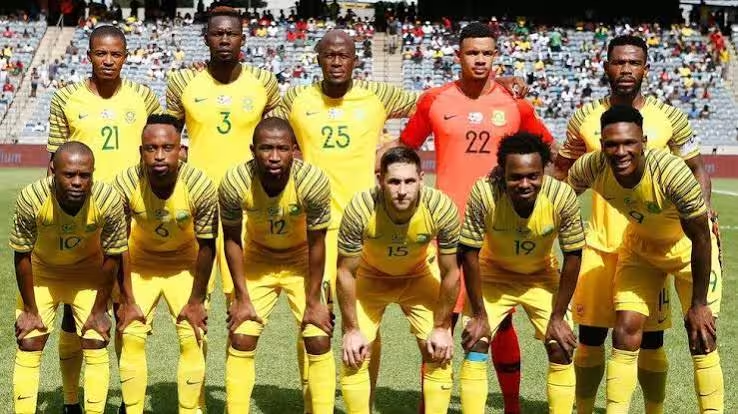
Following a spectacular modern tactical reconstruction under experienced management, Bafana Bafana enters the current footballing landscape as an ascending force. Combining elite technical short-passing, immense spatial discipline, and deep chemistry built upon a highly unified domestic club core, South Africa has restored its reputation as an incredibly difficult tactical puzzle for global opponents. This comprehensive profile breaks down the structural design of the active senior roster, foundational history, individual records, and updated tournament data.
Brief History and Core Continental Achievements
Following their historic readmission to FIFA in 1992 after the dismantling of apartheid, South Africa instantly established a golden footprint on the African continent. Hosting the 1996 Africa Cup of Nations (AFCON), Bafana Bafana united a nation by capturing the continental title on their debut attempt, famously defeating Tunisia in the final at First National Bank (FNB) Stadium.
The World Cup Pedigree and 2010 Legacy
South Africa quickly backed up their continental success by qualifying for consecutive global finals in 1998 and 2002, displaying fearlessness against elite European and South American opponents. Their crowning historical milestone occurred when they hosted the 2010 FIFA World Cup, breaking monumental ground as the first African nation to host the world’s greatest sporting event. Despite a narrow group-stage exit, Bafana Bafana provided iconic tournament memories, highlighted by Siphiwe Tshabalala’s legendary opening goal against Mexico. Following a subsequent era of transitional rebuilding, South Africa re-emerged as a major continental giant, securing a historic bronze medal finish at the 2023 AFCON to lay the blueprint for their modern international campaigns.
Technical Roster Breakdown
The modern South African squad utilizes a fluid 4-2-3-1 or a highly disciplined 4-3-3 shape. A defining competitive advantage of Bafana Bafana is their unparalleled internal chemistry, as a dominant majority of the starting lineup features domestic superstars playing together at reigning South African powerhouse Mamelodi Sundowns.
1. Goalkeepers
The South African goalmouth is anchored by an elite, physically imposing shot-stopper who serves as the absolute captain and tactical leader.
- Ronwen Williams (#1): The captain and undisputed first-choice goalkeeper. Williams is a world-class reflex shot-stopper, a modern ball-playing sweeping keeper, and a legendary penalty-saving expert.
- Veli Mothwa (#16): A highly dependable, physically robust veteran who provides elite starting-caliber depth from the bench.
- Ricardo Goss (#22): A sharp, high-reflex backup keeper finalizing a secure goalkeeping department.
2. Defenders
The defensive line focuses on supreme tactical cohesion, rapid positional recovery, and comfortable short-passing distribution out of the backline.
- Mothobi Mvala (#2) & Grant Kekana (#14): The preferred central defensive partnership, offering incredible structural telepathy, precise timing in tackles, and aerial dominance.
- Khuliso Mudau (#5): A world-class right-back possessing electric recovery speed, elite 1v1 defensive isolation skills, and strong overlapping traits.
- Aubrey Modiba (#6): A highly technical, versatile left-back who functions as an inverted playmaker during possession phases.
- Nkosinathi Sibisi (#3) & Thapelo Morena (#11): High-energy, adaptable defenders who provide immense tracking depth across both central and wide channels.
- Nyiko Mobbie (#12) & Terrence Mashego (#15): Disciplined wide options utilized to maintain structural containment against explosive opposing wingers.
3. Midfielders
The midfield functions as the tactical engine room, meticulously balancing intense possession retention with aggressive mid-block pressing.
- Teboho Mokoena (#4): The midfield maestro and creative hub. Mokoena provides elite press-resistance, world-class line-breaking passing range, and a lethal reputation for striking long-range free-kicks.
- S Sphephelo Sithole (#8): A physically robust, tireless central anchor responsible for disrupting opposition counters and protecting the center-backs.
- Thabang Monare (#13) & Jayden Adams (#18): High-work-rate central assets deployed to plug passing lines and sustain pressing densities.
- Themba Zwane (#10): The veteran creative playmaker. Operating between the lines, Zwane utilizes exceptional spatial intelligence, intricate close-control dribbling, and vision to unlock deep defensive structures.
4. Forwards
The frontline provides a dynamic mixture of direct vertical speed, inside-cutting wing combinations, and intense defensive pressing.
- Percy Tau (#11): The premier attacking talisman. Operating from the right flank, Tau brings immense international experience, explosive acceleration, and clinical final-third execution.
- Evidence Makgopa (#9): The primary central target man chosen to lead the front-line press, hold up long distributions, and battle physically with center-backs.
- Thapelo Maseko (#17) & Oswin Appollis (#20): Blistering, highly technical young wingers deployed to isolate fullbacks and inject unpredictable transitional flair.
- Mihlali Mayambela (#7) & Iqraam Rayners (#19): Direct forward variants utilized to alter attacking directness and run channels late in matches.
FIFA World Cup Performance Statistics
South Africa's statistical resume highlights an international program aiming to leverage their rich hosting legacy into expanded global tournament consistency.
World Cup Tournament History Dashboard
The table below logs South Africa’s absolute performance metrics across their historical FIFA World Cup final appearances:
| World Cup Edition | Host Country / Nations | Overall Record (W-D-L) | Goals (GF-GA) | Final Tournament Milestone / Result |
|---|---|---|---|---|
| 1998 | France | 0-2-1 | 3-6 | Group Stage Exit (World Cup Debut) |
| 2002 | South Korea / Japan | 1-1-1 | 5-5 | Group Stage Exit (Narrow Goal-Difference Defeat) |
| 2010 | South Africa | 1-1-1 | 3-5 | Group Stage Exit (Defeated France 2-1) |
| Historical Totals | 3 Tournaments Entered | 2-4-3 | 11-16 | First African Host Nation in History |
Legendary Individual Records and Milestones
The history of Bafana Bafana is written by pioneering goalscorers and dedicated international veterans who set elite historical benchmarks.
All-Time Cap and Scoring Leaderboards
The tables below document the historical all-time record holders for senior international appearances and goals scored for the South African men’s national team:
| Rank | Most Capped Players | Total International Caps | Career Era | Goals Scored |
|---|---|---|---|---|
| 1 | Aaron Mokoena | 107 | 1999–2010 | 1 |
| 2 | Itumeleng Khune | 91 | 2008–2018 | 0 |
| 3 | Siphiwe Tshabalala | 90 | 2006–2017 | 12 |
| 4 | Siyabonga Nomvethe | 82 | 1999–2012 | 16 |
| 5 | Benni McCarthy | 80 | 1997–2012 | 31 |
| Rank | All-Time Top Goalscorers | Goals Scored | Matches Played | Career Goal Ratio |
|---|---|---|---|---|
| 1 | Benni McCarthy | 31 | 80 | 0.39 |
| 2 | Shaun Bartlett | 28 | 74 | 0.38 |
| 3 | Katlego Mphela | 23 | 53 | 0.43 |
| 4 | Bernard Parker | 23 | 73 | 0.32 |
| 5 | Phil Masinga | 18 | 58 | 0.31 |
Elite Individual Records
- The Penalty Heroics Benchmark: Goalkeeper Ronwen Williams set an absolute, historic Africa Cup of Nations record during the 2023 tournament by saving four penalties in a single shootout against Cape Verde, earning global acclaim.
- The Ultimate Goalscorer: Striker Benni McCarthy remains the undisputed all-time top goalscorer in South African international history with 31 goals, famously capturing a UEFA Champions League title at the club level during his peak era.
Tactical Identity: The Sundowns-Infused Template
The modern tactical blueprint of Bafana Bafana operates primarily out of a highly structural 4-2-3-1 matrix. The greatest technical asset of the team is structural familiarity. Because the defensive line, defensive pivots, and creative focal points play daily club football together, South Africa executes intricate, short-passing possession patterns out of the back with total safety.
Out of possession, South Africa avoids frantic, disorganized pressing, preferring a highly synchronized mid-block. Under this protocol, Teboho Mokoena choke-out central progressive lanes, squeezing the opposition into wide spaces where fullbacks Khuliso Mudau and Aubrey Modiba use rapid recovery speeds to regain possession. Once the ball is secured, South Africa transitions with calculated precision, using the technical vision of Themba Zwane to release Percy Tau into space, turning defensive containment into surgical final-third sequences.
Conclusion
The South Africa national football team represents an inspiring mixture of rich historical legacy, supreme structural chemistry, and modern tactical sophistication. Their coordinated, possession-oriented style showcases a program engineered to systematically pick apart opposition game plans on the international stage. As Ronwen Williams coordinates the team from deep and Teboho Mokoena dictates midfield tempos, Bafana Bafana possesses all the technical cohesion, tactical structure, and competitive drive necessary to permanently challenge the global elite.