Following a summer of unprecedented squad turnover that saw more than twenty players depart and eleven arrive almost exclusively on free transfers and loans, Le Havre enters 2026/27 with Didier Digard retained as head coach, a new sporting director in Demba Ba, and a club navigating its fourth consecutive Ligue 1 campaign on one of the smallest budgets in the division.
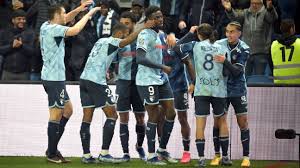
Technical Leadership & Coaching Profile
Manager: Didier Digard
Digard signed a contract extension in June 2026, committing him to the club until 2027 with an option for a further year. The 39-year-old French coach has been described by Ligue 1’s official platform as “Le Havre’s greatest asset,” having guided the club to consecutive survival campaigns despite severe financial constraints. In announcing his renewal, Digard specifically praised the role of Ben Guill, the head of owner Blue Crow Sports Group, stating that Guill “quickly understood our vision”. His coaching philosophy emphasises a balance between possession and attacking football, and he has spoken openly about wanting a team that “has the ball, creates danger, and plays football that supporters can identify with”.
Tactical Philosophy
Digard’s framework is built on collective discipline and the energy of young players. During pre-season, he highlighted the integration of new signings, particularly praising Japanese forward Sota Nakamura for his speed and ability to attack depth, and Kaito Mizuta for his running volume and ability to receive in the half-spaces. Defensively, the team relies heavily on goalkeeper Lionel Mpasi, while the attack is built around the returning Amir Richardson, who links midfield and forward lines. Digard has acknowledged that squad construction this summer was more complex than in previous years due to the simultaneous departure of several key players, but he has expressed satisfaction with the squad’s spirit: “The atmosphere is excellent, the players are very committed.”
Preferred Formations
4-2-3-1 / 4-3-3 in possession.
Strategic Transfer Activity
Le Havre’s summer window continued the club’s long-established strategy of smart, low-cost recruitment. Under new sporting director Demba Ba, the club completed eleven signings while paying virtually no transfer fees. The most notable operation was the return of Amir Richardson from Fiorentina on loan, with a purchase option reportedly valued at €8 million. The Moroccan international came through Le Havre’s academy and played a key role in the club’s 2023 promotion campaign. Also returning was Timothée Pembélé, who joined permanently on a free transfer after two previous loan spells, signing a three-year contract.
Table A: Summer Major Transfer Influx
| Player | Position | Former Club | Fee Paid |
|---|---|---|---|
| Amir Richardson | Midfielder | Fiorentina | Loan (€8M option) |
| Timothée Pembélé | Defender | Sunderland | Free |
| Vincent Sasso | Center-Back | Dunkerque | Free |
| Kaito Mizuta | Midfielder | Rot-Weiss Essen | Free |
| Sota Nakamura | Forward | Sanfrecce Hiroshima | Loan (option to buy) |
| Josh Maja | Forward | — | Free |
| Junior Mwanga | Midfielder/Defender | — | Free |
The First-Team Roster
Goalkeepers
Lionel Mpasi (#77): The DR Congo international has become Le Havre’s most reliable defensive pillar. In the opening rounds, his performance against Monaco was described as “outstanding”. Standing 182cm, he is not the tallest goalkeeper, but his reflexes and command of the defensive line make him indispensable to Digard’s system.
Gautier Gallon (#30): The 33-year-old French goalkeeper joined on a free transfer after Mory Diaw’s departure to Saudi Arabia, signing a one-year contract. He brings Ligue 1 experience from Troyes and Rennes, providing reliable depth behind Mpasi.
Paul Argney (#16): The academy graduate continues to accumulate experience as the third-choice goalkeeper, having been included in matchday squads last season.
Defenders
Arouna Sangante (#93): DEPARTED — The young centre-back joined Sevilla on a free transfer, representing one of Le Havre’s most significant summer losses. His departure stripped the defence of athleticism and ball-playing quality.
Ayumu Seko (#—): The Japanese centre-back is an undisputed starter, his positioning and interception ability providing stability in both three and four-man defensive systems. His minutes played in the opening rounds rank among the highest in the squad.
Timothée Pembélé (#32): The returning defender can operate as a right-back, centre-back, or wing-back. His versatility and familiarity with the club significantly reduce the adaptation period.
Vincent Sasso (#23): The experienced centre-back arrived on a free transfer from Dunkerque, providing necessary leadership and experience to a young defensive unit.
Mohamed Lamine Ndiaye (#97): The 21-year-old Senegalese centre-back signed a three-year contract after a trial period. Standing 187cm, he is strong in duels, quick, and the club specifically praised his “listening ability and determination to succeed”.
Fodé Doucouré (#13): The Malian right-back provides athleticism and defensive coverage on the flank.
Junior Mwanga (#—): A versatile player capable of operating in midfield and defence, he brings Ligue 1 experience to the squad.
Midfielders
Amir Richardson (#—): The return of the Moroccan international is Le Havre’s most significant summer operation. The 24-year-old came through the club’s academy, left for Reims and then Fiorentina, and brings Serie A and Conference League experience. His technical quality and ball-carrying ability are central to Digard’s midfield structure.
Abdoulaye Touré (#94): DEPARTED — The experienced midfielder’s departure stripped Le Havre of an important defensive screen from last season.
Simon Ebonog (#—): The academy midfielder is one of the few remaining players from the 2023/24 promotion season. His running and pressing provide midfield energy.
Kaito Mizuta (#—): The Japanese midfielder joined on a free transfer from Rot-Weiss Essen. Digard praised his “enormous running volume and ability to provide stability in midfield”.
Rassoul Ndiaye (#—): The Senegalese midfielder is another promotion-season squad member, providing continuity within the squad.
Yassine Kechta (#—): DEPARTED — One of last season’s key midfielders, his departure further intensified the need for midfield reconstruction.
Forwards
Josh Maja (#—): The Nigerian forward brings 47 Ligue 1 appearances and 38 Ligue 2 appearances, offering proven adaptability and goalscoring ability to Le Havre’s attack.
Sota Nakamura (#—): The 23-year-old Japanese forward joined on loan from Sanfrecce Hiroshima. Standing just 168cm, he is exceptionally quick and excels at combination play and attacking depth. Digard believes he can play “both as a winger and in central areas”. He has been identified as a potential revelation of the Ligue 1 season.
Mbwana Samatta (#—): The Tanzanian forward is one of the few attacking options retained from last season, and he has already registered a goal this campaign.
Félix Mambimbi (#—): The Swiss forward provides additional attacking depth.
Issa Soumaré (#—): DEPARTED — Joined Rennes on a free transfer, representing a significant loss in the attacking department.
Leadership Group & Squad Regulations
Club Captain: To Be Confirmed
With the departure of several senior figures, Le Havre’s captaincy has been adjusted during the early weeks of the season. Ayumu Seko and Simon Ebonog, as the longest-serving members of the squad, have assumed greater leadership responsibilities.
Homegrown Quota Check
Le Havre possesses one of France’s most celebrated youth academies. This season’s first-team squad includes Paul Argney, Simon Ebonog, Rassoul Ndiaye, Matteo Bodmer, and Mokrane Bentoumi, all of whom have progressed through the club’s youth structure. The returns of Richardson and Pembélé further reinforce the club’s “academy-first” identity.
Financial & Contractual Health
Financial Balance Overview
Le Havre’s financial constraints are among the most severe in Ligue 1. According to L’Équipe, the club’s available budget for this summer’s window was approximately €2 million. Since promotion to Ligue 1 in 2023, Le Havre have spent a total of just €2.1 million across six transfer windows on three players: €400,000 on Soumaré, €700,000 on Rassoul Ndiaye, and €1 million on Emmanuel Sabbi. Demba Ba’s appointment has continued the “value-first” strategy, with all new arrivals secured on free transfers or loans.
Contract Red Alerts
Digard’s extension until 2027, with an option, provides stability in the dugout. However, the contract situations of several key players require attention, particularly the loan agreements for Richardson and Nakamura, whose purchase options will need to be evaluated at season’s end.
The Academy Pipeline & Loan Tracker
Breakout Talents to Watch
Enzo Koffi (#27) is a young attacker to monitor this season, having already received first-team minutes. Additionally, 17-year-old Djibril Ouziad has been included in the squad list, representing the continued output of Le Havre’s academy.
Notable Out on Loan
Le Havre’s loan strategy focuses primarily on providing playing time for young players, with the list subject to adjustment as the season progresses.
Set-Piece Specialists & FPL Cheat Sheet
Penalties: Josh Maja (First Choice) / Mbwana Samatta (Second Choice).
Direct Free-Kicks: Amir Richardson / Kaito Mizuta.
Corners & Crosses: Amir Richardson / Fodé Doucouré.
Final Outlook: Surviving Against the Odds
Le Havre enter 2026/27 facing one of the most severe resource constraints in Ligue 1. The club lost Sangante, Soumaré, Kechta, Touré, Lloris, and Nego during the summer, all without receiving transfer fees. Demba Ba filled the gaps with eleven new signings, almost all of them zero-cost operations.
The opening rounds have confirmed the scale of the challenge. After four matches, Le Havre have recorded two draws and two defeats, scoring two goals and conceding four, sitting 16th in the table. They have yet to win at home, and the attacking output is particularly concerning. Mpasi’s performances in goal have been one of the few bright spots, but goalkeeping alone cannot sustain a season.
Digard’s coaching ability remains Le Havre’s greatest asset. He has already demonstrated across two seasons that he can extract maximum potential from limited resources. The returns of Richardson and Pembélé provide both immediate quality and emotional connection, while Maja’s Ligue 1 experience and Nakamura’s unknown potential are the key variables in attack.
Survival remains the only realistic objective. Le Havre’s squad depth is among the thinnest in the division, and any injury or dip in form among key players would place enormous pressure on the group. But Digard’s team has found ways to survive in each of the past two seasons, and Le Havre’s status as the doyen of French clubs, combined with its academy tradition and collective spirit, may once again prove to be intangible assets in the fight for survival.