Following a historic MLS Cup triumph and the arrival of a new head coach, Inter Miami enters the 2026/27 campaign with one of the most star-studded rosters in league history, a revamped midfield anchored by Casemiro, and the challenge of balancing domestic dominance against the pursuit of continental glory. This is the definitive guide to the current Herons squad.
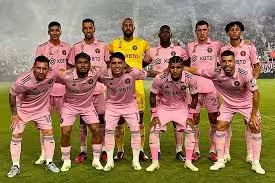
Technical Leadership & Coaching Profile
Manager: Cristian “Kily” González
González was appointed as Inter Miami’s new head coach in August 2026, replacing Javier Mascherano who departed the club in April. The 52-year-old Argentine brings extensive experience from Argentina’s First Division, having previously managed CA Rosario Central (2020-2022), CA Unión de Santa Fe (2023-2025), and CA Platense (2025). González made club history in his very first match at the helm, guiding the team to the 2026 Michelob ULTRA Campeones Cup title with a 2-0 victory over LIGA MX side Cruz Azul. As a player, González starred for Rosario Central, Boca Juniors, Real Zaragoza, Valencia, and Inter Milan, representing Argentina at the 2002 FIFA World Cup and winning gold at the 2004 Summer Olympic Games.
Tactical Philosophy
González has implemented a 4-3-3 formation that prioritizes control in midfield and fluid attacking rotations. The system is built around the creative axis of Lionel Messi and Rodrigo De Paul, with Casemiro providing the defensive screen that allows the attacking talents to flourish. The early-season evidence suggests a team still adjusting to the new coach’s demands, with the squad having endured a difficult run of form that has seen them slip in the Eastern Conference standings. Defensive solidity remains a work in progress, with the team having conceded 48 goals in 26 matches.
Preferred Formations
4-3-3 in possession.
Strategic Transfer Activity
Inter Miami’s summer window was defined by the marquee arrival of Casemiro, the Brazilian midfielder who joined as a free agent following his departure from Manchester United. The signing was accompanied by a MLS investigation into alleged tampering regarding the league’s “discovery rights” system, with the LA Galaxy originally holding the priority to negotiate with the player. On deadline day, the club added Paraguayan midfielder Matías Galarza from River Plate and Brazilian winger Riquelme Fillipi.
Table A: Summer Major Transfer Influx
| Player | Position | Former Club | Fee Paid |
|---|---|---|---|
| Casemiro | Defensive Midfield | Manchester United | Free |
| Matías Galarza | Central Midfield | River Plate | Undisclosed |
| Riquelme Fillipi | Winger | — | Undisclosed |
The First-Team Roster
Goalkeepers
Dayne St. Clair (#1): The Canadian international has established himself as Inter Miami’s first-choice goalkeeper, his shot-stopping and distribution providing a reassuring presence behind the defensive line. His command of the penalty area has been tested during a difficult run of form, but he remains the undisputed number one.
Rocco Ríos Novo (#23): The Argentine goalkeeper provides reliable backup coverage, his development continuing within the first-team environment.
Luis Barraza (#29): The American goalkeeper serves as third-choice option, gaining valuable exposure to first-team standards.
Defenders
Maximiliano Falcón (#37): The Uruguayan centre-back provides physical presence and aerial dominance in the heart of defence, his experience in South American football adding valuable steel to the backline.
Sergio Reguilón (#3): The Spanish left-back brings La Liga and Premier League experience to the defensive line, his attacking thrust and crossing ability offering width on the left flank.
Facundo Mura (#4): The Argentine right-back provides energy and defensive discipline, his overlapping runs offering balance in González’s attacking structure.
Fricio Caicedo (#?): The young defender has been entrusted with first-team minutes, his development continuing under the new coaching staff.
Gonzalo Luján (#2): The Argentine defender provides versatility across the backline, his tactical intelligence making him a dependable rotation option.
Micael dos Santos (#16): The Brazilian centre-back adds depth and physical presence to the defensive core.
Ian Fray (#?): The Jamaican defender offers additional cover, his development continuing within the first-team squad.
Midfielders
Casemiro (#?): The marquee signing of the summer and the anchor of Inter Miami’s midfield. The Brazilian arrived as a free agent after leaving Manchester United, bringing five Champions League titles and a wealth of elite-level experience to the squad. At 34, his positioning and reading of the game remain elite, and his ability to win back possession through interceptions and tackles provides the platform for Messi and De Paul to flourish. He scored nine Premier League goals last season for United, underlining his aerial threat from set-pieces.
Rodrigo De Paul (#7): The Argentine midfielder remains the creative engine of the team, his energy and progressive passing providing the link between midfield and attack. His understanding with Messi, forged over years of international duty, is central to Inter Miami’s attacking structure.
Yannick Bright (#42): The Italian midfielder has established himself as a reliable presence in the engine room, his tactical discipline and work rate complementing the more expressive talents around him.
Matías Galarza (#?): The Paraguayan international arrived from River Plate on deadline day, bringing World Cup experience and energy to the midfield rotation. He scored one goal and provided one assist for Paraguay at the 2026 World Cup, including a standout performance in the round of 32 victory over Germany.
Telasco Segovia (#?): The Venezuelan midfielder provides additional depth in central areas, his development continuing within the first-team environment.
David Ayala (#?): The Argentine midfielder offers energy and tactical discipline, his work rate making him a reliable option in González’s rotation.
Santiago Morales (#?): The young Spanish midfielder continues his development within the first-team squad, gaining valuable exposure to top-level football.
Forwards
Lionel Messi (#10): The captain and the greatest player of all time remains the focal point of everything Inter Miami do. At 39, Messi’s goal-scoring output remains extraordinary: 21 goals in MLS this season, leading the Golden Boot race, including a stunning free-kick against Columbus Crew that marked his 12th direct free-kick goal for the club. His ability to produce moments of magic from nothing defines Inter Miami’s attacking identity.
Luis Suárez (#9): The veteran Uruguayan striker continues to provide a focal point in the attacking line, his movement and finishing instincts complementing Messi’s creativity. At 39, his experience and guile remain invaluable within the squad.
Germán Berterame (#?): The Mexican forward has established himself as a key attacking option, his pace and directness offering a different dimension to Suárez’s more considered approach.
Tadeo Allende (#?): The Argentine winger provides direct running and creativity from wide areas, his development continuing within the first-team squad.
Daniel Pinter (#56): The young American forward provides depth in the attacking line, his development offering long-term potential.
Leadership Group & Squad Regulations
Club Captain: Lionel Messi
The Argentine legend wears the armband and embodies the standards González demands. His voice and standards-setting influence anchor a dressing room that blends world-class veterans with emerging young talent.
The Leadership Committee
Casemiro and Rodrigo De Paul serve as senior voices alongside Messi, their combined experience of elite European and international football providing essential guidance through a challenging campaign. Casemiro’s Champions League-winning pedigree and De Paul’s World Cup experience offer invaluable perspective.
Homegrown Quota Check
With Santiago Morales, Daniel Pinter, Alexander Shaw, and several academy graduates in the first-team squad, Inter Miami maintains a connection to domestic talent development, though the squad’s composition reflects the club’s emphasis on attracting established international stars.
Financial & Contractual Health
Financial Balance Overview
Inter Miami’s roster construction operates under MLS salary cap regulations, with Messi, De Paul, and Berterame occupying the three Designated Player slots. Casemiro’s contract, which runs through the end of the 2027 MLS sprint season with a club option through June 2029, was structured to fit within the cap despite the Brazilian’s significant profile. The MLS investigation into the tampering allegations regarding Casemiro’s discovery rights remains ongoing, with the settlement terms with LA Galaxy to be released upon conclusion.
Contract Red Alerts
Securing the long-term futures of key performers like Matías Galarza, who arrived on a permanent deal from River Plate, will be a priority. The club’s ability to retain its most valuable assets within MLS salary constraints remains a constant challenge.
The Academy Pipeline & Loan Tracker
Breakout Talents to Watch
Santiago Morales has earned first-team minutes despite his youth, his development continuing within a squad packed with world-class talent. David Ruiz has been loaned to the New York Red Bulls with an option to make the move permanent, seeking regular first-team football.
Notable Out on Loan
David Ruiz joined the New York Red Bulls on loan, with Inter Miami receiving $75,000 in 2027 general allocation money and the Red Bulls holding an option to make the move permanent. Noah Allen is set to join Chicago Fire FC, with the two clubs in advanced negotiations.
Set-Piece Specialists & FPL Cheat Sheet
Penalties: Lionel Messi (First Choice) / Luis Suárez (Second Choice).
Direct Free-Kicks: Lionel Messi / Rodrigo De Paul.
Corners & Crosses: Lionel Messi / Sergio Reguilón.
Final Outlook: Navigating the Tactical Horizon
Inter Miami enters 2026/27 at a crossroads. The club secured its first-ever MLS Cup title in December and moved into a brand-new stadium in April, marking a period of unprecedented achievement. But the current campaign has exposed vulnerabilities that require urgent attention. A 2-1 defeat to Columbus Crew, sealed in the ninth minute of stoppage time despite a Messi free-kick golazo, extended a concerning run that has seen the club lose nine of its last ten matches.
The Eastern Conference table tells a sobering story: Inter Miami sit third with 46 points from 26 matches, 14 points behind runaway leaders Nashville SC with just seven games remaining. The defensive record — 48 goals conceded — is the worst among the top three sides in the East, reflecting a structural fragility that Casemiro’s arrival was intended to address.
The attacking output remains formidable. Messi’s 21 league goals lead the Golden Boot race, and his 12 direct free-kick goals for the club underline his enduring ability to decide matches single-handedly. But the supporting cast has struggled for consistency, and the balance between attacking ambition and defensive solidity remains elusive.
The arrival of Kily González offers a fresh tactical voice and the opportunity to reset a campaign that has drifted. His debut victory in the Campeones Cup demonstrated his ability to organise a team for a one-off occasion. The challenge now is translating that into sustained league form.
The road ahead is unforgiving. With seven matches remaining and a 14-point gap to Nashville, the Supporters’ Shield is beyond reach. But the playoffs represent a genuine opportunity. If González can tighten the defensive structure, if Casemiro can provide the midfield control that has been lacking, and if Messi can maintain his extraordinary form, Inter Miami possess the talent to make a deep postseason run. The foundation is secure, the star power is undeniable, and the ambition remains undiminished. The challenge is making it all work together.