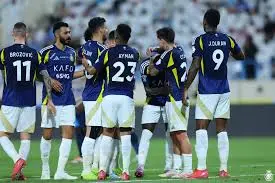
Al Ittihad entered the 2026/27 season with a new manager, a restructured sporting department, and a squad that underwent significant change but arguably insufficient reinforcement. Jens Wissing, the 38-year-old German who led Gamba Osaka to the AFC Champions League title last season, replaced Sergio Conceição after a disappointing fifth-place finish. The summer window saw the departure of key attacking talent Moussa Diaby to Bayer Leverkusen for a fee reported between €28m and €37m — the first Saudi club sale to generate such income — while the incoming business was widely characterised by local media as “much noise, little flour.” A late flurry of deals brought Richard Ríos and Georginio Wijnaldum to Jeddah, but the squad still carries imbalances that the early-season results have largely masked. Seven league matches have produced four wins and three draws, leaving Al Ittihad second on 17 points, two behind Al Hilal.
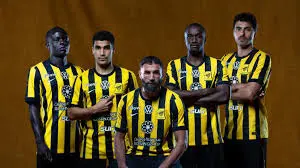
Technical Leadership & Coaching Profile
Manager: Jens Wissing
Wissing was appointed following Conceição’s departure by mutual consent in June 2026, after a season that delivered no trophies, a fifth-place league finish 31 points behind champions Al-Nassr, and a semi-final exit in the King’s Cup. The German’s arrival from Gamba Osaka, where he won the AFC Champions League Elite, represented a calculated gamble on a young coach with proven continental pedigree in Asian football.
The appointment was accompanied by a broader restructuring. Frank Karbou, previously head of strategy and football operations, was appointed sporting director, with Ramón Planes transitioning to an advisory role. This reorganisation reflected the club’s recognition that the previous season’s failures extended beyond the coaching position.
Wissing’s preferred formations have varied in the early weeks. He opened with a 4-3-3 against Al-Kholood, shifted to a 4-4-2 double pivot at Al-Qadsiah, then settled on a 4-2-3-1 that has been used in the majority of subsequent matches. The tactical identity remains a work in progress, with the squad’s composition — heavy in midfield but light on genuine wide attacking options — constraining his options.
Tactical Philosophy
Wissing has implemented a 4-2-3-1 as his primary system, a structure that seeks to maximise the influence of Houssem Aouar and Steven Bergwijn in the attacking third while providing defensive protection through the double pivot.
The early-season data reveals a team that controls matches without dominating them. Al Ittihad have scored 12 goals in seven league matches (1.71 per game) while conceding six (0.86 per game), a goal difference of plus six that reflects reasonable efficiency at both ends. The 2-1 victory over Al-Nassr in early September was the standout result, demonstrating the squad’s capacity to compete against the league’s strongest sides.
The attacking structure relies heavily on Bergwijn’s output. The Dutch winger has scored three goals in six appearances, including two penalties, and is the squad’s leading scorer. Youssef En-Nesyri provides the focal point through the middle, while Aouar operates as the creative hub in the No. 10 position. The concern is a lack of alternative sources of goals, particularly from wide areas following Diaby’s departure.
Defensively, the partnership of Danilo Pereira and Jan-Carlo Šimić has been the preferred centre-back pairing, with the veteran Portuguese providing experience alongside the young Serbian’s physicality. The double pivot of Dion Lopy and Richard Ríos offers mobility and ball-winning capacity, though the latter’s late arrival has limited his integration.
Preferred Formations
4-2-3-1 (primary) / 4-3-3 (opening fixture) / 4-4-2 (used away at Al-Qadsiah and Al-Faisaly)
Strategic Transfer Activity
Al Ittihad’s summer window was defined by extensive negotiation and limited completion. Saudi newspaper Al-Madina reported that the club was linked with approximately fourteen players across the window, yet the final tally of genuinely new arrivals was six.
The window began with the activation of purchase clauses for players already on loan. Jan-Carlo Šimić was signed permanently from Anderlecht for approximately €15m, and Stefan Keller from AEL Limassol for €1m — though Keller was subsequently loaned to Beveren. Rakan Kaabi arrived from Al-Fayha on a free transfer in early July on a long-term contract. Faris Abdi joined from NEOM in early August to provide cover at left-back following Mario Mitaj’s loan to Genoa.
The most significant foreign addition before the deadline was Dion Lopy, signed from Almería for approximately €13m on a contract until 2029 or 2030, brought in to replace the departed Fabinho. Mukhtar Ali arrived from Al-Ettifaq in mid-August on a deal until 2029, reinforcing the midfield following Hamed Al-Ghamdi’s cruciate ligament injury.
The final days of the window brought two headline arrivals. Richard Ríos joined on a season-long loan from Benfica, the Colombian midfielder having scored eight goals and provided six assists in 45 appearances across all competitions in his first season in Portugal. Georginio Wijnaldum signed a one-year contract with an option for a further season on 6 September, the 35-year-old returning to the Roshn Saudi League after three seasons at Al-Ettifaq where he scored 36 goals and provided 16 assists in 96 appearances.
The most consequential failed pursuit was Anis Hadj Moussa. Al Ittihad escalated their offer for the Feyenoord winger from approximately €30m to €37.5m, with a figure of €42.5m reportedly discussed. The deal collapsed when Feyenoord demanded a bank guarantee at a critical moment, and two members of the Dutch club’s board refused to sanction the sale despite the player having been registered in their Champions League squad.
On the departure side, Moussa Diaby’s move to Bayer Leverkusen generated between €28m and €37m, described as the first Saudi club transfer to generate such income. Abdulrahman Al-Aboud joined Al-Shabab, while loan departures included Faisal Al-Ghamdi to NEOM, Unai Hernández to Girona, Mitaj to Genoa, Hamed Al-Shanqiti to Al-Khaleej, Abdulelah Hawsawi to Al-Ettifaq, and Mateo Borrell to Abha.
Table A: Summer Major Transfer Influx
| Player | Position | Former Club | Fee Paid |
|---|---|---|---|
| Jan-Carlo Šimić | Centre-Back | Anderlecht | ~€15m |
| Dion Lopy | Defensive Midfielder | Almería | ~€13m |
| Richard Ríos | Midfielder | Benfica | Loan |
| Georginio Wijnaldum | Midfielder | Free agent | Free |
| Rakan Kaabi | Midfielder | Al-Fayha | Free |
| Faris Abdi | Left-Back | NEOM | Undisclosed |
| Mukhtar Ali | Midfielder | Al-Ettifaq | Undisclosed |
The First-Team Roster
Goalkeepers
Predrag Rajković (#1): The 30-year-old Serbian remains the undisputed first choice, starting all six of his appearances this season with two clean sheets. His experience and shot-stopping provide stability behind a defence that has been reasonably solid in the early weeks.
Mohammed Al Absi (#50): The 23-year-old made one appearance this season, conceding once. He provides capable backup and represents the club’s investment in domestic goalkeeping talent.
Osama Al Mermesh (#88): The third-choice goalkeeper, aged 23, provides additional depth.
Defenders
Danilo Pereira (#2): The 35-year-old Portuguese veteran has started five of six league matches, his experience and positional intelligence anchoring the back line. A red card in one appearance is a reminder of the disciplinary edge that accompanies his competitive nature.
Jan-Carlo Šimić (#4): The 21-year-old Serbian centre-back was signed permanently after his loan spell, the €15m investment reflecting the club’s belief in his long-term potential. His physical profile and ball-playing ability complement Danilo’s experience.
Hassan Kadesh (#15): The 33-year-old Saudi defender has featured in all six matches, starting four. His versatility across centre-back and left-back provides valuable squad depth.
Faris Abdi (#25): The 27-year-old left-back arrived from NEOM in August to fill the void created by Mitaj’s loan departure. He has started all six matches, his consistency on the left flank an important contribution.
Muhannad Al Shanqiti (#13): The 27-year-old right-back provides competition on the right side of defence.
Saad Al Mosa (#6): The 23-year-old centre-back is currently recovering from an ankle injury but has returned to training.
Ahmed Sharahili (#20): The 32-year-old centre-back is sidelined with an ankle injury expected to keep him out until late September 2026.
Mohammed Barnawi (#66): The 21-year-old centre-back represents the club’s investment in young domestic defensive talent.
Muath Fagihy (#42): The 24-year-old left-back provides cover and competition.
Midfielders
Houssem Aouar (#10): The 28-year-old Algerian remains the creative heart of the team, providing two assists in six appearances. His ability to operate between the lines and link midfield with attack is central to Wissing’s system. Physical discomfort has made him doubtful for recent matches, underlining his importance.
Dion Lopy (#30): The 24-year-old Senegalese midfielder signed from Almería for approximately €13m and has started five matches. His ball-winning and mobility provide the platform for the more creative players ahead of him, though he has accumulated four yellow cards and one red in his early appearances — a disciplinary concern that requires management.
Richard Ríos (#5): The 26-year-old Colombian arrived on loan from Benfica in the final days of the window. His debut is eagerly anticipated, and his technical quality and physical presence are expected to elevate the midfield. He becomes the second Colombian to represent Al Ittihad, after Sergio Herrera.
Georginio Wijnaldum (#35): The 35-year-old Dutchman signed on 6 September after three seasons at Al-Ettifaq, where he was club captain and scored 36 goals in 96 appearances. His experience of the league and his goalscoring threat from midfield offer Wissing a proven option in the attacking third.
Mukhtar Ali (#8): The 28-year-old Saudi midfielder arrived from Al-Ettifaq in August and has provided valuable depth in the double pivot.
Rakan Kaabi (#60): The 23-year-old signed from Al-Fayha on a free transfer in July and has made three appearances, offering a young domestic option in midfield.
Mahamadou Doumbia (#17): The 22-year-old Malian midfielder is a long-term absentee with an unspecified injury, his absence contributing to the midfield shortfall that prompted the late signings of Ríos and Wijnaldum.
Hamed Al Ghamdi (#80): The 27-year-old Saudi midfielder suffered a cruciate ligament injury and is not expected to return until April 2027. His absence was a key factor in the club’s decision to reinforce midfield in the summer.
Forwards
Steven Bergwijn (#34): The 28-year-old Dutch winger is Al Ittihad’s most important attacking player and leading scorer with three goals in six appearances, including two penalties. His contract expires at the end of the season, and the club has opened negotiations for an extension, with a club option for a further year under discussion. Since joining from Ajax in summer 2024, Bergwijn has scored 28 goals and provided 15 assists in 72 appearances, and was instrumental in the 2024/25 domestic double.
Youssef En-Nesyri (#21): The 29-year-old Moroccan striker has scored twice in six appearances, providing the physical focal point in attack. His international pedigree — including Morocco’s 2022 World Cup semi-final run — and his experience at Sevilla and Fenerbahçe make him a reliable presence through the middle.
George Ilenikhena (#9): The 20-year-old Nigerian striker joined from Royal Antwerp and represents a significant investment in young attacking talent. His development within Wissing’s system will be closely monitored as a long-term successor to En-Nesyri.
Roger Fernandes (#7): The 20-year-old Portuguese winger provides an exciting young option on the flanks. His pace and directness offer a different profile to Bergwijn, and he represents part of the club’s strategy to develop young attacking talent.
Saleh Al Shehri (#11): The 32-year-old Saudi striker provides experience and domestic depth in the attacking positions.
Marwan Al Sahafi (#22): The 22-year-old forward offers additional depth across the attacking line.
Leadership Group & Squad Regulations
Club Captain
The captaincy structure has evolved through the summer’s transitions. Danilo Pereira, as the most experienced outfield player with a career spanning Porto, PSG and the Portuguese national team, has assumed a senior leadership role within the defensive unit. Wijnaldum’s arrival adds another authoritative voice, his three seasons as Al-Ettifaq captain providing leadership credentials within the Roshn Saudi League context.
The Leadership Committee
Houssem Aouar and Steven Bergwijn serve as senior voices within the attacking unit, their performances setting the standard for the squad’s creative output. Dion Lopy’s combative presence in midfield adds a competitive edge to the leadership group.
Homegrown Quota Check
Al Ittihad’s squad contains a strong Saudi core, with Mohammed Al Absi, Muhannad Al Shanqiti, Hassan Kadesh, Faris Abdi, Mukhtar Ali, Rakan Kaabi, Ahmed Al Ghamdi, Hamed Al Ghamdi, Saleh Al Shehri and Marwan Al Sahafi all having developed within the domestic football system. The club’s model combines this domestic foundation with high-profile foreign signings, though the summer window’s limited completion rate left the squad thinner than the season’s ambitions require.
Financial & Contractual Health
Financial Balance Overview
Al Ittihad’s summer window generated a net transfer surplus through Diaby’s sale to Bayer Leverkusen, reported at between €28m and €37m — the first significant outgoing transfer fee in the club’s history. This income, combined with the modest expenditure on Šimić, Lopy and the other arrivals, positions the club with financial flexibility that it failed to exploit fully in the summer window. The club’s total transfer record for 2026/27 shows a net balance of negative €3.00m.
The wage structure has been adjusted through the departures of Fabinho and Al-Bishi, both of whom left upon contract expiry or settlement. Wijnaldum’s one-year deal with an option reflects a prudent approach to a veteran player, while Bergwijn’s extension negotiations are being conducted with an eye on both performance and financial sustainability.
Contract Red Alerts
Steven Bergwijn’s contract expires at the end of the current season, and the club has opened negotiations for an extension with an option for a further year. Given his importance to the attacking structure and his 28 goals in 72 appearances, securing his future is a priority.
Georginio Wijnaldum’s one-year deal with an option for an additional season provides flexibility but also uncertainty. At 35, his long-term future will be assessed based on his performance across the campaign.
The Academy Pipeline & Loan Tracker
Breakout Talents to Watch
George Ilenikhena represents the most significant investment in young attacking talent, the 20-year-old Nigerian signed from Royal Antwerp with the potential to develop into a long-term successor to En-Nesyri.
Roger Fernandes offers an exciting alternative on the flanks, his pace and directness providing a different dimension to the more experienced wide options.
Mohammed Fallatah (#41) is a 19-year-old midfielder who has entered the first-team squad, representing the academy’s continued output.
Notable Out on Loan
Al Ittihad’s loan strategy saw several players depart to gain experience or make way for new arrivals. Faisal Al-Ghamdi joined NEOM, Unai Hernández moved to Girona, Mario Mitaj joined Genoa, Hamed Al-Shanqiti went to Al-Khaleej, Stefan Keller to Beveren, Abdulelah Hawsawi to Al-Ettifaq, and Mateo Borrell to Abha.
Set-Piece Specialists & FPL Cheat Sheet
Penalties: Steven Bergwijn (First Choice) / Youssef En-Nesyri (Second Choice).
Direct Free-Kicks: Houssem Aouar / Roger Fernandes.
Corners & Crosses: Houssem Aouar / Steven Bergwijn.
Final Outlook: Ambition Outstripped by Squad Depth
Al Ittihad’s 2026/27 season has begun with results that exceed the expectations created by the summer window. Seven league matches have produced four wins and three draws, including a 2-1 victory over Al-Nassr, leaving the club second on 17 points and within touching distance of leaders Al Hilal. The defensive record of six goals conceded in seven matches is among the league’s best, and Bergwijn’s goalscoring form has provided the attacking edge that the summer’s recruitment failed to guarantee.
The concerns lie beneath the surface of these results. The squad lacks genuine depth in wide attacking areas following Diaby’s departure, and the failed pursuit of Hadj Moussa leaves Bergwijn as the only proven wide threat. Aouar’s fitness is a persistent variable — his absence would remove the team’s primary creative outlet. The No. 9 position relies entirely on En-Nesyri, with Ilenikhena still developing and Al Shehri providing only domestic cover.
The midfield, paradoxically, may now be overstocked following the late arrivals of Ríos and Wijnaldum. Wissing must manage the integration of two players who arrived after the season had begun, while Lopy’s disciplinary record — four yellow cards and a red in five appearances — requires attention.
The upcoming fixtures will test the squad’s resilience. The Clásico against Al Hilal at Kingdom Arena on 10 October represents the first genuine examination of the club’s title credentials. The Jeddah Derby against Al Ahli follows later in the season, and the AFC Champions League Elite campaign adds further demands on a squad that lacks proven rotation options in key positions.
Wissing’s tactical intelligence and the early results suggest the club can compete at the top end of the table. But the summer’s transfer failures have left the squad vulnerable to injuries and suspensions in the positions that matter most. The January window may prove decisive, offering an opportunity to address the wide attacking deficiency that the failed Hadj Moussa pursuit exposed. Until then, Al Ittihad’s title challenge rests on the continued fitness of Bergwijn and Aouar and the defensive solidity that has underpinned the opening weeks.