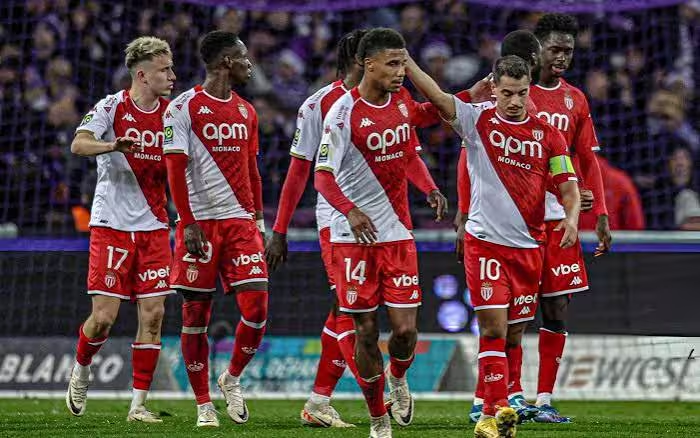
Following a disappointing campaign that saw the club miss out on Champions League qualification and finish outside the top three, Monaco enters 2026/27 under new manager Filipe Luís with a squad reshaped by financial necessity, a sensational unbeaten start to the Ligue 1 season, and the emergence of a new generation of talent at the Stade Louis II.
Technical Leadership & Coaching Profile
Manager: Filipe Luís
Filipe Luís arrives at the Stade Louis II for his first European managerial role after a distinguished playing career that included spells at Atlético Madrid, Chelsea, and Flamengo, where he also began his coaching journey. The Brazilian has inherited a squad in transition, with financial constraints forcing significant departures, but his early impact has been remarkable. Monaco have taken thirteen points from a possible fifteen, including a stunning 3-2 victory at champions Paris Saint-Germain, and sit top of Ligue 1 during the international break. Supporters have been cautiously optimistic, noting his closeness to the players and the attacking intent evident in pre-season.
Tactical Philosophy
Filipe Luís has implemented a high defensive line and an aggressive attacking structure, though some supporters have expressed concerns about the vulnerability this creates against pacy attackers. The system relies heavily on the midfield axis of Lamine Camara and Denis Zakaria, with Aleksandr Golovin deployed in a deeper role on the left to do the “dirty work” as the coach demands. The attacking line has been fluid, with Paris Brunner emerging as the focal point in the absence of Folarin Balogun, supported by the creativity of Takumi Minamino and the returning Ansu Fati.
Preferred Formations
4-2-3-1 / 4-3-3 in possession.
Strategic Transfer Activity
Monaco’s summer was defined by financial pressure following the failure to secure Champions League football, with the DNCG imposing strict wage controls. The club generated over €100 million in player sales, including Maghnes Akliouche’s €50 million move to PSG and Aladji Bamba’s €41.5 million departure to Newcastle, while Caio Henrique and Kassoum Ouattara also departed. The arrivals were surgical: Flavio Nazinho arrived from Cercle Brugge as Caio Henrique’s successor, Sadibou Sané joined as defensive depth, and Ansu Fati’s loan was made permanent for €11 million.
Table A: Summer Major Transfer Influx
| Player | Position | Former Club | Fee Paid |
|---|---|---|---|
| Flavio Nazinho | Left-Back | Cercle Brugge | €5m |
| Sadibou Sané | Center-Back | — | Undisclosed |
| Ansu Fati | Winger | Barcelona | €11m |
| Eric Dier | Center-Back | — | Permanent |
| Matthis Abline | Forward | — | Undisclosed |
The First-Team Roster
Goalkeepers
Lukáš Hrádecký (#1): The veteran Finnish goalkeeper arrived in 2025 and provides experienced cover, though he is now 36 and in the twilight of his career. His leadership and professionalism remain valued within the goalkeeping group.
Philipp Köhn (#16): The Swiss goalkeeper remains Monaco’s first-choice option when available, his shot-stopping and distribution suited to Filipe Luís’s build-from-the-back approach. At 28, he represents the most reliable option between the posts.
Jules Stawiecki (#40): The young academy graduate continues his development as third-choice cover, gaining exposure to first-team standards.
Defenders
Vanderson (#2): The Brazilian right-back remains a key outlet on the right flank, his attacking thrust and defensive discipline providing balance. At 25, he is one of the more experienced figures in a youthful defensive unit.
Eric Dier (#3): The former England international brings Premier League and Champions League experience to the heart of defence. At 32, his composure and positional intelligence anchor a backline integrating younger players.
Jordan Teze (#4): The Dutch defender provides versatility across right-back and centre-back, his athleticism and tactical intelligence making him a dependable rotation option.
Thilo Kehrer (#5): The German centre-back offers physical presence and aerial dominance, his experience across European leagues adding stability to the defensive core.
Christian Mawissa (#13): The 21-year-old has established himself as a first-team regular, his pace and ball-playing ability marking him as one of Monaco’s most promising defensive talents.
Mohammed Salisu (#22): The Ghanaian centre-back provides additional depth and physicality, his recovery pace valuable within Filipe Luís’s high defensive line.
Flavio Nazinho (#?): The Portuguese left-back arrived from Cercle Brugge as Caio Henrique’s successor, bringing an attacking profile from his time as a wing-back in Belgium. Described as having “strong character,” he has adapted well to Ligue 1 and offers exactly the forward runs and left-footed delivery Monaco have long valued.
Sadibou Sané (#?): The 22-year-old centre-back joined as part of Monaco’s investment in defensive depth, his physical profile and potential offering long-term security.
Midfielders
Lamine Camara (#15): The Senegal international has been Monaco’s standout performer this season, emerging as the creative director at the heart of midfield. His market value has soared by €15 million to €55 million following a summer where Chelsea were “inches away” from signing him on deadline day. His ball retention, press-resistance, and ability to dictate tempo make him indispensable, and he has not missed a single minute this season.
Denis Zakaria (#6): The Swiss captain remains a commanding presence in the engine room, his physicality and ball-carrying ability providing the platform for Camara’s creativity. At 29, his leadership and experience are invaluable within a youthful squad.
Aleksandr Golovin (#10): The Russian playmaker came close to a deadline-day return to Zenit Saint Petersburg, with his agent confirming negotiations took place, but he remained at the Stade Louis II and has responded with a goal and two assists in six appearances. Filipe Luís has deployed him on the left, where he has embraced the defensive responsibilities required, declaring: “No problem. I am ready for the team”.
Paul Pogba (#8): The French midfielder remains at the club despite expectations of a departure, though his physical issues have limited his involvement. His future remains uncertain.
Mamadou Coulibaly (#28): The young midfielder provides depth in central areas, his development continuing within the first-team environment.
Edan Diop (#?): The 22-year-old offers athleticism and versatility across midfield roles.
Takumi Minamino (#18): The Japanese international is nearing a return from injury after being sidelined, his creativity and experience offering a significant boost to the attacking options.
Stanis Idumbo (#17): The Belgian midfielder provides additional depth and technical quality in advanced areas.
Forwards
Ansu Fati (#31): The Spain international’s permanent arrival from Barcelona for €11 million represented a significant coup after he scored 12 goals in just 13 starts during his loan spell last season. A calf injury sustained in pre-season has delayed his return, but he has resumed collective training and is nearing reintegration into the matchday squad. His return will provide a major attacking boost.
Folarin Balogun (#9): The American striker remains at the club despite strong interest from Everton, and his decision to walk away from a deadline-day move ultimately proved beneficial for Monaco. However, he is yet to feature this season due to injury, and his future beyond the current campaign remains uncertain.
Paris Brunner (#29): The German forward has been the revelation of Monaco’s season, scoring six goals in seven competitive appearances, including two in the Conference League qualifiers against Górnik Zabrze. His market value has skyrocketed by €13.5 million to €15 million, a tenfold increase from his previous valuation. With Balogun injured, Brunner has seized his opportunity and become Monaco’s attacking focal point.
Matthis Abline (#?): The French forward arrived from Nantes and has integrated well, offering pace and movement in the attacking line. His development will be closely monitored.
Mika Biereth (#14): The Danish striker provides additional depth in the forward line, his physical profile and finishing instincts offering a different dimension.
Mathys Detourbet (#?): The young attacker has been praised for his technical quality and represents Monaco’s commitment to internal development.
Leadership Group & Squad Regulations
Club Captain: Denis Zakaria
The Swiss midfielder wears the armband and embodies the standards Filipe Luís demands. His experience across the Bundesliga, Premier League, and Serie A provides essential guidance for a squad integrating numerous young players.
The Leadership Committee
Eric Dier and Aleksandr Golovin serve as the senior voices alongside Zakaria, their combined experience of elite European football offering valuable perspective. Golovin’s response to being deployed in a deeper role—”I am ready for the team”—reflects the collective mentality Filipe Luís has cultivated.
Homegrown Quota Check
Monaco’s commitment to youth development is evident, with Safouane Benzahra, Najd Ajroud, Nahël Haddani, and Melvin Gomes Da Veiga all signing their first professional contracts until 2029. Benzahra has already made his competitive debut against PSG, underlining the academy’s productivity.
Financial & Contractual Health
Financial Balance Overview
Monaco’s financial situation remains constrained by the failure to qualify for the Champions League and reduced domestic television revenues. The DNCG capped the wage bill, and the club targeted approximately €200 million in player sales over the summer. The departures of Akliouche (€50m), Bamba (€41.5m), Caio Henrique (€11m), and Ouattara (€8m) generated over €105 million, with Balogun and Camara also linked with significant moves.
Contract Red Alerts
Securing Lamine Camara’s long-term future is the priority. His contract runs until 2029, but Chelsea’s deadline-day interest and his soaring market value mean Monaco will face renewed pressure in future windows. Folarin Balogun’s situation also warrants monitoring, with his contract expiring in 2028 and his future unresolved.
The Academy Pipeline & Loan Tracker
Breakout Talents to Watch
Paris Brunner (#29) has been the revelation of the season, scoring six goals in seven appearances and seeing his market value increase tenfold to €15 million. Safouane Benzahra has already made his competitive debut and is one of four academy graduates to sign professional contracts until 2029. Ilane Touré, Oumar Konaté, and Anis Soubeir have been identified by supporters as the next academy talents primed for breakthrough.
Notable Out on Loan
Monaco’s focus on immediate first-team integration for the new arrivals means the loan tracker is less prominent, with the squad assembled for competitive contribution across Ligue 1 and the Conference League.
Set-Piece Specialists & FPL Cheat Sheet
Penalties: Aleksandr Golovin (First Choice) / Lamine Camara (Second Choice).
Direct Free-Kicks: Aleksandr Golovin / Takumi Minamino.
Corners & Crosses: Aleksandr Golovin / Flavio Nazinho.
Final Outlook: Navigating the Tactical Horizon
AS Monaco enters 2026/27 as one of the most intriguing stories in French football: a club forced to rebuild under financial constraints, guided by a rookie European manager, yet sitting top of Ligue 1 after an unbeaten start that included a stunning victory at Paris Saint-Germain. The departures of Akliouche, Bamba, and Caio Henrique removed significant quality, but the emergence of Paris Brunner and the retention of Lamine Camara have provided the foundation for Filipe Luís’s impressive opening months.
The early-season evidence is compelling. Thirteen points from fifteen, with a 3-2 win at the Parc des Princes, demonstrates that Monaco possess both the tactical discipline and attacking firepower to compete at the top of Ligue 1. Camara’s performances have been so commanding that Chelsea’s failure to sign him looks increasingly like a blessing, while Brunner’s six goals in seven appearances have filled the void left by Balogun’s injury.
The defensive concerns raised by supporters during pre-season — the vulnerability behind a high line — have been largely managed, though the true test will come when the fixture list becomes more congested. The returns of Ansu Fati and Takumi Minamino from injury will provide Filipe Luís with genuine attacking depth for the first time this season, offering options to rotate and adapt as the Conference League campaign progresses.
The challenges ahead are substantial. The squad remains thin in certain areas, and the financial pressures that necessitated the summer sales have not disappeared. If Camara or Brunner attract serious interest in January, Monaco’s resolve will be tested. But the ingredients for a successful campaign are present: a tactically astute coach, a midfield anchored by Camara and Zakaria, a goalscoring revelation in Brunner, and a squad that has embraced the collective mentality Filipe Luís demands. The Stade Louis II faithful, who have endured a difficult season and significant upheaval, are witnessing the early stages of something genuinely promising. If Monaco can maintain their momentum and navigate the unique challenges of a post-Champions League rebuild, a return to Europe’s elite competition is far from impossible.