PLAYER SNAPSHOT: At a Glance
| Category | Details |
|---|---|
| Full Name | Douglas dos Santos Justino de Melo |
| Date of Birth | 22/03/1994 (Age: 32) |
| Place of Birth | João Pessoa, Brazil |
| Nationality | Brazilian / Russian |
| Height | 1.75 m / 5 ft 9 in |
| Weight | 69 kg |
| Position | Left-Back |
| Preferred Foot | Left |
| Squad Number | #16 |
| Current Club | Zenit Saint Petersburg |
| Previous Clubs | Náutico, Udinese (loan), Granada CF, Atlético Mineiro (loan), Hamburger SV |
| International Caps | 12 |
| International Goals | 0 |
| World Cup Appearances | 2026 |
| Contract Until | 2027 |
The Frozen Moment
The video went viral on Brazilian social media. The living-room CCTV footage showed Douglas Santos, the 32-year-old left-back, frozen in disbelief as Carlo Ancelotti read out the Brazil squad. When his name was called, the reality sank in. After nine years of waiting, he was going to the World Cup.
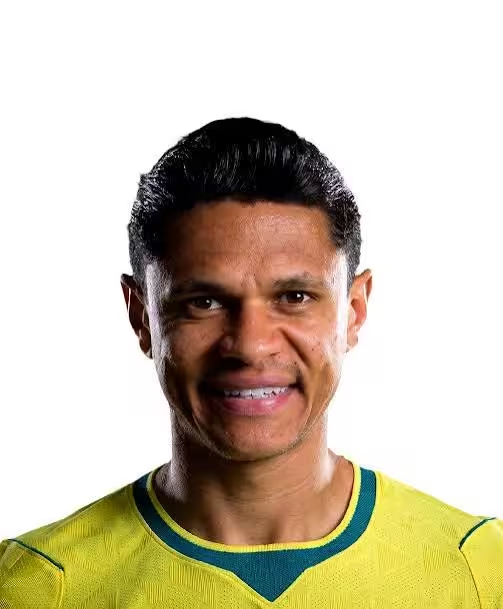
Eight years earlier, he had been part of Brazil’s Olympic gold medal-winning team in Rio 2016, alongside Neymar and Marquinhos. Then, the call-ups stopped. He disappeared from the Seleção for nearly a decade. He became a Russian citizen, accepted a call-up from Russia, and was days away from making his debut for his adopted country.
Then, at the last moment, Ancelotti called. Santos chose Brazil over Russia, risking everything for the dream he had carried since childhood. In 2026, he walked onto the pitch at the World Cup as Brazil’s starting left-back, vindication for a decision that had seemed irrational to many.
Origins
Douglas Santos was born in João Pessoa, Brazil, on March 22, 1994. His professional career began at Náutico, where he made his senior debut in 2012, making 22 Série A appearances in his first season.
The early promise was evident. In 2013, he moved to Granada CF, and then on loan to Udinese in Serie A, making three appearances for the Italian club. He returned to Brazil on loan with Atlético Mineiro in 2014, where he became a regular starter, making over 70 appearances and winning the Copa do Brasil in 2014 and the Campeonato Mineiro in 2015.
In 2016, he made the move to Europe permanently, joining Hamburger SV in the Bundesliga. At HSV, he made 80 appearances, but the club suffered relegation for the first time in their history, and Santos spent a season in the 2. Bundesliga before moving to Russia in 2019.
The Russian Years
In July 2019, Santos joined Zenit Saint Petersburg. It was a move that would define his career. He became a regular starter, an idol, and eventually the captain of the club. He won the Russian Premier League five times (2020, 2021, 2022, 2023, 2024), the Russian Cup twice, and the Russian Super Cup five times. By 2026, he had made 190 appearances for Zenit, scoring seven goals and providing twenty-one assists.
His deep connection to Russia led to a naturalisation decision. In October 2024, after more than five years in the country, Santos was granted a Russian passport. The move was partly strategic for Zenit, freeing up a foreign player slot, but it also opened the door for Santos to play for the Russian national team. The Russian Football Federation initiated the paperwork to change his sporting nationality. In March 2025, he was included in the Russian squad for a series of friendlies. The Russian media welcomed his addition.
Then came the last-minute reversal. Just days before he was set to make his debut for Russia, Ancelotti included him in Brazil’s preliminary squad. Santos had a choice. He could represent Russia, the country that had given him everything—fame, money, respect. Or he could follow his heart and play for Brazil. He chose Brazil. “I’ve always had a lot of respect for Russia, as it’s the country where I have built so much of my career,” he said. “But wearing the Brazilian shirt has always been the dream, so that took priority.”
The decision was not straightforward. The transfer of his sporting nationality to Russia had already been activated on paper. Fortunately for Santos, new FIFA regulations saved his international career—he had never played a single minute in an official match for Russia, so the transfer was reversed.
The Anatomy of His Game
Santos is a classic full-back defined by his defensive solidity, work rate, and tactical intelligence. At 32, he has become a reliable presence for both club and country.
In possession
, his passing is accurate and intelligent. In the 2026 World Cup, he recorded a 93% pass accuracy. His partnership with Vinícius Júnior has been a key feature of Brazil’s attacking play. Santos has described his role: “I need to have a good read when Vini gets the ball, know the right moment to overlap and be vigilant so that if Vini loses the ball, I can recover it and the opposition doesn’t get a quick transition.”
Out of possession
, his defensive contribution is elite. He is Brazil’s leader in tackles, averaging 3.0 per game. He recovers 4.2 balls per game, has only been dribbled past twice in the entire tournament, and has a 68% duel success rate. His “feijão com arroz” (rice and beans) style has been praised by coaches and fans for its simplicity and excellence.
His leadership
is another key quality. He is a veteran of the Zenit dressing room, and his experience at the Olympic Games in 2016 has helped him guide Brazil’s younger players.
His weakness
has been his offensive output. He has created just one big chance in the tournament, and his attacking contribution has been limited.
The Numbers Game
TABLE A: The Data Snapshot (Career Overview)
| Season | Club | League | Apps | Goals | Assists |
|---|---|---|---|---|---|
| 2013-14 | Udinese (loan) | Serie A | 3 | 0 | 0 |
| 2014-16 | Atlético Mineiro (loan) | Série A | 74 | 2 | 6 |
| 2016-19 | Hamburger SV | Bundesliga/2.Bundesliga | 80 | 2 | 5 |
| 2019-26 | Zenit Saint Petersburg | Russian Premier League | 190 | 7 | 21 |
| TOTAL | — | — | 347+ | 11 | 32 |
TABLE B: Performance Metrics (2026 World Cup)
| Metric | Douglas Santos |
|---|---|
| Matches Played | 5 |
| Pass Accuracy | 93% |
| Tackles per Game | 3.0 (Brazil leader) |
| Ball Recoveries per Game | 4.2 |
| Dribbles Conceded | 2 (total) |
| Duel Success % | 68% |
| Sofascore Rating | 6.98 |
TABLE C: International Career (as of 2026)
| Category | Total |
|---|---|
| Senior Caps | 12 |
| Senior Goals | 0 |
| Debut | 2016 vs Panama |
| World Cup Appearances | 2026 |
| Olympic Gold Medal | 2016 |
TABLE D: Career Milestones
| Year | Achievement | Details |
|---|---|---|
| 2016 | Olympic Gold Medalist | Started for Brazil at Rio 2016 |
| 2016 | Brazil Debut | Senior debut vs Panama |
| 2019 | Zenit Move | Joined Russian club |
| 2024 | Russian Citizenship | Granted Russian passport |
| 2025 | Brazil Return | Called up by Ancelotti after nine years |
| 2026 | World Cup Campaign | Started as Brazil’s left-back |
What these figures reveal is a player who has built a consistent career in Russia, winning 12 major trophies with Zenit, and who has finally been rewarded for his patience with a starting role at the World Cup. His defensive statistics at the tournament place him among the most reliable full-backs in the competition.
The Present Tense
The 2026 World Cup has been the culmination of a remarkable journey for Douglas Santos. He started all five of Brazil’s matches, playing 441 minutes, and was one of the standout performers in the team. He was dubbed a “lateral nota 7” (a seven-out-of-ten full-back) by the Brazilian media for his defensive security.
His selection was a full-circle moment. He had been part of the Olympic gold-winning team in 2016 but had been overlooked for nearly a decade. His return to the Seleção came in 2025, and he immediately became the first-choice left-back, winning Ancelotti’s trust with his consistency.
His future at Zenit is secure. He is under contract until 2027 and will return to Russia after the World Cup. But for now, he is living his childhood dream. “My first clear memory is of the World Cup in [Korea/Japan] 2002. I was young and I remember watching the matches with my family,” he recalled. “That really marked my childhood. I think that’s where my dream of wearing the Brazilian shirt at the World Cup was born.”
Beyond the Touchline
Off the pitch, Santos’s story is one of resilience and loyalty. He rejected the chance to play for Russia, the country that had given him a career, to represent Brazil, the country of his heart. His decision was not easy, but it was driven by a childhood dream. “I grew up watching the World Cup and dreaming of playing for the Seleção, and that weighed heavily on my heart,” he said.
He is a leader on and off the pitch. He has spoken about the importance of the 2016 Olympic experience, where Brazil won their first-ever football gold medal, and how it prepared him for the pressure of the World Cup. He has also guided younger players like Vinícius Júnior, developing a partnership that has become one of Brazil’s most effective attacking weapons.
The Verdict from the Camp
Carlo Ancelotti, Brazil head coach:
Ancelotti has consistently trusted Santos as his first-choice left-back, praising his composure and defensive reliability.
Douglas Santos, on his long wait:
“I never stopped believing. I kept putting in the work at club level, trying to improve and build consistency. So when the opportunity came again, I was ready to take it.”
Douglas Santos, on his Brazil return:
“Ancelotti has a way of instilling confidence in his players. He talks a lot, explains what he wants tactically, but also gives us the freedom to play with personality.”
Douglas Santos, on his style:
“This rice and beans that everyone is talking about is doing the simple things with excellence.”
Where Next?
Douglas Santos is 32 years old and finally living his World Cup dream. He has won 12 trophies with Zenit, been part of an Olympic gold medal-winning team, and made a dramatic last-minute decision to represent Brazil over Russia.
His legacy is already secure. He is the player who waited nine years for a call-up and proved his worth on the biggest stage. He is the “lateral nota 7” who brought defensive security to Brazil’s left flank. He is the almost-Russian who chose Brazil.