Following a remarkable seventh-place finish in their first season back in the Premier League — a campaign that secured European qualification for the first time in over five decades — Sunderland enters 2026/27 under head coach Régis Le Bris with a settled core, targeted summer additions, and the challenge of balancing domestic ambitions against the rigours of Europa League football. This is the definitive guide to the current Black Cats squad.

Technical Leadership & Coaching Profile
Manager: Régis Le Bris
Le Bris enters his third season at the Stadium of Light having authored one of the most impressive managerial rebuilds in recent English football history. Appointed in June 2024 after relegation from Ligue 1 with Lorient, the Frenchman guided Sunderland from a 16th-place Championship finish to play-off promotion in his first campaign, then seventh place and European qualification in his second. The 49-year-old holds a doctorate in sports physiology and biomechanics and is described by French football expert Julien Laurens as “a pure coach” whose only interest is the training pitch and transmitting his ideas. BBC Radio Newcastle’s Nick Barnes notes that Le Bris “purposely learned English to come to this country to make a name for himself”. His popularity on Wearside is such that a trip to Roker seafront early in his tenure saw him mobbed by supporters.
Tactical Philosophy
Le Bris favours a 4-3-3 formation but is unafraid to adapt, frequently switching to a back three during matches. He is happy for his team to concede possession — Sunderland had just 37% of the ball in a 3-0 win over West Ham on the opening weekend of last season — prioritising efficiency over dominance and hitting opponents on the break with quick forward passing. Defensively, the emphasis on organisation and discipline has been a hallmark: Sunderland kept four clean sheets in their opening eight matches last season, a foundation Le Bris described as “important for our campaign”. The evolution this season has seen Sunderland become more proactive, ranking fifth in the division for PPDA, a pressing metric measuring how quickly a team engages when out of possession.
Preferred Formations
4-3-3 / 3-4-3 in possession.
Strategic Transfer Activity
Sunderland’s summer window prioritised quality over quantity following the establishment of a settled core. The club targeted a right winger as the key addition and moved decisively on deadline day to secure Malick Fofana, beating Crystal Palace and Arsenal to the Lyon forward’s signature.
Table A: Summer Major Transfer Influx
| Player | Position | Former Club | Fee Paid |
|---|---|---|---|
| Malick Fofana | Left Winger | Lyon | £30m |
| Kevin Danso | Center-Back | Tottenham Hotspur | Loan (option to buy) |
| Jules Ahoka | Central Midfielder | Royal Antwerp | £8.6m |
| Thomas Meunier | Right-Back | Unattached | Free |
| Dayann Methalie | Right-Back | Unattached | Free |
| Juan Riquelme Angulo | Striker | Independiente del Valle | Undisclosed |
The First-Team Roster
Goalkeepers
Robin Roefs (#22): The Dutch goalkeeper’s stellar first season attracted widespread attention, but Sunderland resisted any temptation to sell and plan for him to remain number one. His shot-stopping underpinned last season’s strong start, and he enters this campaign as one of the Premier League’s most highly-rated young goalkeepers.
Melker Ellborg (#31): The Swedish goalkeeper provides reliable backup and developmental depth, having shown composure in cup appearances.
Simon Moore (#21): The experienced English goalkeeper had a one-year extension activated over the summer and remains an important figure behind the scenes, his professionalism valued within the goalkeeping group.
Defenders
Dan Ballard (#5): When fit, arguably Sunderland’s best centre-back. The Northern Irishman’s return to full fitness after months out represents a major boost, with his aerial dominance and dependable defensive work providing the bedrock of Le Bris’s backline. Managing his minutes carefully through a European schedule will be a key priority.
Kevin Danso (#4): The Austrian international arrived from Tottenham on deadline day on an initial loan with an option to buy, adding Premier League experience and physical presence to the defensive core. His arrival strengthens a centre-back group that already boasted depth.
Omar Alderete (#15): The Paraguayan defender delivered a strong first season on Wearside and has started this campaign solidly. His aggression and front-foot defending make him a natural fit for Le Bris’s demanding structure, though managing his workload alongside European fixtures will be essential.
Nordi Mukiele (#20): A versatile defender capable of operating at centre-back and right-back, Mukiele’s flexibility is invaluable for Le Bris’s in-game tactical switches. His experience across European leagues adds a crucial dimension to the squad.
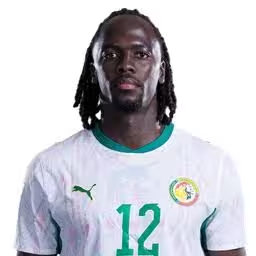
Thomas Meunier (#12): The Belgian right-back arrived on a two-year deal, replacing Lutsharel Geertruida and completing Le Bris’s options on the right side of defence. His experience at the highest level provides a steadying influence within a youthful squad.
Dayann Methalie (#6): The French right-back signed as part of the summer recruitment drive, offering athleticism and attacking thrust down the right flank.
Trai Hume (#32): The Northern Irishman’s versatility has proven invaluable, capable of operating at right-back, left-back, and even on the right wing. His dovetailing with Mukiele against Liverpool in pre-season demonstrated his tactical intelligence.
Reinildo Mandava (#17): The Mozambican left-back has started the season solidly, though the lack of cover on his flank was identified as a pressing need during the summer window. His experience and defensive discipline remain crucial.
Luke O’Nien (#13): The veteran’s strong end to last season provides valuable depth across multiple defensive positions. His leadership and commitment embody the culture Le Bris has cultivated.
Aji Alese (#42): The homegrown defender provides additional depth, though his injury record has limited his involvement. His status as a homegrown player gives Sunderland flexibility depending on squad development.
Jenson Seelt (#?): The Dutch defender’s future remains uncertain, with a loan departure possible to secure regular game time after an injury-disrupted spell at Wolfsburg.
Midfielders
Granit Xhaka (#34): The Swiss captain is the heartbeat of this Sunderland side and one of the most influential signings in the club’s modern history. Le Bris has described him as “a future coach” with natural leadership qualities, noting: “He knows how to manage different situations in real time.” Despite playing in only six of Sunderland’s first eight matches last season, Xhaka topped the club’s stats for tackles plus interceptions, clearances, and aerial duels, while ranking joint-third for shot-creating actions. His presence sets the standards for the entire squad.
Enzo Le Fée (#28): The French playmaker was exceptional in a central position towards the end of last season, and his influence has carried into this campaign. Operating as a number ten, Le Fée keeps finding dangerous positions — he scored three goals in two pre-season fixtures — and penalty duty could push him towards double figures. His creativity is central to Sunderland’s attacking evolution.
Chris Rigg (#11): The teenage midfielder looks at home in the number-eight role, scoring at York in pre-season and impressing alongside Le Fée against Liverpool. Even with Xhaka, Diarra, and Sadiki to return, Rigg is pushing for minutes under Le Bris. His maturity on the ball belies his age.
Habib Diarra (#19): The Senegalese midfielder endured a difficult first season on Wearside due to injury, but Sunderland invested heavily in him and are eager for him to establish himself this campaign. His physicality and box-to-box energy offer a different dimension to the midfield.
Noah Sadiki (#27): The young Belgian midfielder now has a season of Premier League experience to build upon, and his development trajectory suggests further improvement this campaign.
Jules Ahoka (#29): The 20-year-old DR Congo youth international arrived from Royal Antwerp on a long-term contract, described by Director of Football Florent Ghisolfi as a player with “huge potential.” His development will be carefully managed within a competitive midfield group.
Alan Browne (#8): The Irishman had an excellent pre-season outing in the deeper midfield role, a position where Sunderland lack cover behind Xhaka. His future remains uncertain, with a move for regular starts possible, but he provides reliable depth.
Dan Neil (#4): The academy graduate offers additional midfield depth and has shown maturity in cup appearances.
Forwards
Brian Brobbey (#9): The Dutch striker improved significantly after a late arrival last season and enters this campaign as Sunderland’s primary centre-forward. His hold-up play and finishing instincts are crucial to Le Bris’s attacking structure.
Wilson Isidor (#18): The French forward provides a direct, physical presence in the attacking line. His ability to stretch defences and compete for aerial duels makes him a valuable alternative to Brobbey.
Chemsdine Talbi (#7): The Belgian winger is one of the wide options Le Bris can deploy on either flank. His pace and directness offer a constant threat in transition, and his versatility allows flexibility within the attacking structure.
Nilson Angulo (#10): The Ecuadorian has started on the wing in Sunderland’s opening fixtures and offers dribbling and creativity from wide areas. His development this season will be closely watched.
Malick Fofana (#39): The £30m deadline-day arrival from Lyon is the marquee signing of Sunderland’s summer and the key addition Le Bris identified to provide consistent one-v-one threat on the right wing. The 21-year-old scored 19 goals and provided eight assists in 84 appearances for Lyon, and Sunderland beat Crystal Palace and Arsenal to his signature. Director of Football Florent Ghisolfi believes Fofana “has all the attributes to thrive in the Premier League.”
Romaine Mundle (#14): The winger faces a battle for regular minutes following Fofana’s arrival, with a permanent departure possible as he enters the last two years of his contract.
Jocelin Ta Bi (#37): A young attacking talent providing additional depth in wide areas.
Tymur Tutierov (#57): A Ukrainian forward offering further attacking depth.
Tom Proctor: The teenage forward was the youngest tourist on Sunderland’s US pre-season tour and impressed as a lively surprise, scoring at York and pressing with intent against Liverpool. Physical development will come, but his inclusion already looks justified.
Leadership Group & Squad Regulations
Club Captain: Granit Xhaka
The Swiss midfielder is the unequivocal leader of this squad, his voice and standards-setting influence anchoring a dressing room that blends youthful energy with emerging experience. Le Bris has spoken openly about the importance of Xhaka’s leadership for a young squad, describing him as “a future coach” whose ability to manage situations in real time is a precious strength.
The Leadership Committee
Dan Ballard, Luke O’Nien, and Simon Moore serve as the senior voices bridging Le Bris’s coaching staff and the emerging core, their combined experience providing essential guidance through a demanding European campaign.
Homegrown Quota Check
With Chris Rigg, Trai Hume, Dan Neil, Luke O’Nien, and Aji Alese all qualifying as homegrown players, Sunderland comfortably satisfies the Premier League’s registration requirements while maintaining their commitment to academy development.
Financial & Contractual Health
Financial Balance Overview
Sunderland’s summer spending was more restrained than their first season back in the top flight, reflecting Le Bris’s stated preference for a squad of around 20 first-team players rather than a bloated roster. The club’s big attendances at the Stadium of Light underpin strong revenue streams, allowing them to resist bids for key assets and avoid the disruptive overhauls that have destabilised other promoted clubs. The £30m investment in Fofana represents a statement of intent as Sunderland prepare for their first European campaign in 51 years.
Contract Red Alerts
The long-term future of Robin Roefs remains a priority after his stellar first season attracted attention from rival clubs. Securing the goalkeeper’s future, alongside emerging talents like Chris Rigg, will be central to Sunderland’s strategy of building on last season’s success.
The Academy Pipeline & Loan Tracker
Breakout Talents to Watch
Chris Rigg (#11) has already established himself as a first-team contributor, and his development within the number-eight role suggests further growth this campaign. Tom Proctor impressed on the US pre-season tour as the youngest member of the travelling squad, scoring at York and pressing with maturity beyond his years against Liverpool.
Notable Out on Loan
Jenson Seelt is expected to secure a loan move to gain regular game time after an injury-disrupted spell at Wolfsburg, with departures for Seelt and Aji Alese likely depending on incoming business.
Set-Piece Specialists & FPL Cheat Sheet
Penalties: Enzo Le Fée (First Choice) / Granit Xhaka (Second Choice).
Direct Free-Kicks: Enzo Le Fée / Chris Rigg.
Corners & Crosses: Enzo Le Fée / Trai Hume.
Final Outlook: Navigating the Tactical Horizon
Sunderland enters 2026/27 with Europe on the horizon for the first time in over 50 years and the inevitable debate about second-season syndrome swirling around the Stadium of Light. The bookmakers ranked the Black Cats as fourth-favourite for relegation behind the promoted clubs, a prediction that fails to account for the trajectory of a side that was controlling games and creating more from open play by the end of last season. On the final day at Chelsea, Sunderland arguably delivered their best display of the campaign.
The underlying data this season tells a story of a team trending in the right direction despite a modest points haul. Sunderland sit second in the Premier League for big chances created, fifth for non-penalty expected goals, and have struck the woodwork five times. A 3-0 home victory over West Ham on the opening weekend demonstrated the attacking potential within Le Bris’s evolving system. The challenge is converting those opportunities — Sunderland lead the division for big chances missed — and tightening a defence that has conceded 10 goals from 8.65 expected goals against, facing a demanding early fixture list that included Manchester City and Arsenal.
The squad’s foundations are strong. The core that secured seventh place remains largely intact, augmented by targeted additions in Fofana, Danso, and Ahoka. Xhaka’s leadership provides a reference point for a young dressing room, while the emergence of Rigg as a genuine first-team contributor offers a glimpse of the academy’s continued productivity. Le Bris has proven his ability to adapt tactically and manage a demanding schedule, and the internal sense at the Stadium of Light is that this is only the beginning.
If Sunderland can navigate the Europa League’s Thursday-Sunday rhythm without a domestic dip, if Fofana provides the one-v-one threat that was the summer’s priority, and if the attacking improvements continue to translate into goals, the Black Cats possess every tool to defy the second-season predictions and establish themselves as a sustainable Premier League force. The doubters have been wrong before. Le Bris and his players have made a habit of proving them so.