Following a turbulent summer that saw the club navigate managerial uncertainty, stalled contract renewals, and the lingering financial pressures of Serie A’s sustainability rules, Cagliari enters 2026/27 with a squad rebuilt around youth, a coach tasked with consolidating the progress of last season, and a fanbase cautiously optimistic that the club can finally move beyond the relegation scrap that has defined its recent top-flight existence.
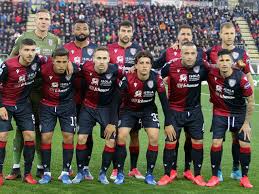
Technical Leadership & Coaching Profile
Manager: Fabio Pisacane
Pisacane was confirmed as Cagliari’s permanent head coach after a promising interim spell that steadied the club following a difficult autumn. The former Cagliari defender, a cult hero at the Unipol Domus during his playing days, has brought a defensive-minded pragmatism and deep emotional connection to the club. His contract runs until June 2028, reflecting the board’s desire for continuity after years of short-term appointments. His first act was to reshape the fitness department, scheduling double sessions through pre-season in a clear statement that Cagliari will not be outrun in the closing stages of matches.
Tactical Philosophy
Pisacane has built his side around defensive organisation, compact lines, and rapid transitions. The early-season evidence points to a 3-5-2 that becomes a 5-3-2 out of possession, with the wing-backs tasked with providing the width. His time learning under Italian defensive specialists has shaped a team that concedes few clear chances but must extract goals from set-pieces and counterattacks. The squad’s limited attacking depth means Pisacane may lean heavily on the pace of his wide forwards and the aerial threat of his centre-backs.
Preferred Formations
3-5-2 / 5-3-2 out of possession.
Strategic Transfer Activity
Cagliari’s summer window was a study in cautious rebuilding. The club’s salary restrictions under Serie A’s economic controls prevented the kind of ambitious recruitment that supporters had hoped for, and the departure of two senior figures left gaps that were only partially filled. The arrivals that did complete were a mix of loan additions, free transfers, and low-cost options designed to add depth rather than star quality.
Table A: Summer Major Transfer Influx
| Player | Position | Former Club | Fee Paid |
|---|---|---|---|
| Elia Caprile | Goalkeeper | Napoli | Loan (option to buy) |
| Zito Luvumbo | Winger | — | Contract renewal |
| Alberto Dossena | Center-Back | — | Permanent |
| Nadir Zortea | Right Wing-Back | — | Permanent |
| Michel Adopo | Midfielder | — | Permanent |
| Leonardo Pavoletti | Striker | — | Contract renewal |
The First-Team Roster
Goalkeepers
Elia Caprile (#1): The loan arrival from Napoli has assumed the number one shirt, his shot-stopping and composure in possession offering a modern goalkeeping profile. His distribution under pressure will be tested behind a back three that invites opponents to press.
Simone Scuffet (#22): The experienced goalkeeper provides reliable backup coverage and started the season as the only senior alternative during Caprile’s integration. His familiarity with Serie A’s demands makes him a trusted squad member.
Defenders
Alberto Dossena (#4): The centre-back has become Cagliari’s defensive anchor, his aerial dominance and physicality central to Pisacane’s back three. His ability to step into midfield with the ball adds an extra dimension to the build-up.
Yerry Mina (#26): The Colombian centre-back brings Serie A experience and a commanding presence, though his injury record remains a persistent concern. When fit, his leadership and set-piece threat at both ends are invaluable.
Sebastiano Luperto (#6): The left-sided centre-back offers composure and ball-playing ability, his positioning and reading of the game compensating for a lack of raw pace.
Adam Obert (#33): The young Slovak centre-back has established himself as a first-team regular, his development under Pisacane’s guidance being closely monitored by the club’s recruitment team.
Nadir Zortea (#8): The right wing-back provides energy and crossing ability down the right flank, his attacking thrust offering a constant outlet in transition.
Paulo Azzi (#37): The left wing-back offers competition and cover, his pace and directness providing a different dimension on the left side.
Gabriele Zappa (#28): The academy graduate provides additional defensive depth across the back line and represents the club’s commitment to internal development.
Midfielders
Michel Adopo (#16): The French midfielder is the engine of Cagliari’s midfield, his defensive screening and tactical intelligence providing the platform for the team’s structure. His ball-winning ability and distribution are central to Pisacane’s plans.
Nadir Zortea (#8): The wing-back’s versatility allows him to operate in midfield when required, his work rate and delivery from wide areas making him a reliable option.
Alessandro Deiola (#14): The club captain remains a key figure in midfield, his leadership and box-to-box energy offering a driving force through the middle. His experience of Cagliari’s recent battles is essential within a transitional squad.
Matteo Prati (#26): The young midfielder possesses enormous talent, his passing range and composure on the ball offering a modern profile. His development will be carefully managed.
Antoine Makoumbou (#29): The French midfielder offers physical presence and defensive coverage, his ability to break up play and drive forward making him a valuable squad option.
Gianluca Gaetano (#70): The attacking midfielder provides creativity from advanced positions, his dribbling and shooting from distance offering a goal threat from midfield.
Forwards
Roberto Piccoli (#91): The Italian striker is Cagliari’s primary attacking focal point, his physical presence and movement offering a reference point for the attack. His goalscoring form will be decisive in the club’s push for mid-table security.
Zito Luvumbo (#77): The Angolan winger has become one of Cagliari’s most important attacking players, his explosive pace and directness making him a constant threat in transition. His new contract reflects his growing importance.
Leonardo Pavoletti (#30): The veteran striker offers a physical alternative in the attacking line, his aerial ability and finishing instincts providing a different profile to Piccoli. His experience and leadership within the dressing room remain invaluable.
Gianluca Lapadula (#9): The Peruvian forward provides depth across the attacking line, his work rate and movement offering a reliable option when called upon.
Mattia Felici (#97): The young winger possesses explosive pace and directness, his ability to isolate full-backs offering a threat in transition.
Leadership Group & Squad Regulations
Club Captain: Alessandro Deiola
The midfielder remains the unequivocal leader of the squad, his voice and standards-setting influence anchoring a dressing room that has endured significant turbulence. His experience of Cagliari’s greatest recent moments — including the promotion campaign and the memorable survival battles — provides a reference point for the club’s expectations.
The Leadership Committee
Alberto Dossena and Leonardo Pavoletti serve as the senior voices alongside Deiola, their combined experience providing essential guidance through a challenging campaign. The summer departures of several senior figures have made their leadership more important than ever.
Homegrown Quota Check
With Alessandro Deiola, Gabriele Zappa, and several other academy graduates in the first-team squad, Cagliari maintains a strong connection to their youth pipeline. The club’s tradition of promoting from the Primavera remains a core principle, though the summer’s financial constraints have complicated the pathway for emerging talents.
Financial & Contractual Health
Financial Balance Overview
Cagliari’s salary limit for 2026/27 remains constrained by Serie A’s economic control regulations, which require clubs to balance their football results across rolling three-year periods. The failure to complete a more ambitious squad rebuild in the summer was a direct consequence of these constraints and the previous sporting leadership’s inability to navigate them.
Contract Red Alerts
Pisacane’s contract runs until 2028, providing stability in the dugout. Securing the futures of key young assets like Matteo Prati and Adam Obert remains a priority, with the club having previously emphasised the importance of contract renewals for academy talents. Zito Luvumbo’s renewal was a significant statement of intent.
The Academy Pipeline & Loan Tracker
Breakout Talents to Watch
Gabriele Zappa has been the great success of Cagliari’s recent youth investment, responding with consistent performances at right-back and a growing maturity beyond his years. The academy graduate has demonstrated he can compete at Serie A level and is viewed as a player Pisacane can rely upon. Mattia Felici also impressed during pre-season and forms part of the young group now vying for first-team minutes.
Notable Out on Loan
Cagliari’s loan strategy has been designed to provide regular minutes for emerging talents, with several Primavera graduates securing temporary moves to Serie B clubs. The club’s inability to register replacements due to financial constraints made permanent departures difficult to finalise.
Set-Piece Specialists & FPL Cheat Sheet
Penalties: Roberto Piccoli (First Choice) / Gianluca Gaetano (Second Choice).
Direct Free-Kicks: Gianluca Gaetano / Nadir Zortea.
Corners & Crosses: Nadir Zortea / Paulo Azzi.
Final Outlook: Building Beyond the Battle
Cagliari enters 2026/27 in a state of cautious consolidation. The summer’s measured transfer window left Pisacane with a squad that lacks star quality but possesses genuine togetherness, and the coach’s appointment reflects the board’s desire for stability after years of managerial churn.
The early-season returns offer measured encouragement. Cagliari sit comfortably in mid-table after the opening weeks, with the defensive structure and transition threat that Pisacane has implemented already evident. The attacking limitations remain a concern, but the emergence of academy talents and the renewal of key contracts provide a foundation for sustainable progress.
The challenge ahead is consistency. Pisacane’s first full season offers an immediate test of his ability to organise a defence that has been prone to lapses and extract performance from a squad low on attacking depth. The January window represents the first genuine opportunity to address the gaps — a reliable goalscorer and a commanding midfielder — that the summer left unfilled. If Pisacane can keep Cagliari competitive through the winter, and if the academy’s emerging talents continue to deliver, the club possesses the foundation to avoid another relegation battle. But the margin for error is thin, and the consequences of another failed window would be severe.