CLUB SNAPSHOT: At a Glance
| Category | Details |
|---|---|
| Club | Rayo Vallecano |
| League | La Liga |
| Manager | Beñat San José |
| Stadium | Estadio de Vallecas |
| Nickname | Los Franjirrojos |
| Founded | 1924 |
| First-Choice Striker | Sergio Camello |
| Supporting Forward | Jorge de Frutos |
| Wide Threat | Álvaro García |
| Notable Absence | Isi Palazón (injury) |
The Defining Moment
Rayo Vallecano’s 2026/27 forward line was defined by an unexpected eruption. Sergio Camello, a 25-year-old who had scored six, three, and five league goals in his previous three campaigns respectively, suddenly became one of La Liga’s most productive strikers. By late October, he had seven goals in ten appearances, a return that placed him among the division’s top scorers and transformed Rayo’s attacking prospects.
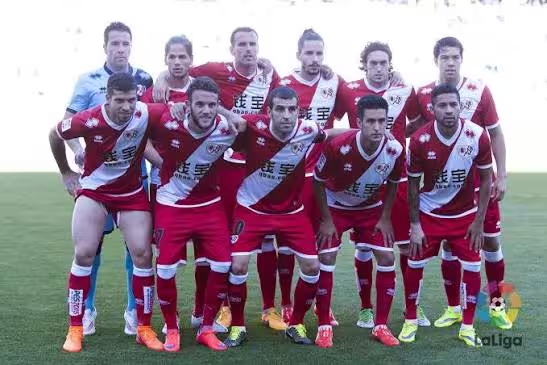
The defining moment, however, was not a single goal but the contrast it created. Rayo had spent the summer losing Óscar Trejo, the creative soul of the club, and had entered the season with a forward line that looked functional rather than formidable. Camello’s explosion changed the calculus. A team that had been expected to fight relegation suddenly possessed a striker whose finishing was keeping them competitive.
This is the story of Rayo’s 2026/27 forwards: a breakthrough season from a homegrown talent, a supporting cast of wide forwards searching for consistency, and a team whose survival hopes rest on whether Camello’s goals can continue.
Tactical Context
Beñat San José’s attacking structure is built around a 4-2-3-1 that prioritises quick combinations and vertical transitions. Camello operates as the lone striker, tasked with dropping deep to link play as often as he is asked to run in behind—a creative forward profile rather than a pure poacher.
The numbers tell a story of a forward line that has been efficient without being prolific. Rayo scored 12 goals in their opening nine league matches, a modest return, but Camello’s seven accounted for more than half of that total. His conversion rate was among the better figures in the division, and his expected goals suggested he was scoring more than the quality of chances would predict.
The supporting cast has been uneven. Álvaro García contributed three goals from wide areas, his directness and experience offering a different dimension to Camello’s link play. Jorge de Frutos added two goals, his movement and willingness to run the channels complementing the central striker. But the absence of Isi Palazón, Rayo’s most creative attacking midfielder, removed a layer of service that the forwards had relied upon in previous seasons.
The structural concern is depth. Rayo’s forward options beyond Camello, García, and De Frutos are limited. Raúl de Tomás, a proven La Liga scorer, has struggled for fitness and form. Ilias Akhomach and Fran Pérez are young wide forwards still establishing themselves. The reliance on Camello is significant, and an injury to the 25-year-old would leave San José without a proven goalscorer.
The Forwards
Sergio Camello
Camello is Rayo’s first-choice striker, top scorer, and the player upon whom the club’s survival hopes depend. The 25-year-old Spaniard has been at Vallecas since 2022, but his previous seasons were characterised by flashes rather than consistency—six goals in 2022/23, three in 2024/25, five in 2025/26.
This season has been different. Seven goals in ten appearances, including a run of seven goals in his last ten matches, has transformed him from a rotation option into one of La Liga’s more productive forwards. His finishing is his clearest strength, backed by short passing and creativity that allow him to contribute to build-up play as well as finish moves.
At 25, Camello is entering his prime. His contract has under a year remaining, and his market value has risen sharply with his goalscoring form. Rayo will face a decision in the summer: extend his deal or sell him at a premium. For now, his focus is on maintaining the form that has kept his team competitive.
Álvaro García
García is Rayo’s most experienced wide forward and the captain in several matches this season. The 33-year-old has been at Vallecas since 2018 and remains a reliable source of goals and assists from the flanks.
His three league goals place him second in the squad’s scoring charts, and his directness and willingness to shoot from distance offer a different threat to Camello’s more intricate link play. At 33, he is no longer the explosive winger of his peak years, but his positioning and finishing compensate for the loss of pace.
García’s importance extends beyond goals. His experience in a young dressing room and his understanding of the club’s identity make him a valuable leader. In a season defined by adaptation, his consistency has been an asset.
Jorge de Frutos
De Frutos is the supporting forward tasked with providing width and movement around Camello. The 29-year-old has contributed two league goals this season, his willingness to run the channels and arrive in the box offering a complementary profile to the central striker.
His career has been defined by potential rather than consistent output. At 29, he is at an age where he should be entering his prime, but the goals and assists have never quite matched the flashes of quality. In a team that creates limited chances, his contribution is measured in moments rather than sustained production.
Raúl de Tomás
De Tomás is the most experienced striker in the squad and, on paper, the most proven goalscorer. The 32-year-old has scored consistently in La Liga across spells at Espanyol, Benfica, and Rayo itself. But his involvement this season has been limited by fitness and the form of Camello.
When fit, De Tomás offers a different profile to the younger striker: more physical, more of a penalty-box presence. But at 32, his durability is a concern, and his role is likely to remain that of a squad option rather than a starter.
Ilias Akhomach
Akhomach is the young wide forward with the most potential in the squad. The 22-year-old arrived from Villarreal with a reputation for dribbling and creativity, and his development is a long-term project.
His involvement has been limited, but his profile—direct, comfortable in one-on-one situations—offers something different to Rayo’s more experienced wide options. In a season defined by survival, his opportunities may be restricted, but his development is worth monitoring.
Fran Pérez
Pérez is another young wide option, a 24-year-old who has featured sparingly. His pace and directness offer a different dimension, but he has yet to establish himself as a reliable first-team contributor.
The Numbers Game
TABLE A: Rayo Vallecano Forward La Liga Statistics (2026/27)
| Player | Apps (Starts) | Goals | Assists | Position |
|---|---|---|---|---|
| Sergio Camello | 10 (9) | 7 | 1 | Striker |
| Álvaro García | 9 (8) | 3 | 2 | Wide Forward |
| Jorge de Frutos | 9 (7) | 2 | 0 | Wide Forward |
| Raúl de Tomás | 4 (1) | 0 | 0 | Striker |
| Ilias Akhomach | 5 (2) | 0 | 0 | Wide Forward |
| Fran Pérez | 3 (0) | 0 | 0 | Wide Forward |
TABLE B: Rayo Vallecano Attack – Key Metrics (La Liga 2026/27)
| Metric | Value | Context |
|---|---|---|
| Goals Scored | 12 | In 9 matches |
| Goals per Game | 1.33 | 14th in La Liga |
| Camello Goal Share | 7 of 12 | 58% of team goals |
| Camello Conversion Rate | 31.8% | Above league average |
| Camello xG | 2.86 | Scoring above expectation |
TABLE C: Rayo Vallecano Forwards – Squad Profile
| Player | Age | Contract Until | Market Value | Role |
|---|---|---|---|---|
| Sergio Camello | 25 | 2027 | €8m | First-choice striker |
| Álvaro García | 33 | 2027 | €2m | Wide forward/captain |
| Jorge de Frutos | 29 | 2028 | €4m | Wide forward |
| Raúl de Tomás | 32 | 2027 | €2m | Squad depth |
| Ilias Akhomach | 22 | 2028 | €5m | Development |
| Fran Pérez | 24 | 2028 | €2m | Squad depth |
Tactical Identity & Squad Balance
Rayo’s forward line is a unit defined by reliance. Camello’s seven goals have accounted for more than half of the team’s league output, and his importance to the attacking structure extends beyond scoring—his link play and movement create space for the wide forwards and the arriving midfielders.
The numbers suggest the reliance is both a strength and a vulnerability. When Camello scores, Rayo are competitive. When he does not, the team struggles to find alternative sources of goals. García’s three goals and De Frutos’s two provide some support, but neither offers the consistency of a genuine second scorer.
The deeper concern is creativity. The loss of Trejo and the injury to Palazón removed the two players most capable of unlocking defences, and the forwards have often been forced to create something from nothing. Camello’s finishing has compensated, but the supply line remains fragile.
The Verdict from the Camp
On Sergio Camello’s form:
Camello’s seven goals in ten appearances represent a career-best return, with his conversion rate and expected goals figures suggesting a striker performing above the quality of chances created for him.
On the forward line’s balance:
Rayo’s attacking output has been concentrated in Camello, with Álvaro García and Jorge de Frutos providing secondary threats but not the consistency of a genuine second scorer.
Where Next?
The specific question hanging over Rayo’s forward line is whether Camello can sustain his goalscoring form across the full season. His previous campaigns were characterised by flashes rather than consistency, and the seven-goal start is an outlier relative to his career record.
That makes Camello’s durability and form the most important variable. If he continues scoring at a rate close to his current output, Rayo have a genuine chance of survival. If he regresses toward his career average, the burden falls on García and De Frutos, neither of whom has proven capable of carrying the load.
The deeper concern is contract. Camello’s deal expires in 2027, and his form will attract interest from larger clubs. Rayo must decide whether to extend his contract or sell him at a premium, a decision that will shape the club’s attacking future regardless of whether they survive.
For now, Rayo’s forwards are performing above expectations. Camello’s goals have powered a respectable start, García’s experience has provided support, and the team remains competitive. Whether that is enough to avoid relegation depends on whether the striker’s breakthrough season becomes the new normal or a fleeting anomaly.