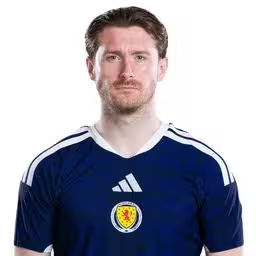
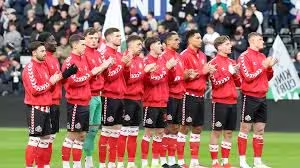
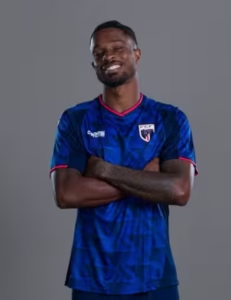
Following a catastrophic start to the season that saw Eugen Polanski dismissed after just three matches and Alexander Blessin appointed as the club’s fourth head coach in five years, Borussia Mönchengladbach enters 2026/27 rooted to the bottom of the Bundesliga, winless and facing the gravest crisis of its modern era.
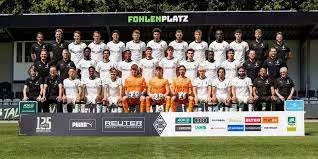
Technical Leadership & Coaching Profile
Manager: Alexander Blessin
Blessin was confirmed as Gladbach’s new head coach on 21 September 2026, signing a contract through 2028. The 53-year-old German arrives at Borussia-Park after two years at FC St. Pauli, where he achieved promotion in 2024/25 before suffering relegation on the final day of the 2025/26 campaign. His coaching career includes a Belgian Cup triumph with Union Saint-Gilloise in 2024 and a brief spell at Genoa that ended in relegation.
Sporting director Rouven Schröder identified Blessin as the ideal candidate to stabilise a defence that has conceded 16 goals in four matches, citing his track record of defensive organisation. In his first press conference, Blessin struck a measured tone: “I am aware of the responsibility. I approach the matter with humility because I know how strong the Bundesliga is”. He acknowledged the squad possesses greater quality than results have shown but warned against expectations of a quick fix: “This will not be an elevator, but a staircase, step by step. It will be hard work”.
Tactical Philosophy
Blessin’s approach is built on collective defensive discipline and high-intensity pressing. At St. Pauli, his side conceded just 41 goals in 2024/25 — the second-best defensive record in the Bundesliga behind Bayern Munich. His preferred system at St. Pauli was a 3-4-3 that became a 5-4-1 out of possession, with wing-backs tasked with providing width and the front three pressing aggressively to disrupt opposition build-up.
Blessin has emphasised that defensive stability is a collective responsibility rather than a back-line issue alone: “You defend together, and you score goals together. This mindset must enter the heads from the very beginning”. The early evidence from his first weeks suggests he will prioritise compactness and work-rate over expansive football, a pragmatic approach necessitated by Gladbach’s defensive frailties.
Preferred Formations
3-4-3 / 5-4-1 out of possession.
Strategic Transfer Activity
Gladbach’s summer window was defined by a radical wage-structure overhaul rather than significant investment. Sporting director Rouven Schröder and squad planner André Hechelmann implemented a new salary cap that reduced base salaries substantially and increased performance-related bonuses, with every summer arrival earning below €1.5 million annually. The club’s stated plan is to return to European contention by 2027, when the contracts of high earners like Florian Neuhaus and Joe Scally expire.
The departures were more significant than the arrivals. Captain Rocco Reitz joined RB Leipzig for approximately €20 million, leaving a substantial void in midfield and leadership. Long-serving centre-back Nico Elvedi departed for Leeds United after eleven years at the club.
Table A: Summer Major Transfer Influx
| Player | Position | Former Club | Fee Paid |
|---|---|---|---|
| Ko Itakura | Center-Back | Ajax | Permanent |
| Isac Lidberg | Striker | Darmstadt | Permanent |
| Daniel Batz | Goalkeeper | Mainz 05 | Free |
| David Herold | Left-Back | Karlsruhe | Permanent |
| Enzo Leopold | Midfielder | Hannover 96 | Permanent |
| Yukhym Konoplya | Right-Back | Shakhtar Donetsk | Permanent |
| Jan Leszczyński | Center-Back | — | Permanent |
| Hugo Bolin | Winger | — | Loan made permanent |
| Zento Uno | Midfielder | Shimizu S-Pulse | €1.0M |
The First-Team Roster
Goalkeepers
Moritz Nicolas (#33): The 28-year-old has established himself as Gladbach’s number one after returning from three loan spells, and the club resisted interest from Aston Villa and Celtic to retain him. His shot-stopping and command of the penalty area are central to Blessin’s plans, though he has been exposed by the defensive chaos in front of him.
Daniel Batz (#33): The 35-year-old arrived on a free transfer from Mainz, where he made 27 appearances last season during Robin Zentner’s injury absence. Sporting director Schröder described him as “not only a very good goalkeeper, but also someone with real character both on and off the pitch”. He provides experienced backup and started the recent friendly against Siegen.
Tobias Sippel (#21): The veteran goalkeeper offers additional depth and leadership within the dressing room.
Jan Olschowsky (#23): The academy graduate provides further competition between the posts, though his first-team opportunities remain limited.
Defenders
Ko Itakura (#6): The Japanese international returned to Gladbach from Ajax, signing a contract until 2030. His return directly addresses the void left by Elvedi’s departure, bringing Bundesliga experience and composure to the back three.
Kevin Diks (#4): The Indonesian international has become a senior figure within the squad, wearing the captain’s armband in Tim Kleindienst’s absence. He has spoken openly about the squad’s struggles: “We have to be more ruthless in both boxes. In those decisive moments, we need to be even more determined”. His versatility across the back line makes him indispensable.
Fabio Chiarodia (#2): The young centre-back earned his first Italy call-up in June 2026, a significant milestone for a player who has emerged as one of Gladbach’s most promising defensive talents. He suffered a muscle injury in pre-season that disrupted his integration under Blessin.
Joe Scally (#29): The American right-back remains at the club after a proposed summer departure failed to materialise. His versatility and experience make him a valuable option, though his performances have reflected the team’s broader struggles.
Yukhym Konoplya (#22): The Ukrainian right-back arrived from Shakhtar Donetsk but suffered a knee ligament injury in pre-season that delayed his debut. He has returned to full training and is targeting the Rheinderby against Köln for his first competitive appearance.
Daiki Hashioka (#14): The Japanese defender provides depth across the back line, his reliability making him a trusted squad member.
David Herold (#20): The summer arrival from Karlsruhe offers attacking thrust from left wing-back, his energy and crossing ability providing a different dimension on the flank.
Lukas Ullrich (#26): The young left-back provides competition and cover, his development being carefully managed within the first-team squad.
Jan Leszczyński (#5): The 19-year-old centre-back has been integrated into the first-team squad, his physical profile and composure marking him as a long-term prospect.
Midfielders
Kevin Stöger (#7): The Austrian playmaker remains a key creative figure, his set-piece delivery and passing range offering a goal threat from deep positions. His performance levels have been questioned during the crisis, with reports suggesting he has “not called up good performances” this season.
Florian Neuhaus (#10): The 29-year-old midfielder is one of the highest earners at the club and a symbol of the old salary structure that the board is determined to dismantle. His contract expires in 2027, and his future beyond that appears increasingly uncertain.
Philipp Sander (#16): The midfielder was named to the team council by Polanski before his dismissal, a reflection of his leadership credentials within the dressing room.
Jens Castrop (#17): The South Korean international offers box-to-box energy and physical presence, though injuries have disrupted his availability. His absence has been a significant blow to Gladbach’s midfield depth.
Enzo Leopold (#8): The summer arrival from Hannover 96 provides technical quality and tactical discipline, his development representing part of the club’s strategy of recruiting from the 2. Bundesliga.
Zento Uno (#47): The Japanese midfielder arrived from Shimizu S-Pulse for €1 million and has received a special commendation from Blessin for his dynamism and forward-thinking approach. The coach noted Uno always looks to play the first pass forward, though he has been instructed to sometimes take a second touch. With Leopold and Castrop injured, Uno could make his Bundesliga debut in the Rheinderby.
Mathieu Nguefack (#34): The young midfielder was promoted to the first-team squad in August alongside Fritz Fleck and Iaia Manco Danfa, his intensity and dynamism earning praise from Polanski before his dismissal.
Robin Hack (#25): The attacking midfielder offers creativity and goal threat from wide areas, his performance in the friendly against Siegen demonstrating his quality with a well-taken opening goal.
Forwards
Tim Kleindienst (#11): The captain returned from a long-term injury that limited him to just three appearances last season. His physical presence, hold-up play, and goalscoring ability provide a focal point that Gladbach have desperately missed. Former Gladbach player Marcell Jansen has called on Kleindienst to assume greater leadership responsibility during the crisis: “Keep a cool head, give everything, and march ahead as a leading player”. His suspension for the Mainz match exposed the squad’s lack of alternatives.
Shuto Machino (#18): The Japanese forward has emerged as one of Gladbach’s most important attacking players, his double in the friendly against Siegen demonstrating his finishing ability. He was a late inclusion in Japan’s World Cup squad and offers a different profile to Kleindienst — more mobile, capable of dropping deep to link play, and possessing an instinctive eye for goal.
Isac Lidberg (#3): The Swedish striker joined from Darmstadt, where he scored 31 goals and provided nine assists in 58 2. Bundesliga appearances. He provides strong competition and cover for Kleindienst, his physical profile and movement offering a different dimension.
Franck Honorat (#9): The French winger offers pace and directness from wide areas, his ability to isolate full-backs providing a constant threat in transition.
Nathan Ngoumou (#19): The French forward provides depth across the attacking line, his speed and work-rate making him a reliable option.
Hugo Bolin (#38): The Swedish winger made his loan move permanent after impressing during his initial spell, his creativity and technical quality offering an attacking dimension.
Leadership Group & Squad Regulations
Club Captain: Tim Kleindienst
Kleindienst remains the squad’s designated captain despite his injury struggles, his experience and leadership credentials making him the natural reference point for a squad in crisis. Marcell Jansen’s public call for him to “march ahead as a leading player” reflects the expectation that Kleindienst must now deliver both goals and guidance.
The Leadership Committee
Kevin Diks, Philipp Sander, and Moritz Nicolas were named to the team council by Polanski before his dismissal. Diks has worn the armband in Kleindienst’s absence and has spoken candidly about the need for collective improvement.
Homegrown Quota Check
With Joe Scally, Jan Olschowsky, Fabio Chiarodia, and several other academy graduates in the first-team squad, Gladbach maintains a connection to their youth pipeline. The promotion of Mathieu Nguefack, Fritz Fleck, and Iaia Manco Danfa to the senior squad in August reflects the club’s stated commitment to integrating young talent.
Financial & Contractual Health
Financial Balance Overview
Gladbach’s financial strategy represents the most significant structural change at the club in years. Sporting director Schröder and squad planner Hechelmann have implemented a new salary cap that reduced base salaries substantially while increasing performance-related bonuses, aiming to “create a performance culture at the Lower Rhine”. Every summer arrival earns below €1.5 million annually, a fraction of the salaries commanded by previous signings.
The club’s stated plan is to return to European contention by 2027, when the contracts of high earners like Neuhaus and Scally expire, freeing up significant wage budget for reinvestment.
Contract Red Alerts
Blessin’s contract through 2028 provides stability in the dugout, though the club’s perilous league position means that stability is contingent on results. The futures of Neuhaus, Scally, and Stöger — all out of contract in 2027 — remain unresolved, with their departures considered integral to the club’s wage restructuring.
The Academy Pipeline & Loan Tracker
Breakout Talents to Watch
Wael Mohya has broken into the first team and impressed with his fearless style of play, while Mathieu Nguefack, Fritz Fleck, and Iaia Manco Danfa were all promoted to the senior squad in August. Tyler Meiser has been training with the professionals to compensate for Chiarodia’s injury, and Dillon Berko, Edin Biber, and Niko Horvat will supplement the training group as required.
Notable Out on Loan
Tiago Pereira Cardoso is on loan at RAAL La Louviere, while Niklas Swider has joined Viktoria Köln. Jan Urbich is gaining experience at Eintracht Braunschweig.
Set-Piece Specialists & FPL Cheat Sheet
Penalties: Tim Kleindienst (First Choice) / Kevin Stöger (Second Choice).
Direct Free-Kicks: Kevin Stöger / Robin Hack.
Corners & Crosses: Kevin Stöger / Franck Honorat.
Final Outlook: The Fight for Survival Begins
Gladbach enters 2026/27 in a state of existential crisis. The club has collected zero points from its opening matches, conceded 16 goals, and sits bottom of the Bundesliga — the worst start to a season in its history. Eugen Polanski, a Borussia man through and through who had guided the club to survival last season, was dismissed after the 0-5 humiliation at Freiburg, his emotional farewell statement reflecting the pain of a genuine club legend forced out by results.
Alexander Blessin arrives with a reputation for defensive organisation and a track record of stabilising troubled teams. His success at St. Pauli, where he built one of the Bundesliga’s meanest defences, offers a template for the kind of transformation Gladbach urgently requires. But the challenge is immense: the squad lacks confidence, the defensive structure is nonexistent, and the attacking players have been starved of service.
The return of Tim Kleindienst from injury is the single most significant boost available to Blessin. A fit and firing Kleindienst transforms Gladbach’s attacking potential, providing a focal point that has been absent for over a year. Machino’s form offers further encouragement, and the emergence of Uno as a dynamic midfield option could provide the energy that has been lacking.
The margin for error is virtually nonexistent. Gladbach’s wage restructuring has created financial flexibility for the future, but the present demands immediate results. If Blessin can instil the defensive discipline that defined his St. Pauli side, and if Kleindienst can stay fit and deliver the goals that keep Gladbach competitive, survival remains achievable. But the consequences of relegation — financial devastation, the loss of key players, and the unthinkable prospect of a second-tier Rheinderby — loom over every match. The staircase Blessin speaks of must lead upwards quickly, or the fall will be catastrophic.