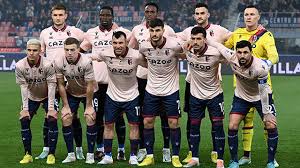
Following a chaotic start to the season that saw Domenico Tedesco dismissed after just four matches and Raffaele Palladino appointed as the club’s new head coach, Bologna enters 2026/27 navigating a year of financial reconstruction, a squad stripped of several key assets, and a clear directive from the boardroom: achieve a top-ten finish while rebalancing the books.
Technical Leadership & Coaching Profile
Manager: Raffaele Palladino
Palladino arrived at Casteldebole in mid-September, confirmed as the replacement for Domenico Tedesco after the club’s worst start to a season in recent memory. The 42-year-old Italian signed a contract until 30 June 2029, a significant commitment that reflects the board’s belief in his long-term vision. Palladino arrives with a reputation for overachievement: he transformed Monza into a stable mid-table side, guided Fiorentina to a sixth-place finish, and improved Atalanta’s results during a six-month spell in Bergamo. CEO Claudio Fenucci revealed that Bologna had maintained contact with Palladino for over two years, and his appointment was viewed as a coup given interest from more prestigious clubs.
Tactical Philosophy
Palladino inherits a squad constructed for Tedesco’s preferred structures and must adapt his approach accordingly. His time at Monza and Fiorentina was defined by flexible attacking football, often utilizing a 3-4-2-1 or 4-2-3-1 depending on personnel. At Bologna, he is expected to prioritize defensive solidity first, addressing a backline that conceded five goals in the opening four matches. The squad’s attacking depth — Orsolini, Bernardeschi, Dovbyk, Rowe, Cambiaghi, and Domínguez — offers Palladino multiple options in wide areas, suggesting a system that maximizes width and one-on-one ability.
Preferred Formations
4-2-3-1 / 3-4-2-1 in possession.
Strategic Transfer Activity
Bologna’s summer window was defined by financial necessity rather than ambition. CEO Fenucci was explicit about the club’s situation: with costs at €145 million against revenues of €85 million, and no European competition to bridge the gap, sales were unavoidable. The departures of Santiago Castro to Roma and Jhon Lucumí to the Premier League generated essential capital, while the loan arrival of Artem Dovbyk from Roma addressed the attacking void. Samuel Mbangula arrived on deadline day to add pace on the flanks.
Table A: Summer Major Transfer Influx
| Player | Position | Former Club | Fee Paid |
|---|---|---|---|
| Artem Dovbyk | Striker | Roma | Loan |
| Samuel Mbangula | Winger | — | Loan |
| Jay Enem | Forward | — | Permanent |
| Mikel Amondarain | Midfielder | — | Permanent |
The First-Team Roster
Goalkeepers
Łukasz Skorupski (#1): The Polish goalkeeper remains Bologna’s undisputed number one, his shot-stopping and experience crucial behind a defence that has struggled for consistency. His leadership within the dressing room is equally important during a transitional campaign.
Massimo Pessina (#25): The young academy graduate provides backup coverage and represents the club’s commitment to internal development.
Defenders
Torbjørn Heggem (#14): The Norwegian centre-back has established himself as a first-team regular, his composure and ball-playing ability offering a modern defensive profile suited to Palladino’s build-up demands.
Martin Vitík (#41): The Czech centre-back provides physical presence and aerial dominance, his development under Palladino’s guidance being closely monitored.
Nicolò Casale (#16): The Italian centre-back brings Serie A experience and defensive solidity, his positioning and reading of the game compensating for a lack of raw pace.
Eivind Helland (#5): The young Norwegian offers additional depth in central defence and represents Bologna’s investment in emerging talent.
Mihajlo Ilić: The Serbian centre-back provides further competition for places, though his future remains uncertain amid the club’s financial constraints.
Juan Miranda (#33): The Spanish left-back offers attacking thrust and crossing ability, his energy providing a constant outlet on the left flank.
Emil Holm (#2): The Swedish right-back returned from his loan spell at Juventus and faces an uncertain future, with Premier League interest potentially prompting a departure.
Nadir Zortea (#20): The right-back provides competition and cover, his work rate and delivery from wide areas offering a reliable option.
Lorenzo De Silvestri (#29): The veteran full-back remains a senior voice within the squad, his experience and leadership invaluable during a season of transition.
Midfielders
Lewis Ferguson (#19): The Scottish midfielder is Bologna’s most important outfield player, his box-to-box energy, goal threat, and leadership central to Palladino’s plans. He wore the captain’s armband in the opening weeks and remains the natural reference point around whom the new coach will build.
Nikola Moro (#6): The Croatian midfielder offers tactical discipline and work rate, his reliability making him a trusted option in Palladino’s structure.
Tommaso Pobega (#4): The Italian midfielder provides physical presence and defensive coverage, his ability to break up play and drive forward making him a valuable squad option.
Oussama El Azzouzi: The Moroccan midfielder is coming off a difficult year at Auxerre with physical problems, but has been given an opportunity to prove his fitness and convince the new coaching staff.
Mikel Amondarain (#8): The summer arrival provides youthful energy and technical quality in midfield, his development representing part of Bologna’s long-term planning.
Forwards
Artem Dovbyk: The Ukrainian striker arrived on loan from Roma and has already made an impact, scoring a late equalizer against Sassuolo that salvaged Bologna’s only point of the season so far. His physical presence and finishing instincts offer a focal point for the attack, though he faces competition from Roberto Piccoli for a starting role.
Riccardo Orsolini (#7): The Italian winger remains one of Bologna’s most important attacking players, his direct running and goal threat from wide areas providing a constant danger. He is the club’s designated penalty taker and a senior figure within the squad.
Federico Bernardeschi (#10): The experienced forward brings quality and versatility to the attacking line, his set-piece delivery and creativity offering a different dimension. He serves as the vice-captain and a senior voice in the dressing room.
Jonathan Rowe (#11): The English winger possesses explosive pace and directness, his ability to isolate full-backs offering a constant threat in transition. He was linked with Premier League interest over the summer but remained at the club.
Nicolò Cambiaghi (#28): The Italian winger provides depth and creativity across the attacking line, his work rate and delivery from wide areas making him a reliable option.
Benja Domínguez (#30): The Argentine forward offers versatility and goal threat from wide positions, though his future has been uncertain amid transfer interest.
Jesper Karlsson: The Swedish winger provides additional attacking depth and competition for places on the flanks.
Roberto Piccoli: The Italian striker competes with Dovbyk for the starting role, his physical profile and finishing instincts offering a different dimension to the Ukrainian.
Leadership Group & Squad Regulations
Club Captain: Lorenzo De Silvestri
The veteran full-back remains the squad’s designated captain, his experience and standards-setting influence anchoring a dressing room that has endured significant turbulence. His presence provides continuity during a season of coaching change and squad turnover.
The Leadership Committee
Lewis Ferguson and Federico Bernardeschi serve as the senior voices alongside De Silvestri, their combined experience and on-field authority providing essential guidance through a challenging campaign. Ferguson’s performances in the opening weeks, wearing the armband in De Silvestri’s absence, suggest he is being groomed for a more prominent leadership role.
Homegrown Quota Check
With Lorenzo De Silvestri, Massimo Pessina, and several other academy graduates in the first-team squad, Bologna maintains a connection to their youth pipeline. The club’s investment in the Primavera and youth sectors continued this summer with the acquisition of multiple young talents across various age groups, reflecting a long-term strategy of internal development.
Financial & Contractual Health
Financial Balance Overview
Bologna’s financial situation is the defining narrative of the 2026/27 season. CEO Fenucci revealed that costs stand at €145 million against revenues of €85 million, a gap that required significant sales to address. The departures of Castro and Lucumí were direct consequences of this imbalance, and the club’s salary limit remains constrained by the need to achieve sustainability. Fenucci described the season as “a year of reconstruction” and stated that a top-ten finish while playing attractive football would represent a successful campaign.
Contract Red Alerts
Palladino’s contract until 2029 provides stability in the dugout, but several key players face uncertain futures. Ferguson’s situation remains one to monitor, with the Scottish midfielder having previously indicated a willingness to evaluate significant offers. Holm and Odgaard are among the players identified as potential sales if the right offers arrive.
The Academy Pipeline & Loan Tracker
Breakout Talents to Watch
Bologna’s youth investment continued this summer with the acquisition of players for the Primavera, Under-18, Under-17, Under-16, and Under-15 squads. Among the most notable additions are Giacomo Giacomone, a goalkeeper from Lazio, and Luka Kusic, a Serbian forward from NK Radomlje, both of whom will look to progress toward the first team in the coming seasons.
Notable Out on Loan
Bologna’s loan strategy has been designed to provide regular minutes for emerging talents, though the club’s financial constraints have made permanent departures difficult to finalise.
Set-Piece Specialists & FPL Cheat Sheet
Penalties: Riccardo Orsolini (First Choice) / Federico Bernardeschi (Second Choice) / Artem Dovbyk (Third Choice).
Direct Free-Kicks: Riccardo Orsolini / Federico Bernardeschi.
Corners & Crosses: Riccardo Orsolini / Lewis Ferguson / Juan Miranda.
Final Outlook: Rebuilding Amid Financial Reality
Bologna enters 2026/27 in a state of managed transition. The summer’s financial realities forced the sale of two key assets in Castro and Lucumí, and the dismissal of Tedesco after just four matches — collecting a single point from fixtures against Lazio, Atalanta, Sassuolo, and Napoli — left the club searching for direction.
Raffaele Palladino’s appointment represents a calculated gamble on a coach with a track record of overachievement at smaller clubs. His ability to stabilize a squad low on confidence, integrate the remaining attacking talent, and extract goals from a group that has scored just twice in four matches will determine whether Bologna can meet Fenucci’s top-ten target.
The financial constraints are real and will not disappear. Fenucci’s admission that the club must cut costs and that ownership will need to raise €15 million this year underscores the severity of the situation. The new stadium project, in which Bologna and Fiera would be the main shareholders, is viewed as crucial to long-term revenue growth, but its feasibility remains uncertain.
For now, Palladino must work with what he has. Dovbyk’s loan arrival offers a focal point in attack, and the combination of Orsolini, Bernardeschi, and Rowe provides genuine quality in wide areas. Ferguson’s leadership and box-to-box energy remain central to any success. If Palladino can organize a defence that has leaked goals and generate enough attacking output to climb the table, Bologna possesses the foundation to achieve a respectable mid-table finish. But the margin for error is thin, and another prolonged struggle could transform a season of reconstruction into a battle for survival.