Following a summer defined by the loss of a title and the complete reconstruction of an attack, Al Hilal opened 2026/27 with the most expensive forward line in Saudi Pro League history. Missing out on the league championship to city rivals Al Nassr by two points last season stung the most successful club in Saudi Arabia. The response from the hierarchy was emphatic: over €200 million in net investment, with three Premier League attackers arriving in one window — Summerville, Watkins and Martinelli. Simone Inzaghi stayed on, but he now commands a squad fundamentally different from the one he inherited. Seven rounds in, Al Hilal lead the table with 18 points from six wins and one defeat, having scored 23 goals — the most potent attack in the division — yet set-piece vulnerabilities at the back and lingering uncertainty over Inzaghi’s future add a subtle tension to the campaign.
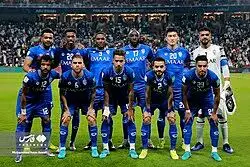
Technical Leadership & Coaching Profile
Manager: Simone Inzaghi
Inzaghi took charge of Al Hilal in 2025/26, delivering the King’s Cup and an unbeaten league campaign — but “unbeaten” did not deliver the title, as Al Nassr claimed the trophy by two points. Inzaghi’s debut season drew criticism for “negative football,” and although his contract runs to June 2027, the hierarchy had not entirely ruled out an early change.
The strong start to the season, however, has shifted the mood. Eighteen points from seven matches and 23 goals have inclined the management toward renewal. According to Saudi sports journalist Abdulaziz Al-Muraisel, Al Hilal “lean toward extending with Inzaghi,” and an agreement “is expected to be completed before the end of October.” Inzaghi’s coaching has been recognised for producing “strong results since his appointment, with a clear tactical identity and progress visible in every match.”
Tactical Philosophy
Inzaghi’s system was comprehensively reshaped over the summer. Last season he relied on the attacking trio of Benzema, Malcom and Salem Al-Dawsari, but all three have either departed, been marginalised, or been sidelined by injury in the new campaign. The hierarchy’s response was to “build an entirely new attacking line rather than find a like-for-like replacement for each departing player.”
Al Hilal’s attack is now built on speed, power and multi-positional flexibility. Summerville offers dribbling and cutting inside from the flanks, Watkins brings “relentless running, tireless pressing and the ability to exploit space behind the defensive line” as a centre-forward, while Martinelli is a weapon for “beating his man on the wing, driving at speed and arriving in the box to threaten.” Inzaghi’s side can now switch between counter-attacking, high pressing, direct play and wide overloads — options that “did not carry the same flexibility” last season.
One systemic flaw has already emerged. According to Saudi journalist Asaf Al-Khalifi, Al Hilal “have conceded every goal this season from set-pieces,” and the defending of the second post “has been a persistent problem under Inzaghi.” The club has begun searching for a dedicated set-piece coach, following the Arsenal model.
Preferred Formations
4-2-3-1 / 4-3-3 (adjusted according to the front three’s configuration).
Strategic Transfer Activity
Al Hilal’s summer window was one of the most aggressive operations in the Saudi Pro League and in global football. Total outlay exceeded €205 million, with three Premier League attackers accounting for the vast majority of the budget.
Crysencio Summerville arrived from West Ham for €64.5 million, the most expensive signing of the Saudi summer window. The 24-year-old Dutch winger was relegated from the Premier League with West Ham last season, but represented the Netherlands at the 2026 World Cup, where he missed a penalty in the shootout against Morocco — saved by his new teammate Bounou. Ollie Watkins joined from Aston Villa for around £51 million (approximately €58.4 million) on a three-year deal. The 30-year-old English striker is Villa’s all-time leading Premier League scorer, having netted 21 goals in all competitions last season, including five in the Europa League, helping Villa win the trophy. Gabriel Martinelli arrived from Arsenal for around €70 million, completing the attacking puzzle.
Beyond the three headline signings, Al Hilal added Mohammed Mahzari for €7.67 million, along with Salnouh and Dahar for €3 million and €2.3 million respectively.
Summer Major Transfer Influx
| Player | Position | Former Club | Fee Paid |
|---|---|---|---|
| Crysencio Summerville | Winger | West Ham United | €64.5m |
| Ollie Watkins | Forward | Aston Villa | €58.4m |
| Gabriel Martinelli | Winger | Arsenal | €70m |
| Mohammed Mahzari | Midfielder | Al-Taawoun | €7.67m |
| Mohammed Salnouh | — | Al-Fateh | €3m |
| Sabri Dahar | — | Al-Fayha | €2.3m |
The First-Team Roster
Goalkeepers
Yassine Bounou (#—) : The Moroccan international is the last line of Al Hilal’s defence. At the 2026 World Cup, he saved the penalty taken by Summerville for the Netherlands — the two will now be club teammates. Bounou’s reflexes and command are of the highest standard in Asian football.
Mohammed Al-Owais (#—) : The Saudi international joined from AlUla, providing depth and experience in the domestic goalkeeping position.
Defenders
Kalidou Koulibaly (#—) : The Senegalese centre-back is the leader of the back line, his physicality and aerial dominance irreplaceable in Al Hilal’s defence.
Theo Hernández (#—) : The French left-back’s attacking output is a key weapon in Al Hilal’s wide progression, his speed and crossing ability already proven in Serie A and La Liga.
Yusuf Akçiçek (#—) : The young Turkish centre-back, standing 1.93 metres tall, provides additional aerial presence.
João Cancelo (#—) : The Portuguese full-back returned from loan, offering Inzaghi another option on the right. His technique and experience are scarce resources in the Saudi league.
Ali Al-Bulaihi (#—) : The Saudi international centre-back returned from loan, adding depth in the domestic player quota.
Midfielders
Rúben Neves (#—) : The Portuguese midfielder is the hub of Al Hilal’s transitions. His passing range and set-piece delivery are the foundation of the team’s build-up from the back.
Sergej Milinković-Savić (#—) : The Serbian midfielder’s physicality and late runs into the box provide a unique attacking dimension. His aerial threat from set-pieces is an important weapon.
Saimon Bouabre (#—) : The young French midfielder offers energy and running power.
Kader Meïté (#—) : A young midfielder gaining experience in rotation.
Forwards
Crysencio Summerville (#—) : The €64.5 million record signing and Dutch World Cup international. His dribbling, speed and cutting inside make Al Hilal more threatening on the left, while his ability to operate centrally gives Inzaghi tactical flexibility.
Ollie Watkins (#—) : The English striker’s arrival solves Al Hilal’s finishing problem at centre-forward. His off-ball running and pressing suit Inzaghi’s demands, and his five Europa League goals last season proved he can score on the big occasion.
Gabriel Martinelli (#—) : The Brazilian winger arrived from Arsenal as the final piece of the attacking puzzle. His high-speed dribbling and finishing inside the box make Al Hilal extremely dangerous in transition.
Salem Al-Dawsari (#—) : The flag-bearer of Saudi football, his injury absence is a significant blow. His return will provide the attack with local creativity and leadership.
Karim Benzema (#—) : The 38-year-old French striker’s future at Al Hilal has become extremely bleak. With the arrivals of Summerville, Watkins and Martinelli, Benzema has lost his place in the foreign player quota, and the two sides are close to agreeing a termination. His future may lie at another Saudi club, or in retirement.
Darwin Núñez (#—) : The Uruguayan striker has been loaned to newly promoted Diriyah, ending his brief chapter at Al Hilal.
Leadership Group & Squad Regulations
Club Captain: Salem Al-Dawsari
Al-Dawsari is the symbol of Al Hilal and Saudi football. As the team’s local core and long-standing leader, his presence provides identity and belonging to a squad composed of international stars. His injury absence is not only a tactical loss but a spiritual void.
Homegrown Quota Check
While signing superstar foreigners, Al Hilal have also maintained depth among domestic players. Mohammed Al-Owais, Ali Al-Bulaihi and Mohammed Kanno form the Saudi backbone of the squad. Mohammed Kanno joined from Al-Qadsiah, providing an option in the domestic attacking line.
Financial & Contractual Health
Financial Balance Overview
Al Hilal’s summer outlay exceeded €205 million, with net spending far ahead of any other Saudi club. The combined fees for Summerville (€64.5m), Watkins (€58.4m) and Martinelli (€70m) approached €200 million. Investment at this level reflects the Public Investment Fund’s clear demand to reclaim the league title, and Al Hilal’s resource advantage as the Kingdom’s “flagship club.”
Contract Red Alerts
Inzaghi’s contract expires in June 2027, with renewal talks expected to conclude before the end of October. Benzema’s termination negotiations are ongoing, with the two sides close to agreeing a deal that would free up a valuable foreign player slot and considerable salary space. Salem Al-Dawsari’s injury recovery will directly affect the team’s domestic core configuration in the second half of the season.
Set-Piece Specialists & FPL Cheat Sheet
Penalties: TBD (no fixed taker established early in the season)
Direct Free-Kicks: Rúben Neves / Salem Al-Dawsari
Corners & Crosses: Rúben Neves / Theo Hernández
Final Outlook: Navigating the Tactical Horizon
Al Hilal enter 2026/27 in a state best described as buying back hegemony. Missing the title by two points last season was unacceptable for the most successful club in Saudi Arabia. The hierarchy’s response was decisive and total: not repair, but the reconstruction of an entire attacking line. Summerville, Watkins and Martinelli arrived directly from the Premier League, forming the most expensive forward line in Saudi Pro League history.
Eighteen points from seven matches and 23 goals prove the immediate quality of that new attack. The 4-2 win over Al-Faisaly, the 3-0 away victory at Al-Fayha, and the 5-1 thrashing of Al-Khaleej reflect Al Hilal’s attacking dominance. Inzaghi’s system is emerging from the “negative football” criticism, with the speed and directness of the new attacking trio giving him more options.
Yet the set-piece defensive vulnerability is a hidden danger that cannot be ignored. The statistic that “every goal conceded this season has come from a set-piece” exposes a systemic flaw in Inzaghi’s defensive organisation. In the Saudi league, set-pieces are an important weapon for weaker teams against stronger opposition. If Al Hilal cannot solve the second-post defending before the winter break, these seemingly minor concessions could prove fatal at decisive moments in the title race.
Benzema’s termination will free up a foreign player slot, but whether Al Hilal need further reinforcement depends on Martinelli’s integration speed and Al-Dawsari’s injury recovery. The “Classic Derby” at home to Al-Ittihad on 10 October will be Al Hilal’s first genuine test of the season — the two sides are separated by just one point at the top, and the result will directly determine who leads the table.
Inzaghi’s renewal is all but certain, but patience in Saudi football is finite. If Al Hilal miss out on the title again at the end of the season, or if Inzaghi’s set-piece problems continue to drag the team down, the hierarchy’s attitude could shift rapidly. For a club accustomed to victory, second place is never an acceptable outcome. The Galácticos have set sail, but whether the captain can steer this giant vessel safely into the harbour of champions remains an open question.