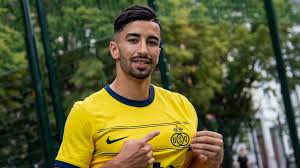
CLUB SNAPSHOT: At a Glance
| Category | Details |
|---|---|
| Club | SV 07 Elversberg |
| League | Bundesliga |
| Manager | Vincent Wagner |
| Stadium | Ursapharm-Arena an der Kaiserlinde |
| Nickname | Die Elv |
| Founded | 1907 |
| Midfield Anchor | Amara Condé |
| Creative Hub | Maurice Krattenmacher |
| Key Loanee | Noah Darvich (from Barcelona) |
| Current League Position | 7th (13 points from 8 matches) |
The Defining Moment
Elversberg’s midfield entered 2026/27 as the department most radically transformed by the club’s remarkable rise. While the defence retained its core and the goalkeeper remained the symbol of continuity, the midfield was where sporting director Nils-Ole Book and coach Vincent Wagner chose to invest their limited resources in the kind of elite young talent that had previously passed through the Ursapharm-Arena on their way to bigger things. Nick Woltemade and Fisnik Asllani had used Elversberg as a developmental incubator; now it was the turn of a new generation.
The defining moment of the summer came with the arrival of Noah Darvich. The 19-year-old German playmaker, reared in Barcelona’s La Masia, joined on loan from the Catalan giants. He was not alone. Francis Onyeka arrived from Bayer Leverkusen’s academy, Cole Campbell from Borussia Dortmund, and Maurice Krattenmacher from Bayern Munich’s second team. It was a midfield assembled from the academies of Europe’s elite, a collection of talents seeking the high-volume playing time that Elversberg’s model promises.
“I still believe this is the only way forward,” Wagner said of his commitment to proactive football, even as the step up to the Bundesliga exposed the risks. The midfield that was supposed to provide the platform for that philosophy has delivered in flashes: Krattenmacher’s three goals in seven league appearances have made him one of the team’s most productive players, while Darvich and Onyeka have contributed assists and glimpses of the quality that persuaded their parent clubs to send them to Saarland.
The results have been encouraging. Elversberg sit seventh in the Bundesliga with 13 points from eight matches, having scored 16 goals and conceded 16. The midfield has been central to that balance: creating chances, supporting the press, and providing the verticality that Wagner’s system demands.
This is the story of Elversberg’s 2026/27 midfielders: a Bayern loanee exceeding expectations, a Barcelona prodigy finding his feet, a Leverkusen talent learning the demands of senior football, and a collection of complementary pieces making one of Germany’s smallest clubs one of its most watchable.
Tactical Context
Wagner’s midfield structure is built for spatial manipulation and explosive transitions. Operating from a 4-2-3-1 or 4-2-2-2 base shape, Elversberg’s central players execute short, sharp dropping movements towards the ball carrier, creating the illusion of a team attempting to build exclusively through congested central channels. The opponent’s defensive line pushes up, and the space behind opens.
The double pivot is narrow, almost always positioned close to the centre-backs. This serves two purposes: it creates numerical superiority in the first phase, and it opens the half-spaces for the attacking midfielders to receive on the turn. The midfielders are not static; they are constantly rotating, dragging opponents out of shape, and looking for the diagonal pass that switches play and forces the defensive block to shift again.
The demands on the midfield are specific. They must be comfortable receiving under pressure, capable of playing first-time passes in tight spaces, and intelligent enough to recognise the moment to accelerate. The “deep-deep combinations” that define Elversberg’s attacking play — a forward pass followed instantly by another forward pass, rather than a safe lay-off — require midfielders with the technical quality and the courage to execute under pressure.
The numbers reflect a midfield still adapting to the Bundesliga’s intensity. Elversberg average 2.00 goals per game, but they also concede at the same rate. The 4-0 defeat at RB Leipzig in October exposed the risks: when the press is bypassed and the midfield is overrun, the defensive structure collapses. Wagner accepted the setback as part of the developmental process. “Experience comes through experience,” he said, noting that no Elversberg player who featured in Leipzig had more than 15 Bundesliga appearances.
The Midfielders
Maurice Krattenmacher
Krattenmacher is the most productive midfielder in the squad and the unexpected leader of the attacking line. The 21-year-old, on loan from Bayern Munich’s second team, has scored three goals and provided one assist in seven league appearances, his 310 minutes yielding a return that few predicted. His profile is that of the modern attacking midfielder: comfortable in the half-spaces, capable of arriving in the box late, and possessing the finishing instinct that Elversberg’s system demands.
His numbers reflect a player who has seized his opportunity. Three goals in seven appearances is a remarkable return for a player adapting to the Bundesliga, and his ability to contribute from midfield has eased the burden on the forwards. At 21, he has time to develop, but Bayern will be watching closely. If he continues on this trajectory, the loan may become a permanent arrangement that Elversberg can ill afford.
Noah Darvich
Darvich is the most technically gifted player in the squad and the most intriguing project of Elversberg’s recruitment model. The 19-year-old, reared in Barcelona’s La Masia, arrived on loan with a reputation for vision, composure, and the kind of technical quality that few Bundesliga midfielders possess. His profile is that of the classical playmaker: comfortable in tight spaces, capable of unlocking defences with a single pass, and intelligent in his movement between the lines.
His numbers reflect a player still adapting to the physical demands of senior football. One assist in five appearances, with 259 minutes played, is a modest return, but the underlying quality is evident. He has been deployed in the attacking midfield positions, where his creativity can be maximised, but the Bundesliga’s intensity has tested his physical resilience.
At 19, Darvich has time to develop. Barcelona will be monitoring his progress closely, and the loan arrangement is designed to give him the minutes he would not receive at Camp Nou. Whether he can establish himself as a regular starter in Wagner’s system depends on his ability to combine his technical quality with the defensive work rate that the coach demands.
Francis Onyeka
Onyeka is the most physically imposing of the young loanees, a 19-year-old from Bayer Leverkusen’s academy who offers a different profile to the more technical Darvich. His profile is that of the box-to-box midfielder: energetic, willing to cover ground, and capable of arriving in the box late. He has contributed one assist in five league appearances, his 172 minutes reflecting a rotational role.
At 19, Onyeka is a project. His physical attributes are evident, but the tactical discipline required in Wagner’s system is still developing. The loan from Leverkusen is designed to provide the minutes that will accelerate his maturation. Whether he can become a regular starter depends on his ability to adapt to the demands of senior football.
Amara Condé
Condé is the veteran of the midfield, a 29-year-old who provides experience and stability in a department otherwise composed of teenagers and loanees. His profile is that of the defensive midfielder: positionally disciplined, capable of screening the back four, and intelligent in his reading of the game. He has made three league appearances, his minutes limited by the emergence of younger options, but his presence in the dressing room is invaluable.
At 29, Condé is in his prime. He is not a player who will attract interest from bigger clubs, but he is precisely the kind of experienced professional that a newly promoted side needs. His role may diminish as the season progresses, but his contribution to the development of the younger midfielders extends beyond his minutes on the pitch.
Łukasz Poręba
Poręba is the other senior option in the central midfield, a 26-year-old Polish player who has made six league appearances. His profile is that of the reliable, hard-working midfielder: capable of covering ground, comfortable in possession, and tactically disciplined. He has yet to contribute a goal or assist, but his value lies in the less glamorous work that allows the more creative players to flourish.
At 26, Poręba is in his prime. He is not a player who will dominate matches, but he is a reliable squad member who understands his role in a system that demands collective discipline.
The Supporting Cast
Frederik Schmahl, a 23-year-old German, has made two league appearances and scored one goal. Felix Keidel, a 23-year-old who can play in midfield or defence, provides depth. The academy graduates and fringe players complete a midfield that is top-heavy with attacking talent but thin on proven Bundesliga experience. The loss of any of the key loanees to injury or recall would leave Wagner with limited options.
The Numbers Game
Table A: SV Elversberg Midfielder Bundesliga Statistics (2026/27)
| Player | Apps (Starts) | Minutes | Goals | Assists | Notes |
|---|---|---|---|---|---|
| Maurice Krattenmacher | 7 (—) | 310 | 3 | 1 | Leading midfield scorer |
| Noah Darvich | 5 (—) | 259 | 0 | 1 | Barcelona loanee; adapting |
| Francis Onyeka | 5 (—) | 172 | 0 | 1 | Leverkusen loanee; developing |
| Łukasz Poręba | 6 (—) | — | 0 | 0 | Senior rotation option |
| Amara Condé | 3 (—) | — | 0 | 0 | Veteran; limited minutes |
| Frederik Schmahl | 2 (—) | 126 | 1 | 0 | Squad depth |
Table B: SV Elversberg Midfield – Key Metrics (2026/27)
| Metric | Value | Context |
|---|---|---|
| Team Goals per Game | 2.00 | 16 goals in 8 matches |
| Team Goals Against per Game | 2.00 | 16 conceded in 8 matches |
| Record | 4W-1D-3L | 7th in Bundesliga |
| Krattenmacher Goal Contribution | 4 | 3 goals, 1 assist |
| Midfield Market Value | €18.15m | Average €3.63m per player |
Table C: Midfielder Career Context & Pedigree
| Player | Nationality | Previous Clubs | Style Profile |
|---|---|---|---|
| Maurice Krattenmacher | Germany | Bayern Munich II (loan) | Attacking midfielder, box arrivals, finishing |
| Noah Darvich | Germany | Barcelona (loan) | Playmaker, technical, vision, developing physically |
| Francis Onyeka | Germany | Bayer Leverkusen (loan) | Box-to-box, energetic, developing |
| Amara Condé | Germany | — | Defensive midfielder, experienced, disciplined |
| Łukasz Poręba | Poland | — | Central midfielder, hard-working, reliable |
Tactical Identity & Squad Balance
Elversberg’s midfield is a study in calculated risk. The club has invested its limited resources in young loanees from elite academies, trusting that their technical quality and hunger for minutes will compensate for their lack of Bundesliga experience. The early returns have been encouraging: Krattenmacher’s goals, Darvich’s creativity, and Onyeka’s energy have provided the platform for a seventh-place position that few predicted.
The numbers tell a story of a midfield that creates but also concedes. Sixteen goals scored and sixteen conceded in eight matches reflects a team that has chosen to compete on its own terms, accepting the defensive vulnerabilities that come with an aggressive, vertical approach. The midfield is central to that trade-off: it provides the verticality that makes Elversberg dangerous, but it also leaves gaps when possession is lost.
The depth is the department’s vulnerability. The core of Krattenmacher, Darvich, Onyeka, and Poręba is talented but thin. The loss of any of the loanees to injury or recall would force Wagner to rely on players who have not demonstrated they can compete at this level. The January window may offer an opportunity to add experience, but Elversberg’s resources are limited and the club’s model prioritises development over immediate reinforcement.
The most intriguing subplot is the balance between the loanees and the permanent players. Krattenmacher, Darvich, and Onyeka are all on temporary deals. If they perform well, their parent clubs may recall them or demand fees that Elversberg cannot afford. If they struggle, the club will have invested minutes in players who will not be part of its future. It is a model that has served Elversberg well in the lower leagues, but the Bundesliga’s demands may expose its limitations.
The Verdict from the Camp
Vincent Wagner, on his philosophy:
“Our aim is to stay in the Bundesliga by playing proactive football. We’ll most likely reach our limits in certain situations, but I still believe this is the only way forward. It’s always been my philosophy, and I’m not going to change it.”
Wagner, on the Leipzig defeat:
“That is a development process. Experience comes through experience. Therefore, you shouldn’t be surprised that you don’t yet play with maximum routine. In terms of content, it was good to very good in the first half, but one good half is naturally not enough.”
Tactical Football Analysis, on Elversberg’s midfield structure:
“The core mechanical trick of their build-up play relies on inviting the opponent’s defensive line to push up high towards the halfway line. During first-phase possession, Elversberg’s deep pivots and central attackers execute short, sharp dropping movements towards the ball carrier, creating the visual illusion of a team attempting to construct play exclusively through congested central channels.”
Where Next?
Elversberg’s midfield priority is clear: they need Krattenmacher to maintain his goalscoring form, Darvich to adapt to the physical demands of the Bundesliga, and Onyeka to develop into a reliable rotation option. The loanees are the engine of the team’s attacking play, and their continued development will determine whether Elversberg’s remarkable start to the season can be sustained.
The development of the permanent players is the secondary subplot. Poręba and Condé provide experience and stability, but they are not the future of the club. The academy graduates and fringe players need opportunities to develop, but those opportunities will be limited by the presence of the loanees. It is a tension that Elversberg’s model must navigate.
The January window is unlikely to bring significant midfield reinforcements. The club’s resources have been directed toward the attacking talent that Wagner’s system demands, and the midfield, for all its inexperience, has functioned effectively enough to keep Elversberg in the top half. The priority is to maintain the current structure and hope that injuries do not expose its fragility.
For now, Elversberg’s midfielders are a unit defined by youth, ambition, and the willingness to take risks. Krattenmacher scores, Darvich creates, Onyeka learns, and Condé anchors. The question is whether that combination is enough to survive in the Bundesliga. The early-season evidence suggests it might be — as long as the loanees stay fit and the system continues to produce more goals than it concedes.