CLUB SNAPSHOT: At a Glance
| Category | Details |
|---|---|
| Club | Crystal Palace FC |
| League | Premier League |
| Manager | Pierre Sage (sacked November 2026) |
| Stadium | Selhurst Park |
| Nickname | The Eagles |
| Founded | 1905 |
| First-Choice Centre-Back | Chris Richards |
| Defensive Partner | Jaydee Canvot |
| Left-Back | Tyrick Mitchell |
| Notable Departure | Maxence Lacroix (to Chelsea) |
The Defining Moment
Crystal Palace’s 2026/27 defensive story was defined by a summer of subtraction before a summer of addition. The Eagles lost Maxence Lacroix to Chelsea, Marc Guéhi had departed for Manchester City in January, and Daniel Muñoz joined Nottingham Forest. The back line that had anchored Palace’s Conference League triumph was dismantled piece by piece, and the club’s response was a scramble of loans, free transfers, and young signings.
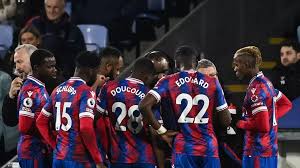
The defining moment came on 25 August 2026, when Axel Disasi arrived on a season-long loan from Chelsea with no option or obligation to buy. Disasi was not a long-term solution; he was emergency cover. The France international brought Premier League experience and a World Cup runner-up medal, but he also represented the improvisation that characterised Palace’s defensive rebuild. By the time Pierre Sage was sacked in November, Palace had conceded 24 goals in 10 league matches—the worst defensive record in the top flight—and the reconstruction had failed.
This is the story of Palace’s 2026/27 defenders: a unit stripped of its foundation, patched together with borrowed parts, and ultimately unable to withstand the weight of the Premier League.
Tactical Context
Pierre Sage inherited a defensive structure built by Oliver Glasner for a back three. The 3-4-3 that Palace used in the opening fixtures was designed to provide width through wing-backs and solidity through three centre-backs. But the personnel available to Sage bore little resemblance to the unit that had won the Conference League.
The numbers tell a story of a defence in crisis. Palace conceded 19 goals in their first eight league matches, an average of 2.38 per game. They shipped four against Manchester City, five against Brighton, and three against Ipswich. The shot volume faced was the highest in the division, a symptom of a midfield that was overrun and a back line that could not repel sustained pressure.
The centre-back situation was the core problem. Chadi Riad suffered an anterior cruciate ligament injury in the opening defeat against Everton, ruling him out for the foreseeable future. Disasi arrived as cover, but the loan signing was a patch rather than a solution. Takehiro Tomiyasu, signed on a free transfer, had pedigree but a concerning injury history. Honest Ahanor, an 18-year-old signed from Hellas Verona, was talented but inexperienced. The result was a defensive unit that was rotated constantly, never establishing the cohesion required to survive.
The wing-back positions were equally unsettled. Tyrick Mitchell remained a consistent presence on the left, but the right side was a revolving door following Muñoz’s departure. Anan Khalaili, a summer arrival from Maccabi Haifa, was tasked with filling the void, but the step up from Israeli football to the Premier League proved demanding.
The Defenders
Chris Richards
Richards emerged as the most reliable defender in a unit that had few of them. The United States international started the majority of matches, contributing a goal and providing the physical presence that Palace otherwise lacked. His aerial ability and recovery pace made him the closest thing to an anchor in a back line that was constantly changing around him.
At 26, Richards is entering his prime. But the chaos around him exposed his limitations: he is a complementary defender rather than an organising one, and without a settled partner, his performances fluctuated. The summer’s departures were supposed to be offset by the arrivals, but Richards was left to hold together a defence that was never whole.
Jaydee Canvot
Canvot was one of the few bright spots of Palace’s defensive recruitment. The 20-year-old French centre-back arrived from Toulouse and established himself as a first-team regular, starting ten matches in all competitions. His composure on the ball and positional intelligence belied his age, and his partnership with Richards showed flashes of a long-term pairing.
But at 20, Canvot was asked to do too much too soon. In a relegation battle, relying on a teenager as a cornerstone of the defence was a gamble that Palace could not afford. His development is a positive for the future, but the present required experience that he did not yet possess.
Tyrick Mitchell
Mitchell was the one constant in Palace’s defence. The 27-year-old left-back started almost every match, contributing two goals and providing the width that Sage’s system demanded. His defensive reliability and attacking thrust made him one of the few players who could be relied upon week after week.
Mitchell’s limitations are well known: he is a competent rather than exceptional defender, and his delivery in the final third is inconsistent. But in a season defined by chaos, his consistency was valuable. The 5-0 defeat at Brighton was not his fault alone, but it exposed the collective failure of a defensive unit that could not protect him.
Axel Disasi
Disasi arrived on loan from Chelsea as emergency cover and delivered exactly that: emergency cover. The 28-year-old brought Premier League experience and a physical presence, but he was never intended to be a long-term solution. His performances were steady without being transformative, and the lack of a purchase option reflected Chelsea’s assessment that he was not part of their future.
Disasi’s loan was a symptom of Palace’s broader problem: the club had failed to replace Lacroix and Guéhi with permanent signings of equivalent quality, and the loan market was the only avenue available. When the season ends, Disasi will return to Chelsea, and Palace will be left with the same defensive void they faced in August.
Honest Ahanor
Ahanor was the most intriguing of Palace’s defensive signings. The 18-year-old Nigerian centre-back arrived from Hellas Verona for a significant fee, and Sage explicitly identified him as the left-footed centre-back the squad needed. His potential is undeniable, and his market value of €25.4 million reflects the club’s investment in his future.
But Ahanor was a project, not a ready-made Premier League defender. His six appearances in all competitions were a learning curve, and the errors that accompanied his development were costly in a relegation battle. Palace needed him to be more than he was ready to be.
Takehiro Tomiyasu
Tomiyasu’s arrival on a free transfer was a calculated gamble on a player with undeniable quality and a troubling injury record. The Japan international had shown at Arsenal that he could defend at the highest level, but his body had repeatedly betrayed him. At Palace, the pattern continued: five appearances in all competitions, a string of niggling issues, and a contribution that was measured in moments rather than matches.
When fit, Tomiyasu offered versatility and defensive intelligence. But fitness was the exception rather than the rule, and Palace could not build a defence around a player who was rarely available.
Anan Khalaili
Khalaili was signed to fill the right wing-back role vacated by Muñoz, and his energy and attacking intent were evident in his early performances. The 22-year-old Israeli international contributed a goal and an assist, and his tackle rate of 3.57 per game was among the highest in the squad.
But the defensive demands of the Premier League exposed his limitations. Khalaili was a wing-back learning the position at the highest level, and the mistakes that accompanied his education were costly. His development is a long-term positive, but the short-term reality was a defence that leaked goals from the right flank.
Óscar Mingueza
Mingueza arrived from Celta Vigo to provide competition at right-back, and his experience in La Liga offered a different profile to Khalaili. But his involvement was limited, and he never established himself as a regular starter. His two assists in six appearances suggested an attacking threat, but the defensive solidity that Palace needed was not always evident.
Ben Chilwell
Chilwell arrived from Chelsea on a free transfer to provide cover at left-back, and his experience and delivery offered a different dimension to Mitchell. But injuries and the lack of a consistent run in the team limited his impact. His one goal and one assist in four appearances were encouraging, but the season was defined by absence rather than contribution.
Chadi Riad
Riad’s season was over almost before it began. The Moroccan centre-back suffered an ACL injury in the opening defeat against Everton, ruling him out for the majority of the campaign. His absence was a significant blow, removing one of the few centre-backs with Premier League experience from an already thin defensive pool.
The Numbers Game
TABLE A: Crystal Palace Defender Premier League Statistics (2026/27)
| Player | Apps (Starts) | Goals | Assists | Position |
|---|---|---|---|---|
| Chris Richards | 12 (12) | 1 | 0 | Centre-Back |
| Tyrick Mitchell | 12 (11) | 2 | 0 | Left-Back |
| Jaydee Canvot | 10 (9) | 0 | 0 | Centre-Back |
| Anan Khalaili | 11 (9) | 1 | 1 | Right-Back |
| Axel Disasi | 8 (6) | 0 | 0 | Centre-Back |
| Honest Ahanor | 6 (5) | 0 | 0 | Centre-Back |
| Óscar Mingueza | 6 (3) | 0 | 2 | Right-Back |
| Takehiro Tomiyasu | 5 (3) | 0 | 0 | Centre-Back |
| Ben Chilwell | 4 (2) | 1 | 1 | Left-Back |
| Chadi Riad | 1 (1) | 0 | 0 | Centre-Back |
TABLE B: Crystal Palace Defence – Key Metrics (Premier League 2026/27)
| Metric | Value | Context |
|---|---|---|
| Goals Conceded | 24 | In 10 matches |
| Goals Conceded per 90 | 2.40 | Worst in Premier League |
| Clean Sheets | 1 | vs Leeds United |
| Shots Faced per Game | 18.6 | Most in Premier League |
| Defensive Signings | 6 | Disasi, Ahanor, Tomiyasu, Khalaili, Mingueza, Chilwell |
TABLE C: Crystal Palace Defenders – Squad Profile
| Player | Age | Contract Until | Market Value | Role |
|---|---|---|---|---|
| Chris Richards | 26 | 2029 | €21.2m | First-choice CB |
| Tyrick Mitchell | 27 | 2028 | €25.7m | First-choice LB |
| Jaydee Canvot | 20 | 2031 | €19.4m | First-choice CB |
| Axel Disasi | 28 | 2027 (loan) | €12.8m | Loan cover |
| Honest Ahanor | 18 | 2031 | €25.4m | Development CB |
| Anan Khalaili | 22 | 2030 | €20.2m | Rotation RB |
| Takehiro Tomiyasu | 27 | 2028 | €10.2m | Squad depth/injured |
| Óscar Mingueza | 27 | 2029 | €15.3m | Rotation RB |
| Ben Chilwell | 29 | 2028 | €10.2m | Squad depth |
| Chadi Riad | 23 | 2029 | €10.9m | Injured |
Tactical Identity & Squad Balance
Palace’s defensive unit was a reconstruction project that never came together. The departures of Lacroix and Guéhi removed the foundation of a back line that had been among the Premier League’s more reliable, and the replacements were a mixture of loans, free transfers, and development projects. Disasi was emergency cover; Tomiyasu was a gamble on fitness; Ahanor was a bet on potential. None of them were guaranteed starters at the level Palace required.
The numbers reflect the failure. Twenty-four goals conceded in ten matches is the worst defensive record in the division, and the 5-0 defeat at Brighton was the nadir of a campaign that cost Sage his job. The shot volume faced was unsustainable, and the constant rotation of personnel prevented any cohesion from developing.
The one positive is the emergence of Canvot. At 20, he has established himself as a first-team regular and shown the composure and intelligence to suggest a long-term future at the club. Richards remains a capable defender, and Mitchell is a consistent presence on the left. But the centre-back positions, the heart of any defence, were never stabilised.
The Verdict from the Camp
Pierre Sage, on Axel Disasi’s arrival:
“He’ll help us first of all to be stable, to help the team in this department, because we have an injury and we wanted to recruit.”
Sage, on Honest Ahanor:
“Honest [Ahanor] the centre-back we signed because we need one, especially a lefty [left-footed].”
Axel Disasi, on joining Palace:
“I’m very happy. The club has been going in a very good direction, so I think it was the right place for me to keep going. I know that it’s very tough to play against Palace at Selhurst Park – so I’m looking forward to being on the other side now!”
The Athletic, on Palace’s defensive struggles:
“It is not just an issue with the defenders but with the defensive unit as a whole. The replacements at centre-back are Chelsea loanee Axel Disasi, Honest Ahanor and Takehiro Tomiyasu. Disasi had a promising spell on loan with West Ham United in the second half of last season. Tomiyasu has pedigree, but his injury history is a concern. Ahanor is talented but inexperienced at 18. Collectively, it is not ideal, but not catastrophic, with Chris Richards and Jaydee Canvot also available.”
Where Next?
The specific question hanging over Palace’s defence is whether the club can convert its emergency solutions into permanent ones. Disasi will return to Chelsea, Tomiyasu’s fitness cannot be relied upon, and Ahanor is not yet ready to be a Premier League starter. The summer of 2027 will require a genuine rebuild of the centre-back positions, not another patchwork of loans and free transfers.
That makes Canvot’s development the most important variable. The 20-year-old has the talent to be a long-term cornerstone, but he needs an experienced partner and a settled structure around him. Richards is a capable complement, but the pairing requires a third centre-back of equivalent quality if Palace are to play the back three that Sage favoured.
The full-back positions require less urgent attention. Mitchell is a reliable left-back, and Khalaili’s development offers hope on the right. But the defensive unit as a whole needs a coherent identity, a settled selection, and a midfield screen that protects it. Until those structural issues are addressed, the goals will continue to flow, and the manager—whoever replaces Sage—will face the same problems that defined this season.