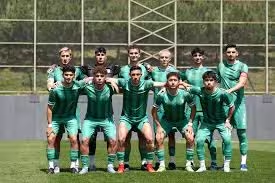
CLUB SNAPSHOT: At a Glance
| Category | Details |
|---|---|
| Club | RC Celta de Vigo |
| League | La Liga |
| Manager | Claudio Giráldez |
| Stadium | Balaídos |
| Nickname | Os Celestes |
| Founded | 1923 |
| Key Midfield Signing | Aleix Febas (free from Elche) |
| Physical Anchor | Ilaix Moriba |
| Tactical Curiosity | Sergio Carreira (wing-back to midfielder) |
| Current League Position | 9th (12 points from 10 matches) |
The Defining Moment
Celta de Vigo’s midfield entered 2026/27 with a problem that Claudio Giráldez had been trying to solve for two seasons: how to replace the unique functions of Óscar Mingueza without losing the structural balance of his 3-4-3. Mingueza, a converted wing-back who drifted into central midfield to create numerical superiorities, had been one of the most distinctive tactical pieces in La Liga. His departure to Crystal Palace in the summer left a void that no like-for-like replacement could fill.
The defining moment of Celta’s midfield summer came in early June, when the club confirmed the free-transfer signing of Aleix Febas from Elche. The 30-year-old Catalan, a former Real Madrid youth player, had been the linchpin of Elche’s possession-oriented midfield, making 36 La Liga appearances and setting the tempo for a side that valued control above all else. He signed a three-year deal through June 2029, arriving at Balaídos with the specific brief of adding composure and circulation to a midfield that already possessed energy and athleticism in abundance.
“I am coming to compete,” Febas said upon arrival. The reality has been more nuanced. Celta’s midfield has functioned effectively without being spectacular, the four-man unit providing the platform for a defensive record of just seven goals conceded in ten matches. But the creative burden has been shared rather than owned, distributed across a rotating cast of Febas, Ilaix Moriba, Hugo Álvarez, and the tactical experiment that is Sergio Carreira.
This is the story of Celta’s 2026/27 midfielders: a Catalan metronome finding his rhythm, a Guinean powerhouse providing the legs, a wing-back learning to become a midfielder, and a collection of academy graduates fighting for minutes in one of La Liga’s most settled structures.
Tactical Context
Giráldez’s 3-4-3 places unique demands on the midfield four. In possession, the two central midfielders are responsible for circulating the ball, breaking lines, and providing the pivot around which the wing-backs and interior forwards rotate. Out of possession, they must screen the back three, cover the wide areas that the wing-backs vacate, and initiate the aggressive counter-press that defines Celta’s defensive identity.
The numbers reflect a midfield built for control rather than penetration. Celta average 1.00 goal per game, a modest return that places them among La Liga’s lower-scoring sides. The ten goals scored in ten matches have been spread across the forward line and the attacking midfielders, with the deeper midfielders contributing little in the way of direct goal involvement. The midfield’s value lies in what it prevents rather than what it produces: the seven goals conceded is among the best defensive records in the division, and the structure that protects the back three begins with the discipline of the central pairing.
The tactical innovation that has defined Celta’s season is the adaptation of Sergio Carreira. The 25-year-old academy graduate, a wing-back by trade, has been deployed in a hybrid role that mirrors Mingueza’s former function: starting wide, drifting central, and creating overloads in the half-spaces. Giráldez has been adapting the wing-back’s functions so that he acts as another central midfielder, and Carreira has responded with distinction. It is a solution born of necessity, but it has become a tactical signature.
The Midfielders
Aleix Febas
Febas is the summer’s marquee midfield signing, the free-transfer arrival from Elche who was tasked with adding control and composure to a midfield that already possessed energy. The 30-year-old Catalan, standing 171 centimetres, is not a physical presence; he is a metronome, a player whose value lies in his positioning, his circulation, and his ability to dictate the rhythm of a match.
His profile is that of the deep-lying playmaker. At Elche, he was the linchpin of a side that prioritised possession, making 36 appearances and missing only two matches through suspension. His two goals and two assists were a modest return, but his influence extended far beyond those numbers: he set the tempo, linked defence and attack, and provided the platform for Elche’s more expressive forwards.
At Celta, his role is more restrained. Giráldez’s system distributes creative responsibility across the front three and the hybrid wing-backs, meaning Febas is not required to be the sole orchestrator. His early-season minutes have been significant, and his passing accuracy and positional discipline have provided the stability that the midfield required. Whether he can become a more influential figure as the season progresses remains the question. At 30, he is not a long-term solution, but he is a valuable short-term one.
Ilaix Moriba
Moriba is the physical anchor of Celta’s midfield, the player whose athleticism and ball-carrying ability provide the dynamism that complements Febas’s composure. The 23-year-old Guinean, standing 165 centimetres, is a complete midfielder who combines athletic strength with the capacity to turn defence into attack through powerful ball-carrying runs.
His profile is that of the box-to-box destroyer. He wins the ball, drives forward with it, and covers ground that others cannot. In a midfield that lacks natural leg-speed in the deeper positions, Moriba’s energy is essential. His development since arriving at Balaídos has been gradual but steady, and at 23, he is entering the phase of his career where potential must translate into consistent performance.
The limitation is technical. Moriba is not a progressive passer on the level of Febas, nor does he possess the creative vision to unlock low blocks. His value lies in what he does without the ball and in the transitions that his ball-carrying initiates. In a system that relies on the midfield to screen and disrupt, Moriba’s attributes are precisely what Giráldez requires.
Sergio Carreira
Carreira is the tactical curiosity of Celta’s season, a wing-back who has been converted into a hybrid midfielder in the mould of the departed Mingueza. The 25-year-old academy graduate, a Vigo native, has made the transition with a tactical intelligence that has surprised observers.
His profile is that of the intelligent, adaptable wide player. He understands when to attack the centre of the pitch and when to recover his position on the flank, a decision-making process that requires greater concentration than a traditional wing-back role. His minutes have been substantial, and his performances have earned praise: so far he is passing the exam with distinction.
The comparison with Mingueza is inevitable but imperfect. Mingueza’s passing range was exceptional, his ability to switch play and break lines from deep positions a defining feature of his game. Carreira is more of a runner, a player whose value lies in his movement and his understanding of space rather than his distribution. But in a system that demands flexibility and tactical awareness, Carreira’s adaptation has been one of the season’s more encouraging developments.
Hugo Álvarez
Álvarez is the academy graduate who has become a fixture in the attacking midfield positions, his energy and movement offering a different dimension to the more technical forwards. The 23-year-old from Ourense has started the season as a regular, his ability to exploit space and deliver the final pass making him a valuable contributor.
His profile is that of the modern interior forward. He is not a traditional winger; he prefers to drift inside, to combine with the central midfielders, to arrive in the box late. His goal against Racing Santander in the 5-0 victory demonstrated his instinct for the right position at the right time.
At 23, Álvarez is still developing. His consistency has been a concern — at times he struggles to be decisive — but his potential is evident. In a squad that relies heavily on academy graduates, his continued growth is essential.
Hugo Sotelo and Damián Rodríguez
Sotelo and Rodríguez are the academy midfielders who provide depth and competition. Sotelo, 22, is a technically gifted central midfielder who has featured sporadically; Rodríguez, 23, offers a more physical presence. Neither has established himself as a regular starter, but both represent the pipeline that Giráldez has built his project around.
Matías Vecino
Vecino is the veteran of the midfield, a 35-year-old Uruguayan who arrived in the summer as a free agent. His experience and positional intelligence provide cover for the younger players, though his minutes are likely to be limited by the demands of Giráldez’s system. At 35, he is a squad option rather than a solution.
The Numbers Game
Table A: RC Celta de Vigo Midfielder La Liga Statistics (2026/27)
| Player | Role | Notes |
|---|---|---|
| Aleix Febas | Central Midfield | Free transfer from Elche; 36 apps last season |
| Ilaix Moriba | Central Midfield | Physical anchor; complete midfielder |
| Sergio Carreira | Hybrid Midfield/Wing-Back | Adapted to Mingueza role; passing the exam with distinction |
| Hugo Álvarez | Attacking Midfield | Academy graduate; regular starter |
| Hugo Sotelo | Central Midfield | Academy depth |
| Damián Rodríguez | Central Midfield | Academy depth |
| Matías Vecino | Central Midfield | Veteran cover |
Table B: RC Celta de Vigo Midfield – Key Metrics (2026/27)
| Metric | Value | Context |
|---|---|---|
| Team Goals per Game | 1.00 | 10 goals in 10 matches |
| Team Goals Against per Game | 0.70 | 7 conceded in 10 matches |
| Record | 2W-6D-2L | 9th in La Liga |
| Possession vs Elche (Away) | 33% | Lowest of season; still drew 0-0 |
| Possession vs Getafe (Away) | 70% | Highest of season; drew 1-1 |
Table C: Midfielder Career Context & Pedigree
| Player | Nationality | Previous Clubs | Style Profile |
|---|---|---|---|
| Aleix Febas | Spain | Elche, Real Madrid Academy | Deep-lying playmaker, circulation, composure |
| Ilaix Moriba | Guinea | RB Leipzig, Barcelona Academy | Box-to-box, ball-carrying, athletic |
| Sergio Carreira | Spain | Celta Academy | Hybrid wing-back/midfielder, tactical intelligence |
| Hugo Álvarez | Spain | Celta Academy | Interior forward, movement, final pass |
| Hugo Sotelo | Spain | Celta Academy | Technical central midfielder |
| Damián Rodríguez | Spain | Celta Academy | Physical central midfielder |
| Matías Vecino | Uruguay | Inter, Lazio | Veteran cover, positional intelligence |
Tactical Identity & Squad Balance
Celta’s midfield is a study in functional balance rather than individual brilliance. The four-man unit that Giráldez deploys is not designed to dominate possession through technical superiority; it is designed to provide the structure that allows the wing-backs to advance, the forwards to rotate, and the back three to remain protected. The numbers reflect this: Celta have kept four clean sheets in ten matches, a record that places them among La Liga’s best defensive sides, while scoring just ten goals at the other end.
The midfield’s contribution to the attacking output has been modest. Febas, Moriba, and the rotating cast of academy graduates have provided control and energy but little in the way of direct goal involvement. The creative burden has fallen on the forwards — Iago Aspas, Hugo Álvarez, Williot Swedberg — and on the hybrid runs of Carreira from his adapted position. It is a structure that works because it is balanced, not because it is brilliant.
The depth is adequate for a club of Celta’s resources. Febas and Moriba are the established pairing; Carreira provides the tactical flexibility; Sotelo, Rodríguez, and Vecino offer cover. The loss of Mingueza was significant, but Carreira’s adaptation has mitigated the impact. The loss of any of the starting midfielders to injury would test the squad’s depth, but the academy pipeline provides a steady supply of replacements.
The January window is unlikely to see midfield reinforcements. Celta’s resources are limited, and the priority, if any, would be a forward who can add goals to a team that has scored just ten in ten matches. The midfield, for all its limitations, is functioning as designed.
The Verdict from the Camp
OneFootball’s tactical guide, on Celta’s midfield:
“The midfield hinge plays a crucial role: the four central pieces must guarantee both the push on the flanks and the central cover, allowing the trident to move off the ball to break down opposing defences.”
Diario AS, on Carreira’s adaptation:
“Giráldez is adapting the wing-back’s functions so that he acts as another central midfielder, just as the Catalan did. The Vigo native is responding with distinction.”
Xinhua, on Febas’s arrival:
“Febas was the linchpin of Elche’s midfield and helped set the tempo for one of La Liga’s most possession-oriented sides.”
Where Next?
Celta’s midfield priority is clear: they need Febas to become a more influential figure, and they need Moriba to develop into the complete midfielder his potential suggests. The pairing has functioned effectively in a structural sense, but neither player has yet demonstrated the ability to dominate a match or provide the creative spark that turns control into goals.
The development of Carreira is the most intriguing subplot. If he can continue to refine his hybrid role, Celta possess a tactical weapon that few other La Liga sides can match: a wing-back who becomes an extra midfielder in possession, creating numerical superiorities that are difficult to defend against. If he falters, Giráldez may be forced to return to a more conventional structure.
The academy pipeline remains the club’s lifeblood. Álvarez, Sotelo, and Rodríguez represent the next generation of Celta midfielders, and their development will determine whether the club can sustain its model of internal promotion. The departure of Mingueza was a reminder that success breeds departures; the challenge is to replace what is lost.
For now, Celta’s midfielders are a unit defined by function rather than flair. Febas circulates, Moriba drives, Carreira adapts, and the academy provides depth. The question is whether function is enough for a club with Celta’s ambitions. The early-season evidence suggests it might be — as long as the structure holds and the goals come from elsewhere.