CLUB SNAPSHOT: At a Glance
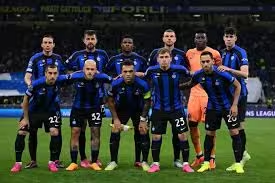
| Category | Details |
|---|---|
| Club | Inter Milan |
| League | Serie A |
| Manager | Cristian Chivu |
| Stadium | San Siro |
| Nickname | Nerazzurri |
| Founded | 1908 |
| Captain & Lead Striker | Lautaro Martínez |
| Top Scorer | Marcus Thuram (5 goals) |
| Young Options | Francesco Pio Esposito, Ange-Yoan Bonny |
| Defining Trait | Four senior forwards for two shirts—efficient when fit, fragile when not |
The Defining Moment
Inter’s forward line entered the 2026/27 season with a clarity of purpose that the rest of the squad lacked. The message from the club was unambiguous: the attacking quartet was “solid, consolidated and already ready” for the campaign. Lautaro Martínez, the captain and symbol of the club, remained the untouchable pillar. Marcus Thuram, decisive in the previous season’s title run, provided the athletic complement. And behind them, two young prospects—Ange-Yoan Bonny and Francesco Pio Esposito—offered present depth and future promise.
That clarity lasted until the injuries arrived. By the November international break, the picture had darkened considerably. Bonny was ruled out for a month with a thigh flexor problem. Thuram was managing fatigue. Lautaro was still working toward full fitness. Esposito, the youngest of the four, was away with Italy and the club could only hope he returned intact. The “four forwards for two shirts” equation, which had seemed adequate in August, suddenly looked dangerously thin.
The defining tension of Inter’s forward season is therefore not a lack of quality but a lack of margin. When fit, Lautaro and Thuram form one of Serie A’s most potent partnerships. When either is absent, the burden falls on two players still establishing themselves at the highest level. The question that has followed Inter into the autumn is whether that margin is sufficient for a title defence and a Champions League campaign.
This is the story of Inter’s 2026/27 forwards: a World Cup-winning captain carrying the weight of expectation, a French international whose goals have led the line, and two young Italians learning what it means to wear the Nerazzurri shirt when the stakes are highest.
Tactical Context
Chivu’s 3-5-2 is built around a strike partnership, and the demands on that pair are specific. The forwards must occupy the two centre-backs, provide a platform for the wing-backs and midfield runners, and convert the chances created by a midfield that dominates possession. It is a system that rewards understanding and complementarity—the ability of two players to function as a unit rather than as individuals.
Lautaro and Thuram embody that complementarity. The Argentine drops deep, links play, and arrives late in the box; the Frenchman runs in behind, attacks crosses, and provides the physical presence that unsettles defenders. When both are available, Inter’s attack functions with a fluidity that few Serie A defences can contain. Thuram’s five league goals by late October placed him among the division’s leading scorers, and his contribution has been decisive in Inter’s rise to the top of the table.
The tactical problem emerges when the partnership is broken. Bonny and Esposito are not like-for-like replacements. Bonny offers pace and directness but lacks Lautaro’s link play; Esposito is a finisher whose development is still in progress. When Chivu has been forced to rotate, the system has sometimes required adjustment, and the results have been uneven. The emergency has not yet become a crisis, but the warning signs are there.
The Forwards
Lautaro Martínez
Lautaro is the captain, the symbol, and the player upon whom Inter’s attacking identity depends. The 29-year-old Argentine has been at the club since 2018, and his importance extends beyond goals: he is the reference point for the press, the leader of the dressing room, and the player whose movement creates space for those around him. When he is absent, as he has been at points this season, Inter lose not just a striker but a structural element of their play.
His season has been disrupted by fitness issues, and his return to full training has been gradual. But when available, he remains one of the most complete forwards in Serie A—a player capable of scoring, creating, and leading in equal measure. At 29, he is in his prime, and Inter’s title defence depends on him staying on the pitch.
Marcus Thuram
Thuram has been Inter’s leading scorer this season, his five league goals by late October placing him among the division’s most productive forwards. The 29-year-old Frenchman offers a different profile to Lautaro: taller, faster, more direct. His runs in behind stretch defences, his aerial ability provides an outlet, and his finishing has been clinical.
His previous season was marked by inconsistency, but his response has been emphatic. When Lautaro has been absent, Thuram has shouldered the scoring burden, and his performances have justified the faith Chivu has placed in him. The concern is fitness: a fatigue issue forced him to withdraw from international duty in November, and his availability for the Atalanta match remains uncertain.
Ange-Yoan Bonny
Bonny is the first of the young understudies, a 23-year-old Frenchman who arrived from Parma with a reputation for pace and potential. His first season at a major club has been a learning curve: flashes of quality interspersed with the inconsistency of a player adapting to a higher level.
His current injury—a thigh flexor problem that will keep him out for approximately a month—has exposed the thinness of Inter’s attacking depth. Bonny is not yet a player who can carry the line in Lautaro’s absence, but he is a genuine option whose development matters for the club’s future.
Francesco Pio Esposito
Esposito is the great hope of Inter’s academy, a 21-year-old who progressed through the youth ranks and impressed during a loan spell at Spezia before returning to establish himself in Chivu’s squad. His profile is that of a traditional centre-forward: strong in the box, capable of finishing with either foot, and intelligent in his movement.
His development has been carefully managed, and the club’s intention to renew and “lock down” his contract reflects their belief in his potential. But at 21, he is not yet ready to be the primary solution. The international break, where he represented Italy, offered a reminder of his talent—and a reminder of the risk of injury that comes with every appearance.
The Numbers Game
TABLE A: Inter Milan Forward Serie A Statistics (2026/27)
| Player | Goals | Context |
|---|---|---|
| Marcus Thuram | 5 | Team’s top scorer |
| Lautaro Martínez | 2 | Champions League goals |
| Francesco Pio Esposito | — | Development season |
| Ange-Yoan Bonny | — | Injured (thigh flexor) |
TABLE B: Inter Milan Forward Unit – Key Metrics (2026/27)
| Metric | Value | Context |
|---|---|---|
| Senior Forwards | 4 | Lautaro, Thuram, Bonny, Esposito |
| First-Choice Partnership | Lautaro & Thuram | Undisputed when fit |
| Bonny Injury | ~1 month | Thigh flexor |
| January Reinforcements | Unlikely | Club focused on renewals |
TABLE C: Forward Career Context & Pedigree
| Player | Nationality | Previous Clubs | Style Profile |
|---|---|---|---|
| Lautaro Martínez | Argentina | Racing Club | Complete forward, link play, leadership |
| Marcus Thuram | France | Borussia Mönchengladbach | Direct, athletic, goalscorer |
| Ange-Yoan Bonny | France | Parma | Pace, potential, developing |
| Francesco Pio Esposito | Italy | Spezia (loan) | Traditional centre-forward, finisher |
Tactical Identity & Squad Balance
Inter’s forward line reflects a deliberate strategy of continuity over revolution. While the defence and midfield were reinforced with Premier League imports, the attack was left untouched. The club’s hierarchy believed that Lautaro, Thuram, Bonny, and Esposito provided sufficient depth for a season with Serie A and Champions League commitments.
The early-season evidence has partially vindicated that belief. Inter sat top of Serie A after nine matches, with Thuram among the division’s top scorers and the team’s attacking output among the league’s best. But the margins are thin. The simultaneous absences of Bonny and Thuram, combined with Lautaro’s ongoing fitness management, have left Chivu with a forward line that is one injury away from crisis.
The club’s reported decision not to pursue a fifth striker in January reflects a belief that the current group is sufficient. Whether that belief proves prudent or complacent will depend on factors beyond anyone’s control: the durability of Lautaro’s body, the consistency of Thuram’s finishing, and the readiness of two young players to deliver when called upon.
The Verdict from the Camp
TMW, on the attacking emergency:
“Bonny is stopped and will be out for a month, Thuram must recover from fatigue and Lautaro is still working to return fully available. With Pio Esposito engaged with Italy, Inter can do nothing but hope to find him intact on his return. A situation that inevitably brings back to the centre a question that the management can no longer postpone: a fifth striker is needed.”
OneFootball, on the risk of inaction:
“The injuries of Lautaro Martinez, Marcus Thuram and Ange-Yoan Bonny represent an alarm bell that should not be underestimated. Three different physical situations, but a single common element: the need to deal with an offensive department that, suddenly, can find itself with fewer alternatives than expected.”
L’Interista, on the summer strategy:
“Lautaro, Thuram, Pio Esposito and Bonny: present and future. Lautaro Martinez is the pillar and icon of this Inter, an untouchable from whom Inter restarts every season, the captain. Then there is Thuram, some shadows last season, but decisive when needed with Lautaro’s injury, hugely important goals for Scudetto number 21.”
Where Next?
Inter’s forward priority is clear: they need Lautaro and Thuram to stay fit, and they need Bonny and Esposito to be ready when called upon. The quality of the first-choice partnership is not in question; the depth behind it is.
The January window is unlikely to bring reinforcements unless the injury situation deteriorates further. The club’s reported focus on contract renewals and the belief that the squad is complete suggest that Chivu will work with the four forwards at his disposal. The risk is that another injury—particularly to Lautaro or Thuram—could leave Inter’s title defence relying on players who are not yet ready for that responsibility.
Esposito’s development is the most intriguing subplot. If he can establish himself as a reliable third option, Inter possess a homegrown forward capable of serving the club for a decade. If he cannot, the reliance on two injury-prone starters will continue to define the department.
For now, Inter’s forwards are a unit built on quality and fragility: a World Cup-winning captain whose fitness is managed week by week, a French international whose goals have led the line, and two young Italians learning that at Inter, the margin for error is always thin.