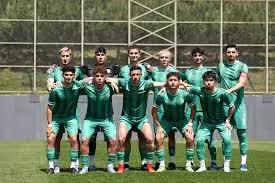
CLUB SNAPSHOT: At a Glance
| Category | Details |
|---|---|
| Club | Atalanta BC |
| League | Serie A |
| Manager | Maurizio Sarri |
| Stadium | Gewiss Stadium |
| Nickname | La Dea |
| Founded | 1907 |
| Leading Scorer | Nikola Krstović (6 goals) |
| Record Signing | Jonathan Rowe (€45m from Bologna) |
| Key Absences | Scamacca, Raspadori (injured) |
| Current League Position | 13th |
The Defining Moment
Atalanta’s forward line entered 2026/27 with a rare luxury: abundance. When Maurizio Sarri surveyed his attacking options in pre-season, he did so with four players capable of leading the line — Gianluca Scamacca and Nikola Krstović as the “true” centre-forwards, and Charles De Ketelaere and Giacomo Raspadori as adaptable alternatives. The Gazzetta dello Sport described it as “a sense of abundance,” a depth that few Serie A sides could match.
The defining moment of the season came not in a victory, but in a medical report. By early November, that abundance had evaporated. Scamacca and Raspadori were working in the gym, following individual training programmes. Kolašinac and Kessie were alongside them. Gaetano, Bellanova, and Kristensen were undergoing treatment. Kossounou, Hien, and Pompei were combining treatment with gym work. The forward line that Sarri had envisioned as a quartet had been reduced to a solitary figure: Nikola Krstović.
The Montenegrin has carried the burden with unexpected productivity. Six goals in eight appearances, a return of 0.75 per game, has made him Atalanta’s leading scorer and one of the more efficient forwards in Serie A. His 2.75 shots per match reflects a player who has embraced the responsibility of being the focal point, even as the supporting cast has fallen away around him.
This is the story of Atalanta’s 2026/27 forwards: a Montenegrin workhorse exceeding expectations, a record signing finding his feet, a Belgian playmaker searching for consistency, and a collection of injured talents waiting for their season to begin.
Tactical Context
Sarri’s attacking structure has undergone a significant evolution since his arrival. The coach who built his reputation on the 4-3-3 has, for the first time in nearly a decade, embraced the 4-2-3-1. The shift was motivated by a desire to accommodate De Ketelaere in a central role and to maximize the attacking output of a squad that possesses more playmakers than pure wingers.
The numbers reveal the trade-off. With the 4-2-3-1, Atalanta’s attacking production has risen sharply — from 0.85 goals per game in the early weeks to 1.78 — but the defensive record has deteriorated almost identically, from 1.00 to 1.89 goals conceded per game. It is a classic Sarri dilemma: more penetration, less protection. The forward line has benefited from the change; the team has not always done so.
The tactical challenge for the forwards is the fluidity of the system. De Ketelaere has been deployed as a trequartista behind the striker, a role that suits his desire to operate centrally but requires him to contribute defensively in a way that does not come naturally. Raspadori, when fit, is viewed as an ideal fit for that position — a player whose qualities are best expressed near the box rather than on the wing. Krstović, the lone striker in the current configuration, is asked to hold the ball up, press relentlessly, and convert the limited chances that come his way.
The injury crisis has stripped Sarri of the ability to rotate. With Scamacca and Raspadori unavailable, and De Ketelaere the only fit senior alternative, Krstović has started nearly every match. The physical demands of Sarri’s pressing system, combined with the intensity of Serie A and the Conference League, have raised questions about how long the Montenegrin can sustain his current output.
The Forwards
Nikola Krstović
Krstović is the leading scorer and the unexpected anchor of Atalanta’s attack. The 26-year-old Montenegrin, who arrived from Lecce in the summer of 2025, has thrived in the absence of competition, his physicality and relentless work rate making him indispensable to Sarri’s system. His profile is that of the modern pressing forward: not the most technically gifted, nor the most clinical, but a player whose movement, aggression, and willingness to sacrifice himself create space for others.
The numbers from 2026/27 reflect his importance. Six goals in eight Serie A appearances, including three starts and five substitute appearances, have made him the club’s leading scorer. His 2.75 shots per match is among the highest in the squad, and his 0.75 goals per game places him in the upper echelon of Serie A forwards. His average rating of 7.21 to 7.58 depending on the source reflects a player performing at a level few predicted.
His profile is not that of the pure finisher. At Lecce and in his first season at Atalanta, Krstović was known for his work rate and his ability to occupy defenders rather than his goalscoring record. His 11 goals in his debut campaign at Bergamo were a respectable return for a mobile forward in his first experience at a top club. The current season has seen him add a clinical edge to that work ethic.
The concern is workload. With Scamacca and Raspadori injured, Krstović has been asked to carry the attacking burden alone. The physical demands of Sarri’s system, combined with the intensity of European football, have raised questions about whether he can sustain this level across the entire season. The return of the injured forwards will provide relief, but until then, Atalanta’s fortunes depend on their Montenegrin striker staying fit.
Gianluca Scamacca
Scamacca is the great what-if of Atalanta’s season. The 27-year-old Roman striker was the club’s top scorer last season with 14 goals in all competitions, a return that suggested he had finally overcome the injury problems that had plagued his career. His profile is that of the modern Italian centre-forward: tall, technically gifted, capable of holding the ball up and finishing with either foot.
His role in Sarri’s system was expected to be central. In the 4-3-3, Scamacca would be supported by two wide players tasked with putting him in ideal positions to score. His physique and powerful shot made him the ideal focal point for a coach who demands a striker capable of occupying centre-backs and converting crosses.
Instead, injury has defined his season. By early November, he was working in the gym, following an individual training programme, his return date uncertain. The specific nature of the problem has not been disclosed, but his absence has been felt acutely. Without Scamacca, Atalanta lack a physical presence in the box, a player who can win aerial duels and convert the chances that the midfield creates.
At 27, Scamacca is in his prime. His return would provide Sarri with a genuine alternative to Krstović, a different profile that could change the dynamics of a match. Whether his body allows him to fulfil that role is the question that will define the remainder of his season.
Charles De Ketelaere
De Ketelaere is the most gifted forward at the club and the most frustrating. The 25-year-old Belgian, who arrived from Club Brugge in 2022, possesses the technical ability and tactical intelligence to play as a false nine, a trequartista, or a wide forward. His profile is that of the modern attacking midfielder: comfortable in tight spaces, capable of unlocking defences with a single pass, and possessing the vision to create chances for others.
His numbers from 2026/27 reflect a player still searching for consistency. Zero goals in six appearances, with 13 chances created and an average rating of 6.59, tell a story of a player contributing to the build-up without delivering the end product. His 414 minutes across six appearances, only five of them starts, reflect a season interrupted by injury and tactical adjustment.
The shift to the 4-2-3-1 was partly designed to accommodate De Ketelaere in a central role. Sarri believed that the Belgian’s qualities were best expressed behind the striker rather than on the wing, where he had been deployed in previous seasons. The early evidence is mixed: flashes of class interspersed with moments of anonymity, the typical growing pains of a player adapting to a new position and a new coach.
At 25, De Ketelaere should be entering his prime. His previous seasons at Atalanta yielded 14 goals and 11 assists in his first campaign, 13 and 13 in his second, and a disappointing 5 and 7 in his third. The talent is undeniable. Whether Sarri can extract it consistently is one of the season’s more pressing questions.
Giacomo Raspadori
Raspadori is the forgotten man of Atalanta’s forward line. The 26-year-old Italian, who arrived from Napoli in January 2026, was viewed by Sarri as one of his favourites — a player whose qualities near the box, rather than on the wing, made him an ideal fit for the trequartista role in the 4-2-3-1.
His profile is that of the second striker: technically gifted, quick, and possessing the instinct to arrive in the box at the right moment. In Sarri’s system, he was expected to provide a different dimension to the more physical Krstović, a player capable of linking play and finishing chances from deeper positions.
Instead, injury has limited his involvement. By early November, he was working in the gym, following an individual programme, his return date uncertain. His absence has been felt particularly in the trequartista role, where De Ketelaere has been the only fit senior option.
At 26, Raspadori has time to make an impact. His return will provide Sarri with another option in the attacking midfield positions, and his qualities — technical, intelligent, and clinical — could prove valuable as the season progresses.
Jonathan Rowe
Rowe is the record signing who has yet to justify his fee. The 23-year-old English winger arrived from Bologna on a deal that could reach €45 million, making him the most expensive signing in Atalanta’s history. Sporting director Cristiano Giuntoli described him as “a very important piece for Sarri’s chessboard” and “a player of international level.”
His profile is that of the direct, pacey wide forward: capable of beating his man, delivering crosses, and arriving in the box to score. In Sarri’s system, he was expected to provide width and penetration from the flanks, stretching defences and creating space for the central forwards.
His early-season numbers are modest: zero goals in five appearances, with 2.20 shots per match and an average rating of 6.19. The adaptation from Bologna’s system to Sarri’s demands has been gradual, and the pressure of the record fee has not helped. At 23, he has time to develop, but Atalanta’s investment demands a quicker return.
The Supporting Cast
Eljif Elmas, the 26-year-old North Macedonian, has contributed one goal in six appearances, his versatility providing cover across the attacking line. Nicola Zalewski, the Polish international, has been used primarily as a wide forward, his pace and directness offering a different option from the more technical De Ketelaere. Ademola Lookman remains at the club, though his role under Sarri has been less prominent than in previous seasons. The academy graduates provide depth without yet challenging for regular minutes.
The Numbers Game
Table A: Atalanta Forward Serie A Statistics (2026/27)
| Player | Apps (Starts) | Minutes | Goals | Assists | Rating |
|---|---|---|---|---|---|
| Nikola Krstović | 8 (4) | 449 | 6 | 0 | 7.58 |
| Charles De Ketelaere | 6 (5) | 414 | 0 | 0 | 6.59 |
| Jonathan Rowe | 5 (5) | 367 | 0 | 0 | 6.19 |
| Eljif Elmas | 6 (3) | 294 | 1 | 0 | 7.08 |
| Giacomo Raspadori | 4 (—) | 179 | 0 | 0 | 6.87 |
Table B: Atalanta Forward Unit – Key Metrics (2026/27)
| Metric | Value | Context |
|---|---|---|
| Team Goals per Game | 1.78 | 16 goals in 9 matches |
| Krstović Goals per Game | 0.75 | Leading scorer |
| Krstović Shots per Match | 2.75 | Highest in squad |
| De Ketelaere Chances Created | 13 | Despite zero goals |
| Rowe Transfer Fee | €45m | Record signing |
Table C: Forward Career Context & Pedigree
| Player | Nationality | Previous Clubs | Style Profile |
|---|---|---|---|
| Nikola Krstović | Montenegro | Lecce | Pressing forward, physical, work rate |
| Gianluca Scamacca | Italy | Sassuolo, Genoa | Target man, technical, injury-prone |
| Charles De Ketelaere | Belgium | Club Brugge | Technical playmaker, versatile, inconsistent |
| Giacomo Raspadori | Italy | Napoli, Sassuolo | Second striker, technical, clinical |
| Jonathan Rowe | England | Bologna, Norwich | Direct winger, pace, adapting |
Tactical Identity & Squad Balance
Atalanta’s forward line is a study in adaptation under adversity. The abundance that Sarri envisioned in pre-season — four players capable of leading the line, supported by a record signing and a collection of versatile attackers — has been reduced by injury to a solitary focal point and a cast of makeshift alternatives.
The numbers tell a story of collective productivity despite the absences. Sixteen goals in nine matches, a return of 1.78 per game, is a respectable output for a team still learning Sarri’s system. Krstović has been the primary beneficiary, his six goals accounting for over a third of the team’s total. But the distribution is uneven: De Ketelaere, Rowe, and the supporting cast have contributed little in the way of goals, placing an unsustainable burden on the Montenegrin.
The injury crisis has exposed the fragility of the squad’s depth. Scamacca and Raspadori were expected to provide rotation and competition; their absence has left Sarri with limited options. De Ketelaere’s deployment as a false nine or trequartista has been a necessity rather than a choice, and Rowe’s adaptation to Serie A has been slowed by the pressure of being the only fit senior wide forward.
The January window may offer an opportunity to add another forward, but Atalanta’s resources are limited by the €45 million already committed to Rowe. The priority, if any, would be a player capable of providing cover for Krstović, a physical presence who can hold the ball up and convert chances when the Montenegrin needs rest.
The Verdict from the Camp
Cristiano Giuntoli, on Jonathan Rowe:
“With Jonathan Rowe the ownership made a very substantial investment, needed for quality in the final third. Rowe is a very important piece for Sarri’s chessboard. He is only 23 but already a player of international level, he has played in the Premier League and League 1, distinguishing himself for his attitude on the pitch and for his great availability towards his teammates and the club.”
La Gazzetta dello Sport, on Sarri’s striking options:
“Regardless of the pecking order, the Nerazzurri squad boasts four forwards capable of playing as a main striker, and such a variety of options can be extremely useful, even during a match. The ‘true’ centre-forwards are Gianluca Scamacca and Nikola Krstović, while those who can be adapted (but have already played in that position) are Giacomo Raspadori and Charles De Ketelaere.”
TuttoAtalanta, on the tactical shift:
“The most eloquent data concerns the defensive phase, with goals conceded almost doubled, from 1 to 1.89 per game; however, offensive production has also grown significantly, passing from 0.85 to 1.78 goals on average. A blanket that stretches on one side and shortens on the other, with the weight of injuries complicating every evaluation.”
Where Next?
Atalanta’s forward priority is clear: they need Scamacca and Raspadori to return, and they need De Ketelaere to find his scoring touch. Krstović has been the revelation of the season, but no single player can carry an attack across three competitions. The return of the injured forwards will provide Sarri with the options he envisioned in pre-season, the abundance that has so far existed only on paper.
The development of Rowe is the most intriguing subplot. The record signing has yet to justify his fee, but at 23, he has time to adapt to Sarri’s demands and the rhythms of Serie A. If he can establish himself as a reliable source of goals and assists from the flanks, Atalanta’s attack will become significantly more potent. If he cannot, the €45 million investment will loom over the season.
The tactical question is whether Sarri persists with the 4-2-3-1 or returns to the 4-3-3. The numbers suggest the former produces more goals but concedes more; the latter offers greater defensive protection but limits the attacking output. With the forwards returning to fitness, Sarri may be able to find a balance that maximizes the squad’s strengths while minimizing its vulnerabilities.
For now, Atalanta’s forwards are a unit defined by unexpected resilience. Krstović leads, De Ketelaere creates, and the injured wait for their season to begin. The question is whether resilience is enough for a club with Atalanta’s ambitions. The early-season evidence suggests it might be — as long as Krstović stays fit and the reinforcements return before the season slips away.