CLUB SNAPSHOT: At a Glance
| Category | Details |
|---|---|
| Club | Atalanta BC |
| League | Serie A |
| Manager | Maurizio Sarri |
| Stadium | Gewiss Stadium |
| Nickname | La Dea |
| Founded | 1907 |
| Defensive Leader | Giorgio Scalvini |
| Key Signing | Thomas Kristensen (loan with obligation) |
| Departure | Berat Djimsiti (to Al-Diriyah) |
| Current League Position | 11th (10 points from 8 matches) |
The Defining Moment
Atalanta’s defensive department entered 2026/27 in the midst of its most significant tactical transformation in a decade. Maurizio Sarri’s arrival from Lazio brought a radical shift: the three-man defence that had defined Gian Piero Gasperini’s era was to be replaced by a back four. The implications were profound. Centre-backs accustomed to man-marking in a back three were now asked to defend zonally in a four. Full-backs who had operated as wing-backs were now required to balance attacking ambition with defensive discipline. The entire structure needed rebuilding.
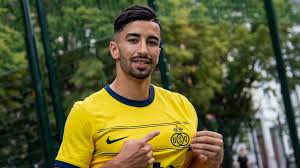
The defining moment of the summer came in mid-August, when Atalanta completed the signing of Thomas Kristensen from Udinese on a loan deal with an obligation to buy. The total cost could reach €27 million with bonuses, a significant investment for a club that typically avoids such expenditure on players over 25. Sporting director Cristiano Giuntoli explained the urgency: “Kristensen was a very sudden purchase, due to the fact that Djimsiti repeatedly asked us to leave: we couldn’t not grant it, given what he has done for this club.”
The departure of Djimsiti, a decade-long servant and the defensive anchor of the Gasperini era, left a void that Kristensen was signed to fill. The Danish centre-back, standing 198 centimetres, arrived with a profile suited to Sarri’s demands: comfortable in a back four, capable of playing out from the back, and physically imposing.
The results have been mixed. Atalanta sit 11th in Serie A with 10 points from eight matches, having conceded 15 goals — a rate of 1.88 per game that reflects a defence still learning Sarri’s system. The 4-4 draw with Frosinone in late October encapsulated the transition: four goals conceded at home, a defensive structure in flux, and a coach still searching for the right balance.
This is the story of Atalanta’s 2026/27 defenders: a young Italian talent carrying the weight of expectation, a Danish arrival tasked with replacing a legend, and a collection of full-backs and squad players adapting to a system that demands everything of them.
Tactical Context
Sarri’s defensive revolution at Atalanta is a study in tactical recalibration. The Gasperini era was built on a back three, man-oriented marking, and aggressive pressing. Sarri’s system demands a back four, zonal marking, and positional discipline. The transition has been gradual and, at times, painful.
The early-season numbers reflect a defence in transition. Atalanta have conceded 15 goals in eight Serie A matches, with a goals against average of 1.88. They have kept just one clean sheet — a 1-0 victory over Bologna in late August. The defensive record is mid-table, neither catastrophic nor convincing, but the underlying performances suggest a unit still learning its shape.
The full-backs have borne a heavy load. In Sarri’s system, they are asked to provide width in possession and defensive solidity out of it. Raoul Bellanova and Davide Zappacosta have alternated on the right, while Lorenzo Bernasconi has emerged as the preferred option on the left. The demands are relentless, and the early-season evidence suggests the squad lacks the depth to rotate effectively across three competitions.
The centre-back pairing has been equally unsettled. Isak Hien, a potential starter, suffered a serious muscle injury in June that required surgery and was not expected back until October. Odilon Kossounou, returning from the World Cup, was eased into training. Giorgio Scalvini, at 22, has been the constant, but the partnership around him has shifted. Kristensen’s arrival provided a natural left-sided option, but his integration into Sarri’s system is ongoing.
The tactical challenge is compounded by the absence of a natural organiser. Djimsiti was not the most gifted defender, but he was the vocal leader, the player who marshalled the line and communicated Sarri’s instructions. His departure has left a void that no single player has filled.
The Defenders
Giorgio Scalvini
Scalvini is the most talented defender at the club and the player upon whom Sarri’s defensive rebuild depends. The 22-year-old from Brescia, standing 194 centimetres, has been at Atalanta since his youth days and has already accumulated over 190 senior appearances. His profile is that of the modern ball-playing centre-back: composed in possession, comfortable stepping into midfield, and intelligent in his reading of the game.
His numbers reflect his importance. He has been a fixture in the back four, his minutes among the highest of any Atalanta defender. His market value of approximately €41 million makes him one of the most valuable players in the squad. At 22, he is already a full Italy international, and his development under Sarri will determine whether he becomes a genuinely elite defender or merely a very good one.
The concern is physical. Scalvini has suffered injuries in previous seasons, and the demands of Sarri’s system — defending large spaces, stepping into midfield, recovering after forays forward — place a heavy burden on his body. If he stays fit, he is the foundation of Atalanta’s defence for years to come. If he does not, the transition becomes significantly harder.
Thomas Kristensen
Kristensen is the summer’s marquee defensive signing, the Danish centre-back who arrived from Udinese to replace Djimsiti. At 24, he arrives at the peak of his development, having spent three seasons at Udinese where he made 81 appearances and scored four goals. His profile is that of the physically imposing, ball-playing centre-back: standing 198 centimetres, he offers the height and presence that Atalanta lacked, and his comfort in a back four was a key factor in Sarri’s decision to pursue him.
His presentation at Zingonia in August was instructive. “I come from a back five, but I have always wanted to return to a four,” he said. “It is a formation I know very well, I played it with the Danish Under-21s. I started my career that way, including with the national team.” It was a statement of readiness for the tactical challenge that awaited him.
His integration has been gradual. The transition from Udinese’s system to Sarri’s demands requires adaptation, and Kristensen has been eased into the starting line-up rather than thrown into the deep end. The total cost of the deal — €22 million plus bonuses rising to €27 million — reflects Atalanta’s belief in his potential. At 24, he has time to develop, but the pressure to replace Djimsiti is immediate.
Odilon Kossounou
Kossounou is the great what-if of Atalanta’s defensive season. The 25-year-old Ivorian, who arrived from Bayer Leverkusen, returned from the World Cup to find a new coach and a new system. His profile is that of the athletic, aggressive centre-back: fast, strong in the duel, capable of playing either side of the central pairing. In Gasperini’s back three, he was a natural fit. In Sarri’s back four, he is learning a new discipline.
His early-season involvement was disrupted by a thigh injury that kept him out for part of October. When fit, he offers a physical presence and recovery speed that complements Scalvini’s composure and Kristensen’s height. The challenge is consistency and availability.
At 25, Kossounou is entering his prime. If he can adapt to Sarri’s demands and stay fit, he provides a third genuine option at centre-back, essential for a season of three competitions.
Isak Hien
Hien is the forgotten man of Atalanta’s defence. The Swedish centre-back suffered a serious muscle injury in June — a torn tendon in his left thigh — that required surgery in Finland and was expected to keep him out until October. His absence has been felt acutely, as he was considered a potential starter under Sarri.
His profile is that of the modern Scandinavian defender: tall, composed, comfortable in possession. At 27, he is in his prime, and his return will provide Sarri with another option in a department that has been stretched. Whether he can reclaim a starting place after months on the sidelines remains to be seen.
Raoul Bellanova
Bellanova is the right-back, a 26-year-old who has been at Atalanta since 2024 and has established himself as one of the most reliable full-backs in Serie A. His profile is that of the modern attacking full-back: fast, direct, capable of beating his man and delivering crosses, but also defensively responsible enough to function in a back four.
His value to the system lies in his width. In a team that relies on narrow attacking midfielders, Bellanova’s willingness to overlap and stretch defences provides an outlet. His pace allows him to recover defensively when attacks break down, and his stamina enables him to cover the entire right flank.
Davide Zappacosta
Zappacosta is the veteran of the full-back corps, a 34-year-old who has been at Atalanta since 2021 and has witnessed the club’s transformation from Europa League qualifiers to Champions League regulars. His profile is that of the experienced, defensively solid full-back: positionally intelligent, reliable in the duel, capable of contributing to the attack without abandoning his defensive responsibilities.
At 34, Zappacosta is in the twilight of his career. His minutes will be managed carefully, but his experience is invaluable in a dressing room that includes several young defenders learning Sarri’s system.
Lorenzo Bernasconi
Bernasconi is the young left-back who has emerged as a starter under Sarri. The 22-year-old from Bergamo has been entrusted with the left-sided role, his energy and willingness to learn earning the coach’s confidence. His profile is that of the developing full-back: fast, willing to overlap, but still learning the defensive discipline that Sarri demands.
At 22, Bernasconi has time to develop. His continued growth will determine whether Atalanta’s left flank becomes a strength or a vulnerability.
Sead Kolašinac and the Supporting Cast
Kolašinac, the 33-year-old Bosnian, provides veteran cover at centre-back and left-back. His calf injury in the early weeks limited his availability. Marten de Roon, nominally a midfielder, has been deployed as a centre-back in emergency situations, a testament to his versatility and Sarri’s trust. The academy graduates — Giovanni Bonfanti, Relja Obrić, and others — provide depth without yet challenging for regular minutes.
The Numbers Game
Table A: Atalanta Defender Serie A Statistics (2026/27)
| Player | Position | Notes |
|---|---|---|
| Giorgio Scalvini | Centre-Back | Most reliable defender; market value €41m |
| Thomas Kristensen | Centre-Back | Summer signing; replacing Djimsiti |
| Odilon Kossounou | Centre-Back | Injury-interrupted; adapting to back four |
| Isak Hien | Centre-Back | Injured until October; returning |
| Raoul Bellanova | Right-Back | Attacking outlet; consistent starter |
| Davide Zappacosta | Right-Back | Veteran cover; experience |
| Lorenzo Bernasconi | Left-Back | Young starter; developing |
Table B: Atalanta Defence – Key Metrics (2026/27)
| Metric | Value | Context |
|---|---|---|
| Goals Conceded per Game | 1.88 | 15 in 8 Serie A matches |
| Clean Sheets | 1 | vs Bologna, 31 August |
| Record | 3W-1D-4L | 11th in Serie A |
| Home Record | 3W-1D-1L | 10 points at Gewiss Stadium |
| Away Record | 0W-0D-3L | 0 points on the road |
Table C: Defender Career Context & Pedigree
| Player | Nationality | Previous Clubs | Style Profile |
|---|---|---|---|
| Giorgio Scalvini | Italy | Atalanta Academy | Ball-playing centre-back, composed, intelligent |
| Thomas Kristensen | Denmark | Udinese | Tall, physical, comfortable in back four |
| Odilon Kossounou | Ivory Coast | Bayer Leverkusen | Athletic, aggressive, adapting to back four |
| Isak Hien | Sweden | Hellas Verona | Composed, tall, returning from injury |
| Raoul Bellanova | Italy | Torino, Inter | Attacking right-back, pace, crossing |
| Davide Zappacosta | Italy | Chelsea, Roma | Experienced full-back, defensively solid |
| Lorenzo Bernasconi | Italy | Atalanta Academy | Young left-back, developing |
Tactical Identity & Squad Balance
Atalanta’s defensive unit is a study in transition. The back four that Sarri has deployed is not yet a settled unit; it is a collection of individuals learning a new system in the unforgiving environment of Serie A. The numbers reflect this: 15 goals conceded in eight matches, one clean sheet, and a negative goal difference.
The centre-back pairing has been the primary source of instability. Scalvini has been the constant, but his partners have rotated between Kristensen, Kossounou, and de Roon. The absence of Hien, combined with Djimsiti’s departure, has left the defence without a natural organiser. Kristensen was signed to fill that void, but at 24, he is still adapting to the demands of a top-four club.
The full-backs have been more consistent. Bellanova and Bernasconi have established themselves as the first-choice pairing, with Zappacosta providing experienced cover. Their attacking output has been respectable — Bellanova’s overlaps and Bernasconi’s willingness to advance provide width that the narrow attacking midfielders cannot. But their defensive positioning has been exposed at times, particularly in the away defeats to Roma, Juventus, and Milan.
The depth is adequate but not abundant. With Hien returning and Kossounou finding fitness, Sarri will have four senior centre-backs for two positions. The full-back positions are thinner: Bellanova, Bernasconi, and Zappacosta are the only senior options, and an injury to either starter would force a reshuffle.
The January window is unlikely to see defensive reinforcements. Atalanta’s resources are limited, and the priority, if any, would be a forward who can add goals to a team that has scored 14 in eight matches. The defence, for all its transition, has the personnel to improve as the system beds in.
The Verdict from the Camp
Cristiano Giuntoli, Atalanta sporting director, on Kristensen’s arrival:
“Kristensen was a very sudden purchase, due to the fact that Djimsiti repeatedly asked us to leave: we couldn’t not grant it, given what he has done for this club. We replace him with a young boy, we think he can do well. When a player plays so much in a three and man-to-man, it stimulates individual tactics: we have a great teacher like Sarri who will be able to put him in the best condition to also play in a four.”
Thomas Kristensen, on joining Atalanta:
“I chose Atalanta because I know it very well, it is a great club. I know it from the league, the ambitions are great. It is a club that also fights at European level, with great results, and I immediately thought it was the right choice for me, very ‘attractive’ as a destination and to further develop my career.”
La Gazzetta dello Sport, on Atalanta’s defensive hierarchy:
“Atalanta — Zappacosta, Kristensen, Scalvini, Bernasconi.”
Where Next?
Atalanta’s defensive priority is clear: they need the back four to gel, and they need Scalvini and Kristensen to develop an understanding. The pairing has the potential to be one of the more balanced centre-back partnerships in Serie A: Scalvini’s composure and ball-playing ability complemented by Kristensen’s height and physical presence. But potential is not performance, and the early-season evidence suggests the unit is still finding its shape.
The return of Hien and the continued integration of Kossounou will provide Sarri with options. The competition for places should raise standards, but it may also hinder the development of cohesion. Sarri must find the right balance between rotation and stability.
The away form is the most pressing concern. Atalanta have taken zero points from their opening three away matches, conceding seven goals in the process. The defensive structure that has functioned adequately at home has been exposed on the road, where opponents have exploited the spaces behind the advancing full-backs and the uncertainty in the centre-back pairing.
For now, Atalanta’s defenders are a unit defined by transition. Scalvini leads, Kristensen adapts, and the supporting cast provides depth without drama. The question is whether transition can become cohesion before the season’s decisive moments arrive. The early-season evidence suggests it might be — but the margin for error is thin, and the away form must improve.