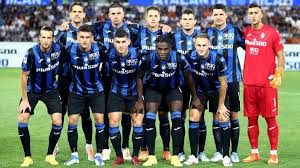
Following a summer of radical transformation that saw Maurizio Sarri appointed as head coach, Cristiano Giuntoli installed as sporting director, and over €100 million generated from the sales of two academy graduates to Chelsea, Atalanta enters 2026/27 with a squad rebuilt for a new tactical era and a club navigating the delicate transition from Gasperini’s man-marking intensity to Sarri’s positional discipline.
Technical Leadership & Coaching Profile
Manager: Maurizio Sarri
Sarri arrived at Zingonia in July as the chosen successor to the Gasperini era, tasked with implementing a complete philosophical reset. The 67-year-old Tuscan brings a possession-based, zonal-marking system that represents a fundamental departure from the man-oriented approach that defined Atalanta’s most successful period. His appointment followed the brief and underwhelming Palladino interlude, with the club’s hierarchy concluding that a clean break was necessary rather than an attempt to continue Gasperini’s methods with a different voice.
Tactical Philosophy
Sarri’s preferred 4-3-3 demands positional discipline, quick circulation, and a back four that defends zonally. Sporting director Giuntoli has publicly acknowledged the adaptation challenge: “We believe it takes time, because we are changing from man-marking to zonal, so that is a completely different way of looking at football. The lads need to adapt, it will take a while, but we are confident that we can do well”. The early evidence from the opening day victory over Sassuolo showed flashes of the new identity, though Sarri himself was quick to temper expectations, stating that “the level of play must not be this”.
Preferred Formations
4-3-3 with a possession-oriented build-up.
Strategic Transfer Activity
Atalanta’s summer window was the most ambitious of the Sarri-Giuntoli era, funded by two blockbuster sales to Chelsea. Marco Palestra departed for approximately €57 million plus bonuses, while Honest Ahanor commanded £40 million in a deal effective from 2027 with an immediate loan to Crystal Palace, generating a capital gain approaching €30 million. The club reinvested approximately €76 million, finishing with a net positive balance of around €34 million.
Table A: Summer Major Transfer Influx
| Player | Position | Former Club | Fee Paid |
|---|---|---|---|
| Jonathan Rowe | Winger | Bologna | Loan (conditional obligation ~€40M) |
| Thomas Kristensen | Center-Back | Udinese | Loan (conditional obligation ~€22M) |
| Gianluca Gaetano | Midfielder | Cagliari | Permanent (~€12M + €2M bonuses) |
| Franck Kessié | Midfielder | Al-Ahli | Free Agent |
| Eljif Elmas | Midfielder | RB Leipzig | Loan (option to buy) |
| Thomas Pompei | Goalkeeper | Cosenza | Permanent |
The First-Team Roster
Goalkeepers
Marco Carnesecchi (#29): The Italian goalkeeper remains Atalanta’s undisputed number one, his shot-stopping and command of the penalty area crucial to the club’s ambitions under Sarri. His distribution under pressure will be tested in a system that demands playing out from the back.
Marco Sportiello (#57): The experienced backup provides reliable coverage and started the season as the senior alternative, his familiarity with Serie A’s demands making him a trusted squad member.
Francesco Rossi (#31): The veteran third-choice goalkeeper offers additional depth, though his role has diminished with Vismara’s emergence.
Defenders
Giorgio Scalvini (#42): The academy graduate remains Atalanta’s most important defensive asset, his composure and ball-playing ability offering a modern centre-back profile ideally suited to Sarri’s build-up demands. The club resisted significant interest from Tottenham and Newcastle, valuing him at €50 million.
Isak Hien (#4): The Swedish centre-back has been a commanding presence when available, though his World Cup injury disrupted his pre-season integration. His physicality and aerial dominance provide the defensive steel Sarri’s structure requires.
Odilon Kossounou (#3): The Ivorian centre-back has attracted interest from English clubs, and his future remains under scrutiny as Sarri evaluates his suitability for a zonal system.
Thomas Kristensen (#31): The summer arrival from Udinese addresses the defensive void left by Djimsiti’s departure, his height and aerial ability offering a physical presence in both boxes.
Sead Kolašinac (#23): The experienced Bosnian provides defensive depth and Serie A know-how, his physicality and leadership offering valuable options across the back line.
Raoul Bellanova (#16): The Italian wing-back faces adaptation challenges in a back four, his lung-busting runs better suited to a five-man midfield. His future remains uncertain amid English interest.
Davide Zappacosta (#77): The veteran full-back offers experience and attacking thrust, though his role under Sarri requires adjustment from a wing-back profile to a more disciplined full-back.
Lorenzo Bernasconi (#47): The young left-back has been identified as a player Sarri rates highly, his energy and crossing ability offering a different dimension on the flank.
Nicola Zalewski (#59): The Polish international provides versatility across wide positions, his directness and work rate making him a reliable option.
Midfielders
Éderson (#13): The Brazilian midfielder has inherited the captain’s armband following De Roon’s departure, his box-to-box energy and tactical intelligence central to Sarri’s midfield structure. He wore the armband in the opening day victory over Sassuolo.
Mario Pašalić (#8): The Croatian remains a key figure, his late runs into the box and goal threat from midfield offering an attacking dimension from deep positions. He is viewed as the squad’s moral captain.
Gianluca Gaetano (#70): The summer arrival from Cagliari was Sarri’s specific request, his passing range and composure on the ball offering a goal threat from midfield. He registered his first assist for Raspadori’s opener against Sassuolo.
Franck Kessié (#19): The Ivorian returned to Serie A as a free agent, bringing physicality, experience, and a winning mentality from his time at AC Milan and Barcelona. Giuntoli confirmed Kessié “made the choice with his heart”.
Eljif Elmas (#99): The North Macedonian international arrived from RB Leipzig on loan, his versatility across midfield and attacking positions making him a valuable joker in Sarri’s system.
Lazar Samardžić (#10): The Serbian midfielder has struggled for consistency in previous seasons, but Sarri’s system may unlock his potential as a mezzala, his technical quality and shooting from distance offering an attacking dimension.
Marten de Roon (#15): DEPARTED — The Dutch midfielder joined Roma to reunite with Gasperini, his departure leaving a significant leadership void.
Forwards
Giacomo Raspadori (#18): The Italian forward has become a central figure in Sarri’s new system, his movement and finishing offering a focal point for the attack. He scored Atalanta’s first official goal of the season against Sassuolo, assisted by Gaetano.
Nikola Krstović (#90): The Montenegrin striker provides a physical presence and goalscoring threat, his match-winner against Sassuolo demonstrating his ability to impact games from the bench. He earned the Panini MVP award for that performance.
Gianluca Scamacca (#9): The Italian striker offers a different profile to Krstović, his technical ability and link-up play potentially suited to Sarri’s possession-based approach.
Charles De Ketelaere (#17): The Belgian forward can become a central figure in Sarri’s system, his versatility across attacking positions and creativity offering a different dimension to the attack.
Jonathan Rowe (#—): The deadline-day arrival from Bologna became the most expensive signing in Atalanta’s history at approximately €40 million. The England U21 European champion brings pace and unpredictability to the left flank, with Giuntoli stating he “can give us the quality in the final third that we are looking for”.
Kamaldeen Sulemana (#7): The Ghanaian winger offers explosive pace and directness, though his consistency remains a question mark as he adapts to Sarri’s tactical demands.
Leadership Group & Squad Regulations
Club Captain: Éderson
The Brazilian midfielder has assumed the captaincy following De Roon’s departure to Roma, a significant responsibility for a player entering his prime. His performance in the opening day victory, wearing the armband, suggests he is ready for the role.
The Leadership Committee
Mario Pašalić serves as the moral captain and senior voice alongside Éderson, his experience of Atalanta’s greatest modern triumphs providing a reference point for the club’s expectations. The departures of De Roon and Djimsiti have made his leadership more important than ever.
Homegrown Quota Check
With Giorgio Scalvini, Lorenzo Bernasconi, and several other academy graduates in the first-team squad, Atalanta maintains a strong connection to their youth pipeline. The club’s tradition of promoting from the U23 and Primavera remains a core principle, with Sarri himself declaring that “four of these boys will arrive in Serie A” when discussing the young talents at Zingonia.
Financial & Contractual Health
Financial Balance Overview
Atalanta’s salary limit for 2026/27 stands at approximately €73.8 million gross, ranking sixth in Serie A and representing a significant gap from the top four clubs. The club’s financial model remains built on youth development and smart recruitment, with the summer’s €34 million net positive balance from transfer activity demonstrating the sustainability of this approach.
Contract Red Alerts
Sergej Levak’s contract extension until 2031, following the club’s rejection of a €10 million offer from Newcastle, represents a significant statement of intent regarding the young Croatian midfielder’s future. Securing the futures of key assets like Scalvini remains a priority amid continued Premier League interest.
The Academy Pipeline & Loan Tracker
Breakout Talents to Watch
Sergej Levak has been the revelation of pre-season, the Croatian midfielder scoring a brace in the Clusone friendly and impressing Sarri with his box-to-box profile. The club rejected Newcastle’s €10 million offer and tied him to a contract until 2031. Relja Obrić has also convinced, the Slovenian defender combining contemporary ball-playing quality with traditional dueling and aerial ability. Federico Steffanoni, a 2008-born midfielder, has caught the eye with his dynamism and two-way play, while Alberto Manzoni offers creativity as a trequartista.
Notable Out on Loan
Dominic Vavassori departed for Palermo in Serie B after scoring 24 goals and providing nine assists in 65 appearances for the U23s, his loan designed to provide regular minutes in a promotion-chasing environment. Federico Cassa, a 2006-born winger, is expected to join Monza in Serie A on loan to add “centimeters of concreteness” to his game.
Set-Piece Specialists & FPL Cheat Sheet
Penalties: Giacomo Raspadori (First Choice) / Lazar Samardžić (Second Choice).
Direct Free-Kicks: Lazar Samardžić / Gianluca Gaetano.
Corners & Crosses: Gianluca Gaetano / Lorenzo Bernasconi.
Final Outlook: A New Era Begins
Atalanta enters 2026/27 in a state of deliberate reinvention. The summer’s radical overhaul — new coach, new system, new captain, and over €100 million in sales — represents the most significant philosophical shift since Gasperini’s arrival reshaped the club’s identity nearly a decade ago.
The early returns offer cautious encouragement. The opening day victory over Sassuolo, secured through Raspadori’s early goal and Krstović’s late winner, demonstrated the attacking quality that remains within the squad. The deadline-day arrivals of Rowe and Kessié added pace and physicality to a group that had lacked both.
The challenge ahead is adaptation. Giuntoli’s admission that “it will take time” to implement Sarri’s zonal system is a realistic assessment of the transition period required. The departure of De Roon, a symbol of the Gasperini era, and the captaincy handover to Éderson signal a clear break with the past. Whether the new leadership group can guide the squad through the inevitable teething problems will determine whether this season becomes a genuine rebirth or a difficult interregnum.
The margin for error is moderate. Atalanta’s financial model remains sound, the academy continues to produce first-team talent, and the squad possesses quality across every department. But the tactical transition from man-marking to zonal defending is notoriously demanding, and Sarri’s methods require patience. If the adaptation accelerates and the new signings integrate quickly, Atalanta could emerge as one of the season’s most compelling stories. If not, the club may need to accept that the new era will take longer to bear fruit than the summer’s investment suggested.