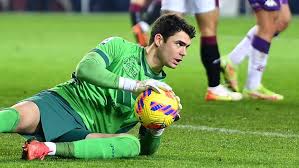
CLUB SNAPSHOT: At a Glance

| Category | Details |
|---|---|
| Club | TSG 1899 Hoffenheim |
| League | Bundesliga |
| Manager | Christian Ilzer |
| Stadium | PreZero Arena |
| Nickname | Die Kraichgauer |
| Founded | 1899 |
| First-Choice Centre-Backs | Ozan Kabak / Koki Machida |
| First-Choice Full-Backs | Vladimír Coufal (RB) / Mats Rots (LB) |
| Key Absences | Albian Hajdari, Robin Hranáč, Valentin Gendrey |
| Defining Trait | A defence built for aggressive pressing and aerial dominance, now held together by two fit centre-backs and whatever Ilzer can improvise |
The Defining Moment
Hoffenheim’s defensive unit entered the 2026/27 season as the foundation of Christian Ilzer’s tactical revolution. The previous campaign had been a triumph of organisation and intensity: fifth place, a push for Champions League qualification, and a defensive record that ranked among the Bundesliga’s best for long stretches . Vladimír Coufal, the free-transfer arrival from West Ham, had embodied the system’s demands, leading the league in sprints, intensive runs, and distance covered . Ozan Kabak had established himself as one of the division’s most dominant aerial defenders, contesting 9.21 aerial duels per 90 minutes at a success rate of 58.71% .
The defining problem emerged not from the system but from the bodies required to execute it. By the first week of November 2026, Hoffenheim’s defensive depth had been reduced to a skeleton. Albian Hajdari, the 23-year-old Kosovo international, had undergone meniscus surgery and would not return until January at the earliest . Robin Hranáč, the Czech centre-back, had suffered an external meniscus injury requiring a minor operation, with fears of a longer absence . Valentin Gendrey, the French right-back, was described as “seriously injured” . Even Coufal, the 34-year-old ironman, was unavailable .
The defining tension of Hoffenheim’s defensive season is therefore one of exhaustion and improvisation. Ilzer’s system demands physical competitiveness, aggressive covering of space, and relentless duelling—qualities that require fit bodies and rotation options. With only Kabak and Machida remaining as recognised centre-backs, and with full-backs forced to consider emergency roles in the centre, the question is not whether the system can function but how long it can survive before collapse .
This is the story of Hoffenheim’s 2026/27 defenders: a system designed for aggression and aerial dominance, a squad decimated by injuries at the worst possible moment, and a manager forced to improvise with the few healthy bodies he has left.
Tactical Context
Ilzer’s defensive philosophy is inseparable from his broader pressing structure. Hoffenheim do not defend passively; they defend by compressing space, maintaining tight central access, and forcing opponents into predictable long balls that their physically dominant defenders can win . The system shifts between back fours and back threes depending on the opponent, but the core principles remain constant: aggressive jumps, sustained intensity, and defensive cover behind the press .
This interpretation of the role explains why Ilzer’s defenders are selected as much for their physical profiles as their technical quality. Kabak’s aerial dominance and Bernardo’s duel-winning capacity were not incidental to Hoffenheim’s success; they were the mechanism through which the press functioned . Coufal’s extraordinary running statistics were a direct expression of Ilzer’s demand for full-backs who could contribute at both ends without flagging .
The tactical question Ilzer inherited was how to sustain this approach with a depleted squad. The 3-5-2 used against Werder Bremen in late October—a 0-2 defeat—was an emergency measure, a recognition that the available personnel could not execute the preferred back four . The shift to a back three offered additional central cover, but it also reduced the attacking width that Coufal and Rots were signed to provide. Ilzer’s challenge is to find a structure that protects his remaining defenders without abandoning the principles that made Hoffenheim successful.
The Defenders
Ozan Kabak
Kabak is the anchor of Hoffenheim’s defence and, with Hajdari and Hranáč unavailable, the player upon whom the entire structure depends. The 26-year-old Turkish international has been one of the Bundesliga’s most effective aerial defenders since arriving at Hoffenheim, and his 12 appearances this season—986 minutes, one goal—reflect his status as the first name on Ilzer’s teamsheet .
His profile is that of the physically dominant, front-foot centre-back: aggressive in the air, proactive in stepping out, and comfortable defending large spaces when the press is bypassed. His aerial statistics from the previous campaign—9.21 duels contested per 90, 58.71% success rate—were among the best in the division for a defender with significant minutes . He is not the most technically refined ball-player, but in Ilzer’s system, his defensive qualities are the priority.
The question for Kabak this season is not whether he remains Hoffenheim’s most important defender—he clearly does—but whether he can sustain the workload. With no natural rotation options available, Kabak has played nearly every minute of every match. At 26, he is in his prime, but the physical demands of Ilzer’s system are unforgiving, and the absence of cover means there is no margin for fatigue or injury.
Koki Machida
Machida is the surviving partner, a 29-year-old Japanese centre-back whose 10 appearances and 722 minutes this season have made him Kabak’s essential counterpart . His profile is more measured than Kabak’s: positionally disciplined, technically secure, and capable of contributing to build-up without abandoning his defensive responsibilities.
His role has become more demanding as the injuries have accumulated. With Hajdari and Hranáč unavailable, Machida is no longer a rotation option but a guaranteed starter, and the physical toll of playing every match in a high-pressing system is significant. His one goal this season—against an unspecified opponent—reflects his willingness to contribute in the opposition box, but his primary value lies in the stability he provides alongside Kabak.
At 29, Machida is neither a long-term project nor a short-term fix. He is a competent Bundesliga centre-back who has been thrust into a role of unexpected importance. Whether he can sustain that role through the winter months will be one of the defining questions of Hoffenheim’s season.
Vladimír Coufal
Coufal is the embodiment of Ilzer’s philosophy, a 34-year-old Czech right-back whose energy and durability have made him one of the most distinctive players in the Bundesliga. His 12 appearances and 1,014 minutes this season—the most of any Hoffenheim defender—reflect a player who has defied his age and the physical demands of the system .
His profile is that of the relentless, industrious full-back: a league leader in sprints, intensive runs, and distance covered during the previous campaign, and a defender whose commitment to the press is absolute . His four assists this season demonstrate that his attacking contribution remains significant, even as the defensive structure around him has crumbled.
The problem is availability. Coufal was listed among the absentees in early November, and at 34, his body cannot be expected to recover as quickly as it once did . His absence, combined with Gendrey’s injury, has left Hoffenheim without a recognised right-back, forcing Ilzer to consider emergency options. When fit, Coufal remains indispensable. When not, the entire right side of the system loses its most important component.
Mats Rots
Rots is the young left-back, a 20-year-old Dutchman whose 11 appearances and 737 minutes this season have established him as a first-choice option despite his age . His profile is that of the modern attacking full-back: comfortable in possession, willing to push forward, and capable of contributing to the press without being exposed defensively.
His development has been accelerated by necessity. With Bernardo, the 31-year-old Brazilian, limited to four appearances and 328 minutes, Rots has become the primary option on the left . His lack of experience is a vulnerability that opponents will target, but his performances have suggested a player capable of handling the responsibility.
The question for Rots is whether he can maintain his form through a period when the defensive structure around him is at its most fragile. At 20, he is being asked to perform a role that would challenge players a decade older, and the absence of experienced partners in the back line places additional pressure on his decision-making.
Albian Hajdari
Hajdari is the missing centre-back, a 23-year-old Kosovo international whose season has been interrupted by meniscus surgery and whose return is not expected until January . His six appearances and 447 minutes before the injury suggested a player establishing himself as a genuine rotation option, and his absence has been the most damaging of the defensive injuries.
His profile is that of the athletic, ball-playing centre-back: comfortable in possession, capable of stepping into midfield, and physically suited to Ilzer’s demanding system. At 23, he represents both an immediate squad option and a long-term investment. His return in the new year will be a significant boost, but the months without him will test Hoffenheim’s depth to its limits.
Robin Hranáč
Hranáč is the other injured centre-back, a 26-year-old Czech whose external meniscus injury required a minor operation and whose return timeline remains uncertain . His eight appearances and 375 minutes this season reflected a player on the periphery of the starting XI, but in a squad this thin, even peripheral players are essential.
His profile is that of the reliable squad defender: physically robust, tactically disciplined, and capable of filling in without destabilising the structure. His absence, combined with Hajdari’s, has reduced Hoffenheim’s centre-back options from four to two, a situation that Ilzer described as forcing him to consider “the full-backs Bernardo and Mats Rots” as emergency alternatives .
Valentin Gendrey
Gendrey is the forgotten right-back, a 26-year-old Frenchman whose season has been destroyed by a serious injury sustained early in the campaign . His five appearances and 99 minutes reflect a player who was expected to compete with Coufal for the right-back position but whose body has not allowed him to do so.
His absence has been compounded by Coufal’s own unavailability, leaving Hoffenheim without a natural right-back for crucial matches. When fit, Gendrey offers a younger, more defensively secure alternative to Coufal’s all-action style. When not—as has been the case for most of the season—he is a reminder of how quickly a squad’s depth can evaporate.
Bernardo
Bernardo is the veteran left-back whose role has diminished to emergency cover. The 31-year-old Brazilian has made four appearances and 328 minutes this season, and with Rots established on the left and the centre-back crisis deepening, he has been identified as a potential option in the centre of defence .
His profile is that of the experienced utility defender: capable of playing multiple positions, physically competitive, and tactically aware enough to adapt to unfamiliar roles. At 31, he is not a long-term solution, but in a squad this depleted, his versatility is a valuable asset.
The Numbers Game
TABLE A: Hoffenheim Defender Bundesliga Statistics (2026/27, as of November)
| Player | Apps | Minutes | Goals | Assists |
|---|---|---|---|---|
| Vladimír Coufal | 12 | 1,014 | 0 | 4 |
| Ozan Kabak | 12 | 986 | 1 | 0 |
| Mats Rots | 11 | 737 | 0 | 0 |
| Koki Machida | 10 | 722 | 1 | 0 |
| Albian Hajdari | 6 | 447 | 0 | 0 |
| Robin Hranáč | 8 | 375 | 0 | 0 |
| Bernardo | 4 | 328 | 0 | 0 |
| Valentin Gendrey | 5 | 99 | 0 | 0 |
Figures include all competitions .
TABLE B: Hoffenheim Defensive Unit – Key Metrics (2026/27)
TABLE C: Defender Career Context & Pedigree
| Player | Nationality | Previous Clubs | Style Profile |
|---|---|---|---|
| Ozan Kabak | Türkiye | Schalke, Liverpool (loan), Stuttgart | Aerial dominant, aggressive, front-foot |
| Koki Machida | Japan | Union SG, Kashima Antlers | Positional, composed, technical |
| Vladimír Coufal | Czech Republic | West Ham, Slavia Prague | Relentless, industrious, experienced |
| Mats Rots | Netherlands | Ajax Academy | Developing, attacking, modern |
| Albian Hajdari | Kosovo | Basel, Juventus (youth) | Athletic, ball-playing, injury-prone |
| Robin Hranáč | Czech Republic | Viktoria Plzeň | Reliable, physical, squad depth |
| Valentin Gendrey | France | Amiens, Lecce | Defensively secure, injury-prone |
| Bernardo | Brazil | Red Bull Salzburg, Brighton | Versatile, experienced, utility |
Tactical Identity & Squad Balance
Hoffenheim’s defensive unit reflects a club that built its success on physicality and intensity, only to discover that those qualities require bodies it no longer has. The system Ilzer implemented in 2025/26 was designed around defenders who could win duels, cover space aggressively, and sustain pressure for ninety minutes . Kabak and Coufal were the exemplars of that approach; their statistics—aerial duels won, sprints completed, distance covered—were not incidental but foundational .
The vulnerability identified by the injury crisis is not tactical but structural. A system that demands so much from its defenders requires rotation, and Hoffenheim’s squad was not built to provide it. The decision to enter the season with four senior centre-backs—Kabak, Machida, Hajdari, and Hranáč—was reasonable in theory but catastrophic in practice when three of them became unavailable simultaneously . The emergency solutions Ilzer has considered—Bernardo in the centre, Rots shifting inside, a back three—are compromises that weaken other areas of the team.
The broader question is whether Hoffenheim’s defensive success in 2025/26 was sustainable in the first place. The system’s reliance on duels and intensity placed enormous physical demands on players, and the injury crisis of 2026/27 may be less an anomaly than a consequence. If Ilzer’s approach cannot be sustained across a full season without a deeper squad, the club faces a choice between adapting the system or investing in the personnel required to execute it.
The Verdict from the Camp
LAOLA1, on the defensive injury crisis:
“The injury worries at TSG Hoffenheim are never-ending. Particularly in defence, the options available to coach Christian Ilzer are becoming thinner and thinner.”
Kicker, on the centre-back shortage:
“In the centre of defence, the squad is now extremely thin. Ilzer has only two recognised centre-backs left in Ozan Kabak and Koki Machida, and even their durability is finite.”
LigaInsider, on emergency options:
“The trade magazine names the full-backs Bernardo and Mats Rots as alternatives for the centre, with the former having played in the centre of defence several times in his career. A switch to a back three is also conceivable. Further options would be defensive midfielder Cajetan Lenz or Sean Dulic, who has so far only played for Hoffenheim’s third-division team.”
Where Next?
Hoffenheim’s defensive priority is clear: they need bodies back. Hajdari’s return in January, Hranáč’s recovery from surgery, and Gendrey’s eventual comeback will determine whether Ilzer can restore the system that brought success last season or whether he must adapt to survive with the players available.
The immediate challenge is navigating the next two months with two fit centre-backs and no recognised right-back. Kabak and Machida cannot play every minute, and the emergency options—Bernardo in the centre, Rots shifting inside, a back three—are compromises that weaken the team elsewhere. The Europa League and DFB-Pokal offer no respite; every competition demands the same intensity from the same exhausted players.
The longer-term question is whether Hoffenheim’s defensive model is sustainable. The injuries to Hajdari, Hranáč, and Gendrey are not isolated misfortunes but symptoms of a system that places extraordinary demands on its defenders. If Ilzer wants to preserve his approach, the club must invest in depth. If the club cannot or will not, the system may need to evolve.
For now, Hoffenheim’s defenders are a unit in crisis management: two fit centre-backs holding the line, a 34-year-old right-back whose body is finally showing signs of wear, a 20-year-old left-back thrust into responsibility, and a manager whose tactical identity depends on players he does not have.