CLUB SNAPSHOT: At a Glance
| Category | Details |
|---|---|
| Club | Borussia Dortmund |
| League | Bundesliga |
| Manager | Niko Kovač |
| Stadium | Signal Iduna Park |
| Nickname | Die Schwarzgelben / BVB |
| Founded | 1909 |
| First-Choice Striker | Serhou Guirassy |
| Supporting Forward | Maximilian Beier |
| Departure | Karim Adeyemi (to Barcelona) |
| Notable Sale | Julien Duranville (to Lyon) |
The Defining Moment
Borussia Dortmund’s 2026/27 forward line was defined by a departure that reshaped the hierarchy and an arrival that never materialised. When Karim Adeyemi joined Barcelona for €22 million in July, Dortmund lost their most explosive wide threat—a player whose pace and directness had tormented Bundesliga full-backs for four seasons . The club’s response was not to sign a replacement, but to redistribute the attacking burden.
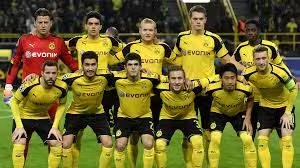
The defining moment, however, was not Adeyemi’s exit. It was the emergence of Serhou Guirassy as something more than a poacher. The Guinean striker had always been a finisher—64 goals in 102 appearances before this season testified to that—but the 2026/27 campaign revealed a different dimension. By early October, Guirassy had not only scored four goals in five matches but also provided four assists, already matching his assist tallies from each of the previous two full campaigns . He was no longer merely the end point of attacks; he was becoming their orchestrator.
This is the story of Dortmund’s 2026/27 forwards: a striker evolving beyond his defined role, a supporting cast of versatile attackers, and a club whose attacking depth was tested by the loss of its most electric talent.
Tactical Context
Niko Kovač’s attacking structure has been built around Guirassy as the focal point, with Maximilian Beier and the wide players providing movement and creativity around him. The 3-4-2-1 and 4-2-3-1 shapes that Kovač has alternated between both place a premium on the striker’s ability to link play as well as finish chances.
The numbers tell a story of a forward line that has been efficient without being prolific. Dortmund scored 15 goals in their opening seven Bundesliga matches, a respectable return that placed them level on points with Bayern Munich at the top of the table . Guirassy contributed two goals and two assists in those seven league appearances, while Beier matched him with two goals and two assists in fewer minutes .
The structural issue is depth. With Adeyemi gone and Julien Duranville sold to Lyon for €5 million, Dortmund’s wide attacking options are thinner than in previous seasons . Fabio Silva, the Portuguese forward who arrived in the summer, has provided competition through the middle, and his partnership with Guirassy has already yielded goals—Guirassy assisted both of Silva’s league strikes in the opening weeks . But the wide positions lack the explosive pace that Adeyemi provided, and Kovač has been forced to rely on midfielders like Julian Brandt and Jamie Gittens to fill the gaps.
The supporting cast has been fluid. Beier, nominally a midfielder but increasingly deployed as a forward, has been the most effective secondary scorer, his movement and finishing making him a genuine alternative to Guirassy . Silva offers a different profile—more physical, more of a traditional centre-forward—and his ability to play alongside Guirassy has given Kovač tactical flexibility.
The Forwards
Serhou Guirassy
Guirassy is Dortmund’s first-choice striker, joint top scorer, and the player whose evolution has defined the forward line. The 30-year-old Guinean has been at the club since 2024, scoring 64 goals in 102 appearances before this season, and his importance to Kovač’s structure is unquestioned .
His profile has traditionally been that of a poacher: a finisher who lives in the penalty area and turns a small number of touches into goals. His finishing and goal threat rank among the Bundesliga’s best, and his durability—he has missed no games through injury in the past two years—makes him a reliable presence . But this season has revealed a new dimension. Guirassy’s four assists in the opening weeks, matching his tallies from each of the previous two campaigns, reflect a willingness to drop deeper, link play, and create for others . His understanding with Silva, in particular, has paid dividends, with the Portuguese forward crediting Guirassy for making him a better player.
At 30, Guirassy is in his prime. His contract runs until 2028, though Dortmund have prioritised other extensions—Anton, Kobel, and Ryerson—before opening talks with their striker . The delay is a calculated risk: Guirassy’s form will attract interest, and his value has never been higher.
Maximilian Beier
Beier is Dortmund’s most versatile forward and the player whose development has been most accelerated by Adeyemi’s departure. The 24-year-old German international has been deployed primarily as an attacking midfielder but has increasingly operated as a centre-forward, his movement and finishing making him a genuine goal threat from multiple positions .
His profile is that of a modern forward: comfortable in tight spaces, capable of arriving in the box late, and possessing the creativity to link play. His two goals and two assists in seven Bundesliga appearances represent a respectable return for a player who has often been deployed in a supporting role, and his expected goals figures suggest the output is sustainable .
At 24, Beier is entering the years when a forward should establish himself. His contract runs until 2029, and his versatility—he can play through the middle, from the left, or as a No. 10—makes him invaluable in a squad that lacks depth in wide areas.
Fabio Silva
Silva arrived in the summer as a relatively low-profile addition, but his impact has been significant. The Portuguese forward has formed a productive partnership with Guirassy, his movement and physicality complementing the Guinean’s link play. Guirassy assisted both of Silva’s league goals in the opening weeks, and the two have spoken of a mutual understanding that allows them to “create more space for each other” .
His profile is that of a traditional centre-forward: strong in the air, capable of holding the ball, and willing to run the channels. At 24, he is at an age where he should be entering his prime, and his partnership with Guirassy offers Kovač the option of playing two strikers when the situation demands.
Karim Adeyemi (departed)
Adeyemi’s departure to Barcelona in July removed Dortmund’s most explosive attacking threat. The 24-year-old German international had spent four seasons in the Bundesliga, making 11 appearances for Germany, and his pace and directness had tormented full-backs across the division . His €22 million fee represented a significant return on a player whose contract had been due to expire in 2027, but his exit left a void that Dortmund have not fully filled .
His form at Barcelona—seven goal contributions in his first ten competitive appearances—has vindicated the Catalan club’s investment and reinforced the sense that Dortmund may have sold too soon .
Julien Duranville (departed)
Duranville’s Dortmund career ended in July when he joined Lyon for €5 million, a fee that could rise to €8.5 million with bonuses . The 20-year-old Belgian winger had arrived from Anderlecht in 2023 with a reputation for explosive pace, but injuries and inconsistency limited him to 27 appearances and a single goal. His departure continued a pattern of talented young forwards failing to establish themselves at Signal Iduna Park.
The Numbers Game
TABLE A: Borussia Dortmund Forward Bundesliga Statistics (2026/27)
| Player | Apps (Starts) | Minutes | Goals | Assists | Position |
|---|---|---|---|---|---|
| Serhou Guirassy | 7 (7) | 609 | 2 | 2 | Striker |
| Maximilian Beier | 7 (5) | 442 | 2 | 2 | Forward/AM |
| Fabio Silva | 7 (5) | ~400 | 2 | 0 | Striker |
| Karim Adeyemi | 0 (0) | 0 | 0 | 0 | Departed |
| Julien Duranville | 0 (0) | 0 | 0 | 0 | Departed |
TABLE B: Borussia Dortmund Attack – Key Metrics (Bundesliga 2026/27)
| Metric | Value | Context |
|---|---|---|
| Goals Scored | 15 | In 7 matches |
| Goals per Game | 2.14 | Among Bundesliga’s best |
| Guirassy Goal Contributions | 4 | 2 goals, 2 assists |
| Guirassy Assists (2025/26 full season) | 2 | Already matched |
| Beier Goals per 90 | 0.41 | Among squad’s best |
TABLE C: Borussia Dortmund Forwards – Squad Profile
| Player | Age | Contract Until | Market Value | Role |
|---|---|---|---|---|
| Serhou Guirassy | 30 | 2028 | €40m | First-choice striker |
| Maximilian Beier | 24 | 2029 | €30m | Supporting forward |
| Fabio Silva | 24 | 2029 | €20m | Rotation/partner |
| Karim Adeyemi | 24 | 2031 (Barcelona) | €35m | Departed |
| Julien Duranville | 20 | 2031 (Lyon) | €8m | Departed |
Tactical Identity & Squad Balance
Dortmund’s forward line is a unit defined by adaptation. The pre-season plan was built around Adeyemi’s pace on the flanks and Guirassy’s finishing through the middle. Adeyemi’s departure removed the former, forcing Kovač to reconfigure an attack that had been designed around a player no longer at the club.
The numbers suggest the adaptation has been successful. Fifteen goals in seven matches, with Guirassy and Beier contributing four goal involvements each, represents a return that few predicted after Adeyemi’s exit. The partnership between Guirassy and Silva has been particularly encouraging, offering Kovač the option of a two-striker system that provides a different challenge for opponents.
The deeper concern is depth. With Adeyemi and Duranville gone, Dortmund’s wide attacking options are limited. Julian Brandt and Jamie Gittens have filled the gaps, but neither is a natural forward, and the fixture congestion of the Bundesliga and Champions League will test the squad’s ability to rotate. The January window may offer an opportunity to add a wide forward, but Dortmund’s priorities have historically been elsewhere.
The Verdict from the Camp
On Guirassy’s evolving role:
“His understanding with Silva, in particular, has paid dividends, with Guirassy creating both of his strike partner’s league goals in 2026/27. As a result, the Portuguese has shown his appreciation for the Guinea international, saying before the international break, ‘I play better when I play alongside him. We can create more space for each other. We create more chances and have a stronger presence in the penalty area.'”
On Guirassy’s contract situation:
“Guirassy soll verlängern, er muss sich aber noch ein bisschen gedulden. Er ist in der Warteschlange nicht ganz vorne. Waldemar Anton soll als erster verlängern… Dann soll Gregor Kobel folgen… Und erst dann soll mit Julian Ryerson und Guirassy gesprochen werden.”
On Adeyemi’s departure:
“Der Ablauf der Ereignisse sorgt beim BVB nun im Nachhinein dem Bericht zufolge für Unzufriedenheit. Adeyemi spielt bei Barcelona bislang groß auf und kommt in zehn Pflichtspielen schon auf sieben Scorerpunkte.”
Where Next?
The specific question hanging over Dortmund’s forward line is whether Guirassy can sustain his evolved role across a full season. His four assists in the opening weeks represent a new dimension to his game, but the sample size is small, and the fixture list will bring opponents who are content to sit deep and deny him space in behind.
That makes Guirassy’s contract situation the most important variable. Dortmund have prioritised other extensions, leaving their leading scorer waiting until early 2027 for talks . If his form continues, interest from larger clubs will intensify, and the club may face a decision similar to the one that saw Adeyemi depart for Barcelona.
The deeper concern is depth. Beier and Silva have provided capable support, but neither offers the explosive pace that Adeyemi provided from wide areas. If Guirassy is injured or suspended, Dortmund’s attack lacks a proven alternative. The January window may offer an opportunity to address that gap, but the club’s financial priorities lie elsewhere.
For now, Dortmund’s forwards are performing above expectations. Guirassy’s goals and assists, Beier’s versatility, and Silva’s partnership with the Guinean have given the Schwarzgelben an attack capable of competing with Bayern. Whether that translates into silverware depends on whether the structure holds when the margins tighten.