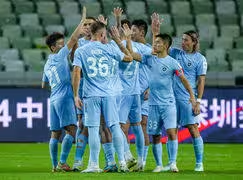
CLUB SNAPSHOT: At a Glance

| Category | Details |
|---|---|
| Club | 1. FC Union Berlin |
| League | Bundesliga |
| Manager | Mauro Lustrinelli |
| Stadium | Stadion An der Alten Försterei |
| Nickname | Die Eisernen |
| Founded | 1966 |
| First-Choice Midfield | Rani Khedira / Michel Aebischer |
| Key Rotation | András Schäfer, Janik Haberer, Aljoscha Kemlein |
| Key Arrivals | Michel Aebischer, Kastriot Imeri |
| Defining Trait | A midfield assembled for function over flair, anchored by a captain whose leadership cannot compensate for a chronic lack of creativity |
The Defining Moment
Union Berlin’s midfield entered the 2026/27 season as the least glamorous unit in a squad already defined by austerity. The departures of Alex Kral and the failure to replace him with a player of comparable defensive quality were noted in pre-season, but the club’s response was not to reinvest in midfield but to add depth in other areas. Michel Aebischer arrived from Pisa for approximately €3.5 million, a modest fee for a 29-year-old Swiss international whose profile was functional rather than transformative . Kastriot Imeri joined from Young Boys to offer another option in the attacking midfield positions . Rani Khedira, the captain, remained the anchor.
The defining problem was not personnel but purpose. Union’s midfield was built to destroy, not to create. Khedira and Aebischer are both defensively responsible, positionally disciplined, and comfortable in possession without being progressive. Schäfer offers energy. Haberer offers experience. Kemlein offers youth. None of them offers the kind of incisive passing or creative spark that a team struggling for goals desperately needs. By early November, Union had scored just seven goals in nine Bundesliga matches, the second-worst tally in the division, and their goal difference of -14 was the worst in the league .
The defining tension of Union’s midfield season is therefore one of limitation. Lustrinelli was hired to implement a more attractive, offensive style, but the midfield he inherited was constructed for a different era—the era of defensive solidity and direct football that defined Union’s rise to the Bundesliga and their brief Champions League adventure. The players available are competent at what they do, but what they do is not what the new manager wants. Whether Lustrinelli can adapt his ideals to the personnel he has, or whether the personnel must be replaced to realize his vision, is the question that defines Union’s season.
This is the story of Union’s 2026/27 midfielders: a captain whose leadership is unquestioned but whose legs are slowing, a Swiss recruit whose passing is tidy but whose impact is minimal, a Hungarian international whose energy cannot compensate for the team’s structural deficiencies, and a collection of squad players whose limitations have been exposed by a system that demands more than they can give.
Tactical Context
Lustrinelli’s preferred approach is built on pressing, intensity, and a measure of attacking ambition. But Union’s statistical profile in the early season suggests a team that is neither pressing effectively nor attacking coherently. They average 42% possession and complete only 74% of their passes, among the worst figures in the division . Their midfield is frequently bypassed, forced to defend in transition rather than control the ball, and when they do win it back, they lack the quality to keep it.
Aebischer’s profile illustrates the dilemma. The Swiss midfielder is a deep-lying playmaker by trade, a player who “sets the tempo from deep with long and short passing and rarely loses the ball” . His strengths are short passing, ball retention, and long passing. His weaknesses are finishing, goal threat, and decisive moments. In a team that dominates possession, these attributes would be valuable. In a team that struggles to keep the ball, they are almost irrelevant. Aebischer has started every league game this season, averaging 6.55, with no goals and no assists . He is doing what he was signed to do, but what he was signed to do is not enough.
Khedira, at 32, remains the captain and the emotional leader . His role is to shield the defence, break up play, and provide the kind of physical presence that Union’s back line requires. But he is not mobile enough to cover the ground that Lustrinelli’s pressing system demands, and his distribution is limited. The midfield’s inability to protect the defence—Union face 15.27 shots per game, among the highest in the division—is a collective failure, but Khedira’s declining physical capacity is a significant factor.
The Midfielders
Rani Khedira
Khedira is the captain and the anchor, a 32-year-old German midfielder who has been at Union since 2021 and whose leadership was confirmed by Lustrinelli’s decision to keep him as captain for the 2026/27 season . His profile is that of the traditional defensive midfielder: physically strong, positionally disciplined, and capable of breaking up play without offering much in possession.
At 32, his limitations are becoming more apparent. The Bundesliga is faster and more demanding than it was when Khedira established himself, and his lack of mobility exposes him against teams that move the ball quickly. His value to the squad extends beyond his on-pitch contributions—his experience and leadership are important in a dressing room that has seen significant turnover—but Union’s midfield cannot afford sentimentality if Lustrinelli’s system is to function.
Michel Aebischer
Aebischer is the summer arrival and the most technically refined midfielder in the squad. The 29-year-old Swiss international joined from Pisa for approximately €3.5 million after a season in which he played 2,898 minutes across 35 Serie A appearances, scoring once and assisting twice . His profile is that of the deep-lying playmaker: composed, accurate, and conservative in his distribution.
His early Union statistics reflect a player still adjusting to a team that does not dominate the ball as he is accustomed to. In six Bundesliga matches, he has no goals, no assists, and an average rating of 6.55 . His passing remains tidy—his short passing and long passing are both strengths—but tidy passing in a team that struggles to score is not enough. Aebischer is a good player in the wrong team, or perhaps a player whose qualities are invisible in a side that cannot impose itself on matches.
András Schäfer
Schäfer is the energy in the midfield, a 27-year-old Hungarian international whose running and pressing have made him a fixture in the starting XI . His profile is that of the box-to-box midfielder: mobile, aggressive, and capable of contributing at both ends without excelling at either.
His limitations are technical. Schäfer is not a progressive passer, and his decision-making in the final third is inconsistent. In a team that creates few chances, his inability to convert energy into end product is a significant problem. He is the kind of player who thrives in a functioning system, but Union’s system is not functioning.
Janik Haberer
Haberer is the experienced squad option, a 32-year-old German midfielder who has been at Union since 2022 . His profile is that of the versatile, reliable professional: capable of playing multiple midfield roles, positionally aware, and unlikely to make costly mistakes.
At 32, he is not a long-term solution, but in a squad as thin as Union’s, his availability and professionalism are valuable. His role this season has been as a rotation option and substitute, offering Lustrinelli a measure of flexibility in a position where options are limited.
Aljoscha Kemlein
Kemlein is the young depth option, a 22-year-old German midfielder who has come through Union’s academy and represents the club’s long-term future . His opportunities this season have been limited, but in a squad that lacks creativity, his development is worth monitoring.
His profile is that of the developing central midfielder: technically competent, physically still maturing, and learning the positional demands of top-level football. At 22, he is not yet ready for a sustained starting role, but he offers hope for a future in which Union’s midfield is rebuilt around younger, more dynamic players.
Kastriot Imeri
Imeri is the late-summer arrival, a 26-year-old Swiss midfielder who joined from Young Boys in September 2026 . His profile is that of the attacking midfielder: capable of playing in central or wide positions, technically gifted, and comfortable in the final third.
His integration has been gradual, and his opportunities have been limited by the form and fitness of others. But in a team that struggles for creativity, Imeri’s profile offers something different from the functional midfielders who have dominated the starting XI. Whether Lustrinelli gives him the chance to show it remains to be seen.
Woo-Yeong Jeong
Jeong is the wide midfield option, a 27-year-old South Korean international whose pace and directness offer a different dimension from the central midfielders . His role this season has been primarily as a substitute or rotation option, and his contributions have been modest.
His profile is that of the wide midfielder who can also play as an attacking midfielder: quick, direct, and capable of stretching defences. In a team that struggles to create, his willingness to run at defenders is valuable, but his end product remains inconsistent.
Robert Skov
Skov is the versatile squad player, a 30-year-old Danish midfielder who can play on either flank or in a more central role . His profile is that of the technically secure, experienced professional: capable of contributing in multiple positions, reliable in possession, and unlikely to be overwhelmed by the occasion.
At 30, he is not a long-term solution, but his versatility is valuable in a squad as thin as Union’s. His opportunities this season have been limited, but he remains an option that Lustrinelli can call upon when injuries or rotation demand it.
The Numbers Game
TABLE A: Union Berlin Midfielder Bundesliga Statistics (2026/27, as of November)
| Player | Apps | Minutes | Goals | Assists | Rating |
|---|---|---|---|---|---|
| Michel Aebischer | 6* | 466* | 0 | 0 | 6.55* |
| Rani Khedira | 9** | — | 0** | 0** | — |
| András Schäfer | 9** | — | 0** | 0** | — |
| Janik Haberer | — | — | — | — | — |
| Aljoscha Kemlein | — | — | — | — | — |
*Figures from ScoutingStats.AI for Aebischer . **Khedira and Schäfer were named in the starting XI for Matchday 9 against an unspecified opponent .
TABLE B: Union Berlin Midfield Unit – Key Metrics (2026/27)
TABLE C: Midfielder Career Context & Pedigree
| Player | Nationality | Previous Clubs | Style Profile |
|---|---|---|---|
| Rani Khedira | Germany | Augsburg, RB Leipzig, Stuttgart | Defensive anchor, leader, declining mobility |
| Michel Aebischer | Switzerland | Pisa, Bologna, Young Boys | Deep-lying playmaker, tidy, unspectacular |
| András Schäfer | Hungary | DAC Dunajská Streda, Genoa | Box-to-box, energetic, technically limited |
| Janik Haberer | Germany | Bochum, Freiburg | Versatile, experienced, reliable |
| Aljoscha Kemlein | Germany | Union Berlin Academy | Developing, technical, long-term project |
| Kastriot Imeri | Switzerland | Young Boys, Servette | Attacking midfielder, technical, unproven at this level |
| Woo-Yeong Jeong | South Korea | Freiburg, Bayern II | Wide midfielder, direct, inconsistent |
| Robert Skov | Denmark | Hoffenheim, Copenhagen | Versatile, technical, squad depth |
Tactical Identity & Squad Balance
Union’s midfield reflects a club that has prioritised survival over ambition for so long that the two have become difficult to distinguish. The squad was assembled to compete in the Bundesliga through organization, physicality, and set-piece threat. It was not assembled to play the kind of football Lustrinelli was hired to implement.
The vulnerability identified by the early season is not individual quality but collective creativity. Union’s midfielders are competent professionals, but none of them possesses the ability to unlock a defence, dictate a game, or provide the kind of incisive passing that turns possession into chances. Aebischer’s passing is tidy but conservative. Khedira’s role is destructive. Schäfer’s energy is not matched by end product. Haberer and Skov are squad players. Kemlein and Imeri are unproven.
The broader question is whether Lustrinelli can build a midfield that functions without a creator. His preferred system relies on pressing and transition, which can generate chances without a traditional playmaker. But Union’s pressing has not been effective, and their transitions have been slow and predictable. The seven goals scored in nine matches are a symptom of a midfield that cannot progress the ball quickly enough or accurately enough to support the attack.
The January window may offer an opportunity to add a creative midfielder, but Union’s financial constraints and the summer’s investment in other areas suggest that significant spending is unlikely. Lustrinelli may have to work with what he has: a group of functional midfielders whose limitations are more visible than their qualities.
The Verdict from the Camp
ScoutingStats.AI, on Michel Aebischer:
“A midfielder who sets the tempo from deep with long and short passing and rarely loses the ball. Leads on Long passing, Ball retention, Short passing. His clearest strengths are short passing, winning the ball back, long passing, stamina and tackling. Finishing, getting into scoring positions and decisive moments are his weaker areas.”
TAG24, on Union’s attacking struggles:
“After nine matchdays, the Eisernen have managed a miserable seven goals of their own—only Schalke 04 are worse in this statistic with five goals in the Bundesliga. Due to the many goals conceded, the capital club even has the worst goal difference (-14) in the entire league.”
FC Union Berlin, on the Matchday 9 starting XI:
“Mit der Nummer 8, unser Kapitän: Rani Khedira. Mit der Nummer 13: András Schäfer. Mit der Nummer 19: Janik Haberer. Mit der Nummer 20: Michel Aebischer.”
Where Next?
Union’s midfield priority is clear: they need to find a way to create chances. The current group of midfielders is defensively responsible but creatively sterile. Aebischer’s passing is tidy but not penetrative. Khedira’s leadership cannot compensate for his declining physical capacity. Schäfer’s energy cannot compensate for his technical limitations. The result is a midfield that neither protects the defence adequately nor supports the attack effectively.
The development of Kemlein and Imeri is the most intriguing subplot. If either can establish themselves as a genuine option, Union’s midfield gains a dimension it currently lacks. But at 22 and 26 respectively, neither is a guaranteed solution, and the pressure of a relegation battle is not an ideal environment for development.
The longer-term question is whether Union’s midfield model is sustainable in the Bundesliga. The club’s rise was built on a foundation of defensive solidity and collective organization, but that foundation has eroded. The replacements have been functional rather than transformative. If Union are to survive, the midfield must be rebuilt—not necessarily with expensive signings, but with players whose profiles fit the system Lustrinelli wants to implement.
For now, Union’s midfielders are a unit defined by limitation: a captain whose time is ending, a Swiss playmaker whose qualities are invisible in a struggling team, a Hungarian runner whose energy cannot create chances, and a collection of squad players whose presence reflects a club that has spent too long surviving and not long enough building.