
CLUB SNAPSHOT: At a Glance
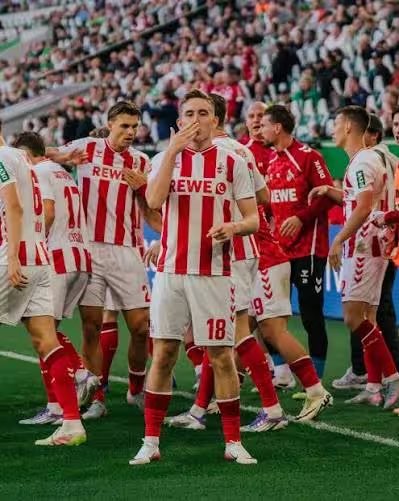
| Category | Details |
|---|---|
| Club | 1. FC Köln |
| League | Bundesliga |
| Manager | René Wagner |
| Stadium | RheinEnergieSTADION |
| Nickname | Die Geißböcke (Billy Goats) |
| Founded | 1948 |
| Leading Scorer | Said El Mala (5 goals) |
| Key Signing | Thijs Dallinga |
| Injured Strikers | Ragnar Ache, Thijs Dallinga |
| Current League Position | 12th |
The Defining Moment
- FC Köln’s forward line entered 2026/27 with a clarity of purpose that the rest of the squad could only envy. Thijs Dallinga, the Dutch striker signed from Bologna, was the “echte Waffe” — the real weapon — that Köln had lacked since Anthony Modeste’s departure. Ragnar Ache provided the physical alternative. Said El Mala, the teenage sensation who had scored 13 goals in his breakout campaign, was the creative force on the left .
The defining moment of the season came not with an arrival, but with a double injury that stripped the department bare. By early October, both Dallinga and Ache were unavailable. Dallinga, the marquee summer signing, had suffered an injury that would keep him out for an extended period. Ache, the physical presence, had sustained a muscle injury in a friendly against Viktoria . René Wagner was left with Marius Bülter, a winger by trade, as his only fit senior option for the centre-forward role.
“Die Stürmer-Not beim 1. FC Köln ist nach den Verletzungen von Ragnar Ache und Thijs Dallinga groß,” the Deutsch Spiegel reported, capturing the scale of the crisis . Wagner responded by recalling Imad Rondic, a striker who had been “aussortiert” — sorted out, discarded — at the start of pre-season, only to fight his way back into the squad through sheer will .
This is the story of Köln’s 2026/27 forwards: a teenage sensation carrying the attacking burden, a Dutch signing whose season was interrupted before it began, and a collection of stopgaps and forgotten men navigating a crisis that no amount of planning could have anticipated.
Tactical Context
Wagner’s attacking structure has been shaped by the absence of his intended strikers. The 4-3-3 and 4-2-3-1 that appear on the team sheet were designed around Dallinga’s movement and Ache’s physicality. With both unavailable, Wagner has been forced to improvise, deploying Bülter through the middle, experimenting with El Mala as a “false nine,” and recalling Rondic from the wilderness .
The numbers reveal the scale of the challenge. Köln scored eight goals in their first six Bundesliga matches — a return of 1.33 per game — but the distribution was heavily skewed toward El Mala. The teenager had scored five goals in the opening phase, making him the club’s leading scorer despite playing primarily as a left winger . Dallinga had managed three goals in limited minutes before his injury . The rest of the forward line had contributed almost nothing.
The tactical challenge is the lack of a genuine focal point. Bülter, at 33, is an experienced Bundesliga forward but not a natural centre-forward. El Mala’s deployment through the middle removes him from the left flank, where his pace and dribbling are most dangerous. Rondic, the forgotten man, offers a physical presence but has played almost no competitive football in months . Wagner’s options are limited, and the January window cannot come soon enough.
The Forwards
Said El Mala
El Mala is the great hope of Köln’s season and the most exciting attacking talent the club has produced since Lukas Podolski. The 19-year-old, who wears the famous number 10 shirt, scored 13 goals in 34 league matches in his breakout campaign . His profile is that of the modern wide forward: searing pace, fearless dribbling, and a penchant for the spectacular.
His numbers from 2026/27 reflect his importance. Five goals in the opening phase made him the club’s leading scorer, and his performances have attracted attention from bigger clubs. The decision to sign a new contract in the summer was a statement of intent from both player and club, but the interest will not disappear .
The concern is the burden. At 19, El Mala is being asked to carry an attack that was supposed to be led by Dallinga and Ache. Wagner’s experimentation with him as a false nine reflects the coach’s desperation rather than a long-term tactical vision. If El Mala is to fulfil his potential, he needs support — not the weight of an entire team’s survival on his shoulders.
Thijs Dallinga
Dallinga is the great what-if of Köln’s season. The Dutch striker, signed from Bologna, was expected to be the “echte Waffe” — the real weapon — that the club had lacked. His opening-day goal against Hoffenheim, a clinical finish in true centre-forward style, suggested that Köln had finally found a reliable scorer .
Instead, injury has defined his campaign. By early October, he was unavailable, and his return date remained uncertain. In the matches he did play, he showed glimpses of the quality that persuaded Köln to invest: three goals in limited minutes, a return that placed him among the club’s most efficient forwards .
At 26, Dallinga is in his prime. His return would provide Wagner with the focal point that the attack has lacked, freeing El Mala to operate on the left and Bülter to return to his natural role. Whether his body allows him to fulfil that role is the question that will define Köln’s season.
Ragnar Ache
Ache is the physical alternative, a 28-year-old German striker whose raw power and aerial presence offer a different dimension to Dallinga’s movement. His injury, sustained in a friendly against Viktoria, was expected to keep him out for three to four weeks . In his absence, Köln have lacked a target man capable of holding the ball up and bringing others into play.
His profile is that of the traditional centre-forward: strong in the air, committed in the duel, and capable of finishing inside the box. When fit, he provides Wagner with a Plan B that the current squad cannot replicate.
Marius Bülter
Bülter is the stopgap, a 33-year-old winger who has been deployed through the middle in the absence of Dallinga and Ache. His profile is that of the experienced, hard-working forward: capable of playing across the front line, reliable in his pressing, but not a natural finisher.
His numbers reflect a player doing a job for the team rather than excelling in his preferred role. He has started regularly, his experience providing some stability in a forward line that has been stripped of its intended leaders.
Imad Rondic
Rondic is the forgotten man who may become the unlikely solution. The 27-year-old Bosnian was “aussortiert” at the start of pre-season, forced to train individually, and expected to leave. No club materialised, and he fought his way back into the squad through sheer will .
His profile is that of the physical, hard-working forward: capable of holding the ball up and pressing defenders. Wagner described him as a “Joker-Spieler” — an impact substitute — and his return to the squad has provided depth that the injury crisis demanded . Whether he can contribute meaningfully remains to be seen.
The Supporting Cast
Luca Waldschmidt, the former Germany international, has been limited to 45 minutes of Bundesliga football despite a strong pre-season . Jan Thielmann, the academy graduate, has fallen behind the younger talents . Mikey Moore, the 19-year-old loanee from Tottenham, was signed to provide cover for Jakub Kamiński’s departure but has yet to make a significant impact . The forward line is top-heavy with potential but desperately short on proven Bundesliga quality.
The Numbers Game
Table A: 1. FC Köln Forward Bundesliga Statistics (2026/27)
| Player | Apps (Starts) | Minutes | Goals | Assists | Notes |
|---|---|---|---|---|---|
| Said El Mala | — | — | 5 | — | Leading scorer; 0.40 goals/90 |
| Thijs Dallinga | — | — | 3 | — | Injured; 0.67 goals/90 |
| Ragnar Ache | — | — | 0 | — | Injured (muscle) |
| Marius Bülter | — | — | 0 | — | Stopgap centre-forward |
| Imad Rondic | — | — | 0 | — | Recalled from wilderness |
Table B: 1. FC Köln Forward Unit – Key Metrics (2026/27)
Table C: Forward Career Context & Pedigree
| Player | Nationality | Previous Clubs | Style Profile |
|---|---|---|---|
| Said El Mala | Germany | Köln Academy | Wide forward, pace, dribbling, goalscoring |
| Thijs Dallinga | Netherlands | Bologna, Toulouse | Complete centre-forward, movement, finishing |
| Ragnar Ache | Germany | — | Physical target man, aerial, hold-up play |
| Marius Bülter | Germany | — | Versatile forward, experienced, pressing |
| Imad Rondic | Bosnia & Herzegovina | — | Physical forward, work rate, impact substitute |
Tactical Identity & Squad Balance
Köln’s forward line is a study in crisis management. The club entered the season with a clear hierarchy: Dallinga as the marquee signing, Ache as the physical alternative, El Mala as the creative force, and Bülter as the experienced rotation option. The injuries to Dallinga and Ache stripped away the top two, leaving Wagner to improvise with a winger through the middle and a teenage sensation carrying the goalscoring burden.
The numbers tell a story of dependency. El Mala’s five goals account for the majority of Köln’s attacking output, and his importance to the team cannot be overstated. Dallinga’s three goals in limited minutes suggest that, when fit, he offers a genuine alternative. The rest of the forward line has contributed almost nothing, a reflection of both the injury crisis and the lack of proven depth.
The January window is the obvious solution. Thomas Kessler has already indicated that a “Zielstürmer” — a target striker — is a priority, alongside a centre-back and possibly a replacement for Ellyes Skhiri . The return of Dallinga and Ache would be the most immediate boost, but the club cannot rely on their fitness alone. Köln need reinforcements, and they need them quickly.
The most intriguing subplot is El Mala’s development. At 19, he is already the club’s most important attacking player. The interest from bigger clubs will intensify if he continues to score, and Köln’s ability to keep him beyond the summer may depend on their league status. For now, he remains the great hope of a season that is threatening to slip away.
The Verdict from the Camp
René Wagner, on Imad Rondic:
“Eigentlich hatte Imad bei uns keine Aufgabe, er hat sich aber mit brutalem Willen, Einsatzbereitschaft und Charakter zurück gearbeitet. Imad ist der Joker-Spieler, bei dem wir uns alle gefreut haben, dass er letzte Woche sein Bundesliga-Debüt gefeiert hat” .
Thomas Kessler, on the January window:
“Ein Zielstürmer soll es auf jeden Fall sein. Wahrscheinlich noch ein Innenverteidiger, vielleicht sogar ein Ersatz für Ellyes Skhiri, möglicherweise eine weitere kreative Kraft” .
Bundesliga.com, on Said El Mala:
“El Mala is Cologne’s great hope for the new season after a sensational breakout Bundesliga campaign. Despite being new to top-flight football, the Krefeld-born winger was a revelation last term, scoring 13 goals in 34 league matches” .
Where Next?
Köln’s forward priority is clear: they need Dallinga and Ache to return, and they need El Mala to maintain his form. The teenage winger has been the one consistent threat in an attack that has been stripped of its intended leaders, and his continued productivity is essential to the club’s survival.
The January window is the most immediate opportunity to address the crisis. Kessler’s stated intention to sign a “Zielstürmer” reflects the recognition that the current options are insufficient . Whether Köln can attract a quality striker in January, given their league position and limited resources, remains to be seen. The return of Dallinga and Ache may be the more realistic solution, but their injury histories suggest that reliance on their fitness is a gamble.
The development of the younger players is the secondary subplot. El Mala is already established. Mikey Moore, the Tottenham loanee, has the potential to provide width and creativity . Kevin Ekweribe, the 18-year-old academy striker who trained with the first team in October, represents the pipeline . But in a relegation battle, potential must translate into production quickly.
For now, Köln’s forwards are a unit defined by absence and improvisation. El Mala leads, Bülter fills gaps, and Rondic waits for another chance. The question is whether the return of the injured strikers can save the season before it slips away. The early evidence suggests that Köln’s hopes rest on a 19-year-old’s shoulders and a Dutchman’s healing body.


